Antakly Projects · Archive
Food and Clay, the most elemental materials the hand can shape
Food Art.
When the
table becomes
the canvas.
Antakly Projects
We are living through a moment when the politics of land, labor, hunger, and identity are inseparable from what we grow, cook, serve, and share. At the same time, the spectacle of food as art, its staging, its lighting, its virality, has never been more intense.
Laila Gohar was among the first doing this with genuine artistic intention. And then, suddenly, a whole world followed.
Food artists working in this space today are not decorating plates. They are asking serious questions about displacement and belonging, about consumption and desire, about what we preserve and how we experience luxury and the world around us.
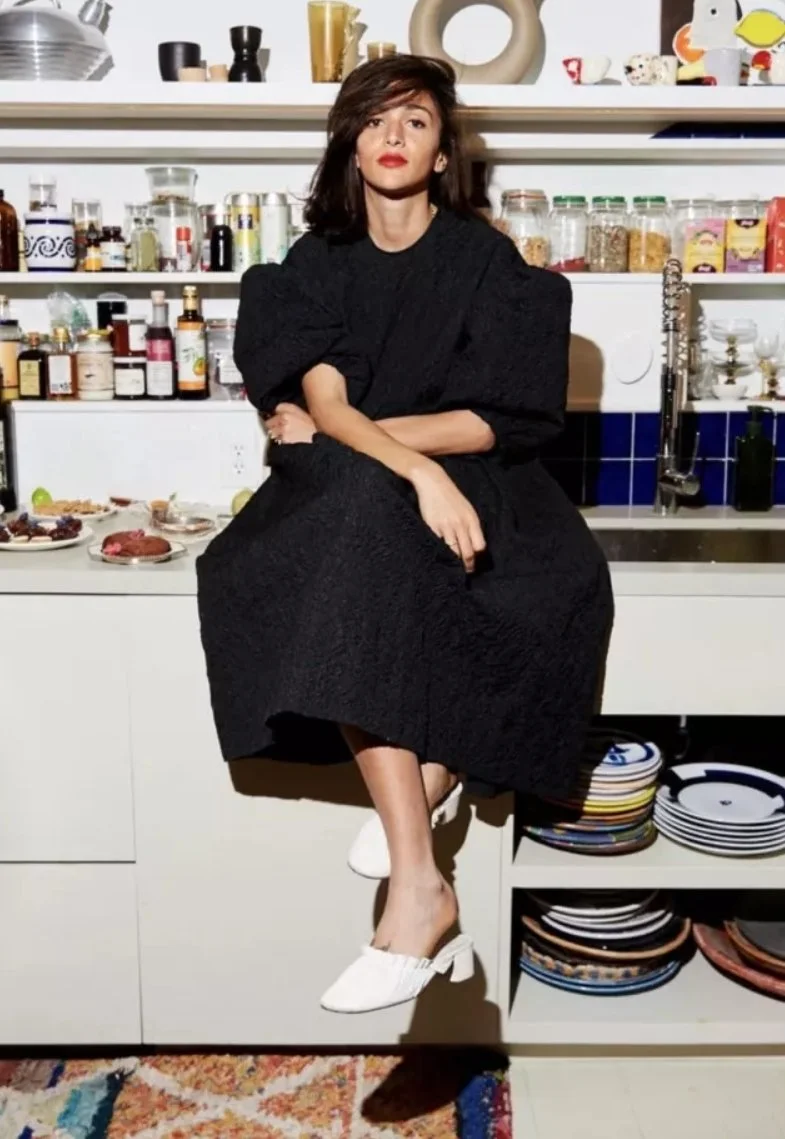
There is a moment, if you have ever stood in front of Laila Gohar's work, when you forget entirely that what you are looking at was made to be eaten. But the story of food art is older, stranger, and far more serious than any single moment of cultural virality can contain. From Roman frescoes to Daniel Spoerri's Eat Art movement to butter sculpted into fragments recalling ancient Greek marble — food has always been a carrier of meaning. Labor and land, culture and class, memory and desire, compressed into something you hold in your hand. This is a cultural essay about what happens when the most basic human material asks the questions the cameras do not know how to frame.
In her world, food becomes a material that can be modelled — to which a meaning can be given. Julie Rothhahn does not start with a recipe. She starts with an image impulse, an association of ideas, a question about form. Her studio works with brands and companies on experiences, installations, performances, and immersive dinners. She co-coordinates the Master's in Design & Culinary at the Reims School of Art. A dish, in her view, is first a thought.
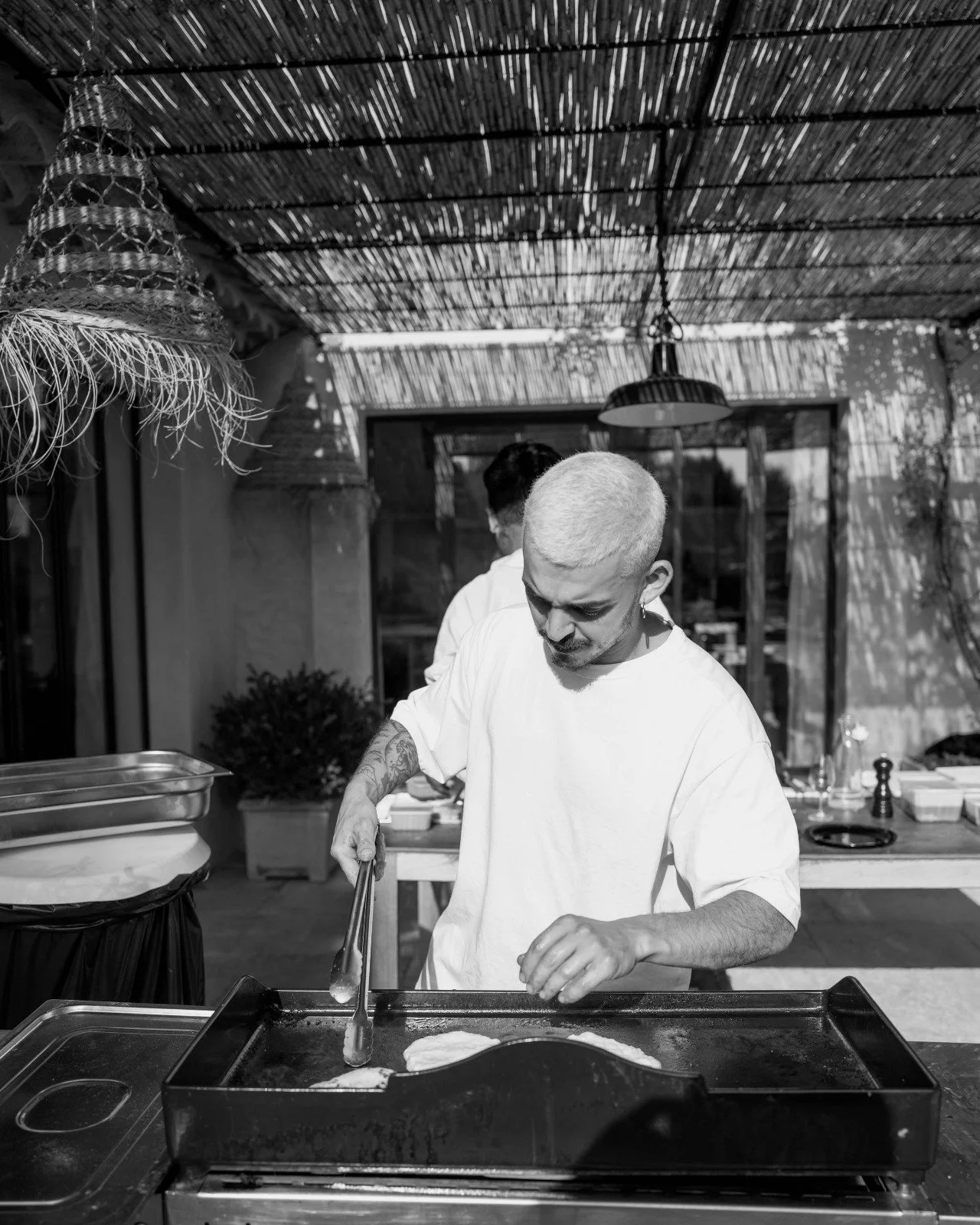
Born in the South of France. Cooked his way through New York. Came back to Marseille and set it on fire — literally. Valentin Raffali changes his menu every week, works over flame and charcoal, and has been cooking since he was fourteen years old. He was named Best French Wine Bar by Le Fooding in 2022. He says what he does is radical, and that he does not cook for people. He means both of those things entirely.
Chef Javier does not start with ingredients. He starts with how something looks and how something feels. Deep violet means intensity. Gold to terracotta means play. The restaurant is designed to feel like being inside a Bedouin tent at night, and the menu was chosen because Middle Eastern cuisine does what the space does — it brings people together, breaks bread, stays social into the night. Force the creative process, he says, and it never comes. Let go completely, and the dish arrives whole.
One of the first interviews ever published on this site was with Charlotte Collard — international model, always traveling, always exploring. It became one of the most-read pieces and stayed that way. Years later, she is a mother of three, based in Brussels, and has built something entirely her own at the intersection of food, fashion, and the feed. She calls it a self-portrait. Her heart said: cooking, giving, sharing. Her brain said: twenty years in fashion is not something you leave behind. She found a way to hold both.
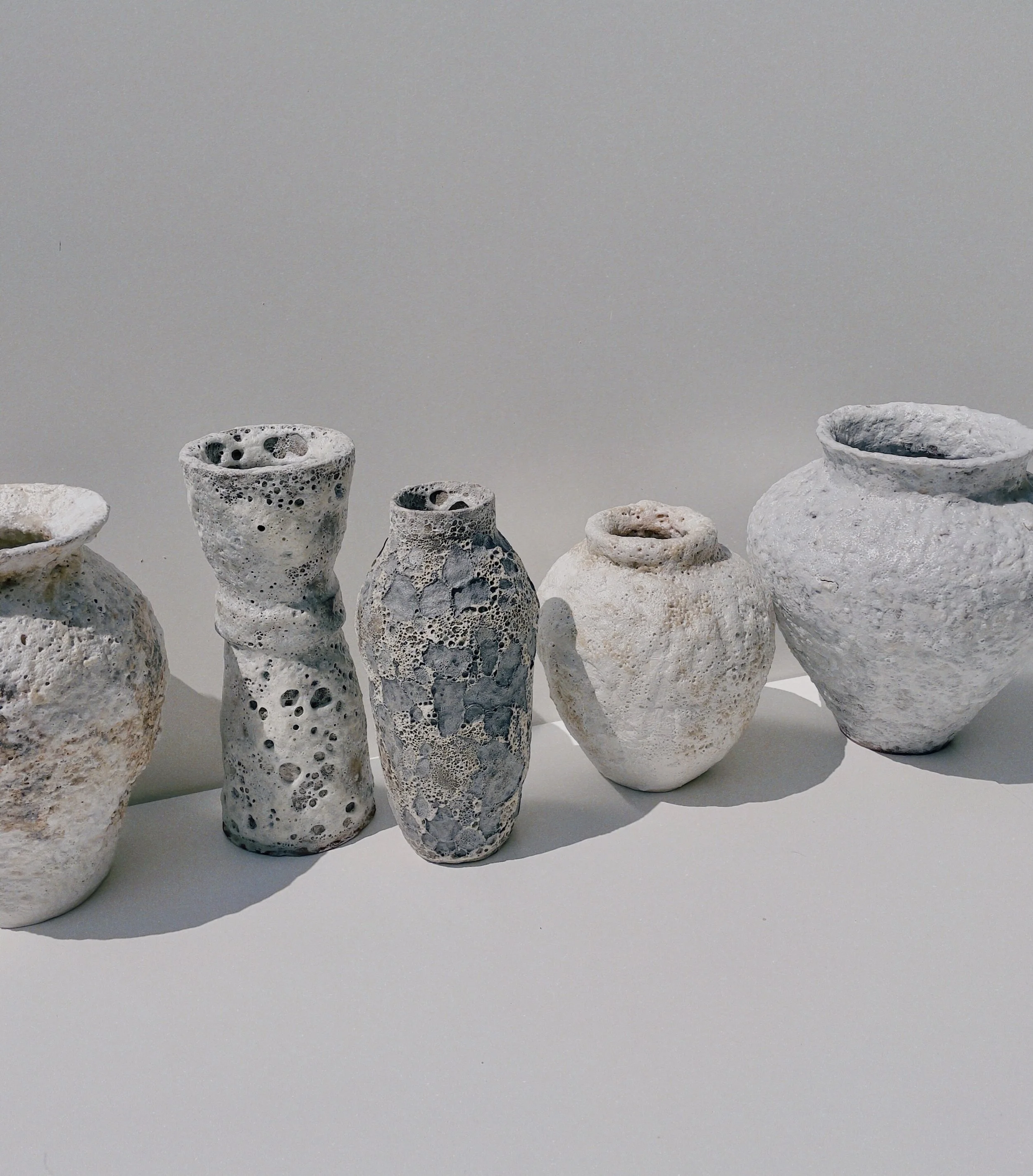
Clay the oldest medium of all.
Clay is one of the oldest materials human hands have touched. Ceramics has undergone a quiet revolution. What was once shelved as craft, useful, decorative, secondary to painting and sculpture has moved firmly into the territory of contemporary art. The artists in this archive are not potters in the traditional sense. They are conceptual artists who happen to work in clay because no other material holds the mark of the hand, remembers pressure, and survives.
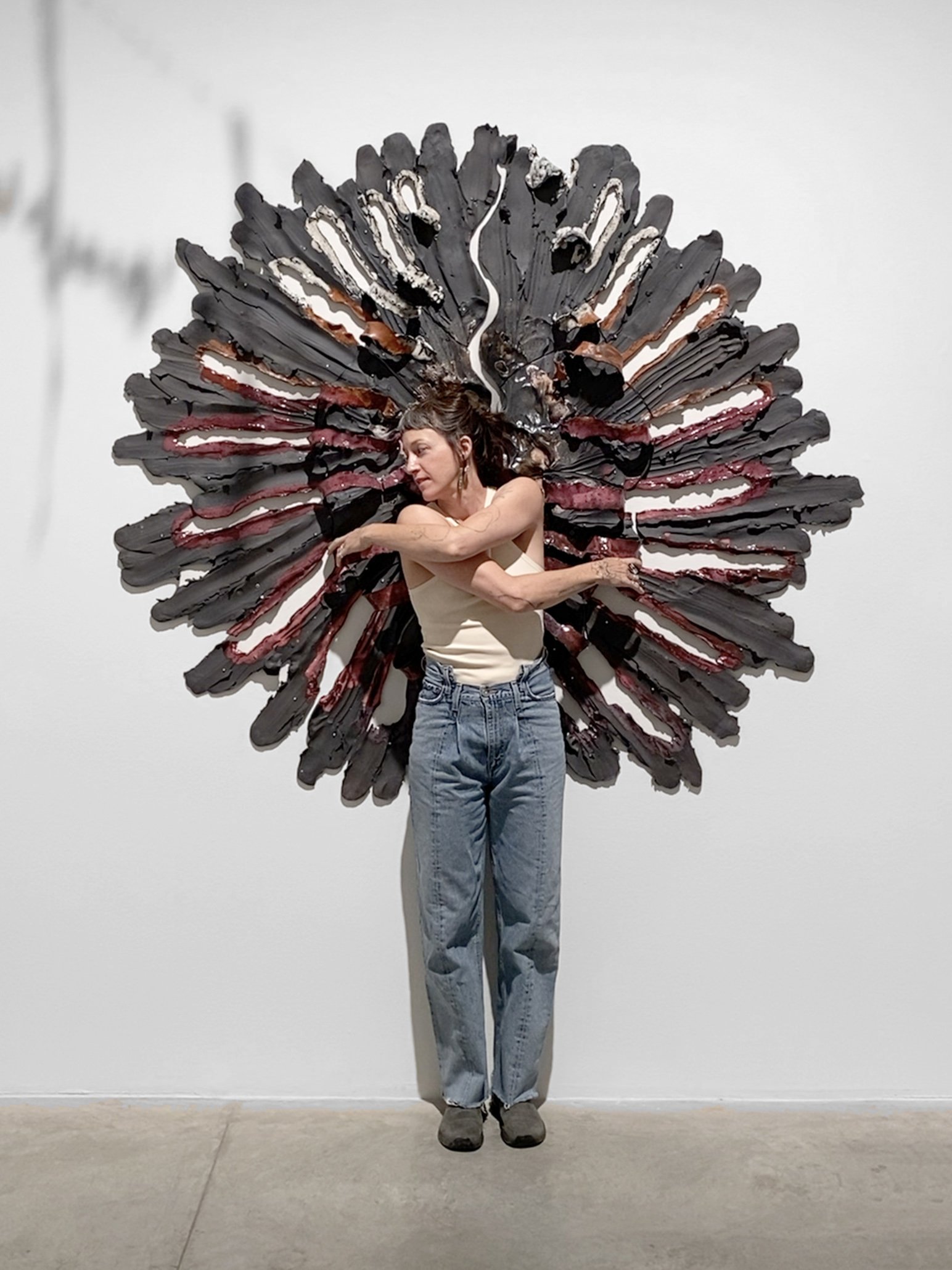
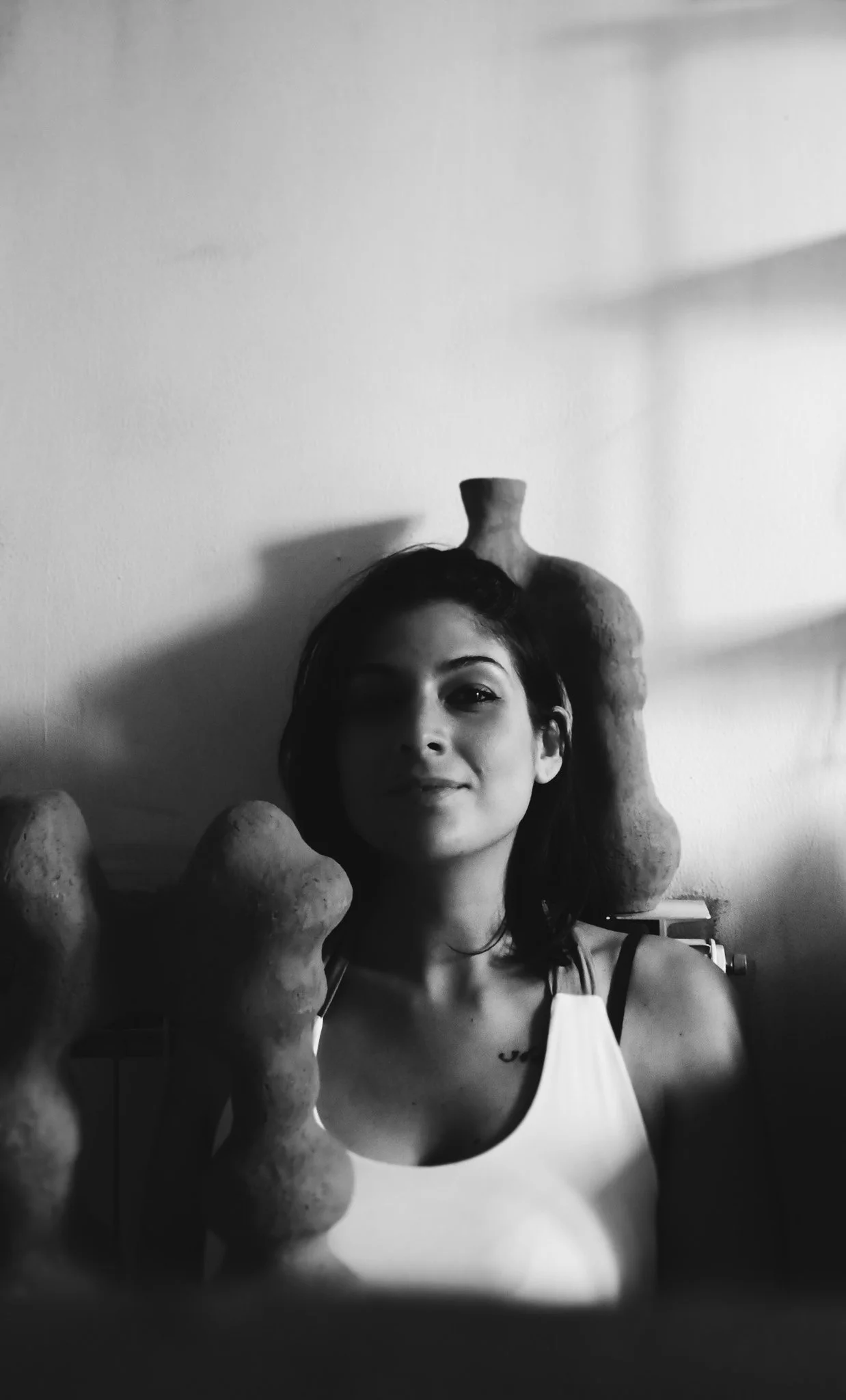
Three years ago clay arrived. From that exact moment it felt as natural as breathing. Giorgia Piu — Rose de Nour — is a ceramicist based in Rome with strong Mediterranean roots, a background in painting and drawing, and an approach to clay that is completely her own: contemplative, instinctive, and deeply rooted in the earth. She and the matter. She and I.
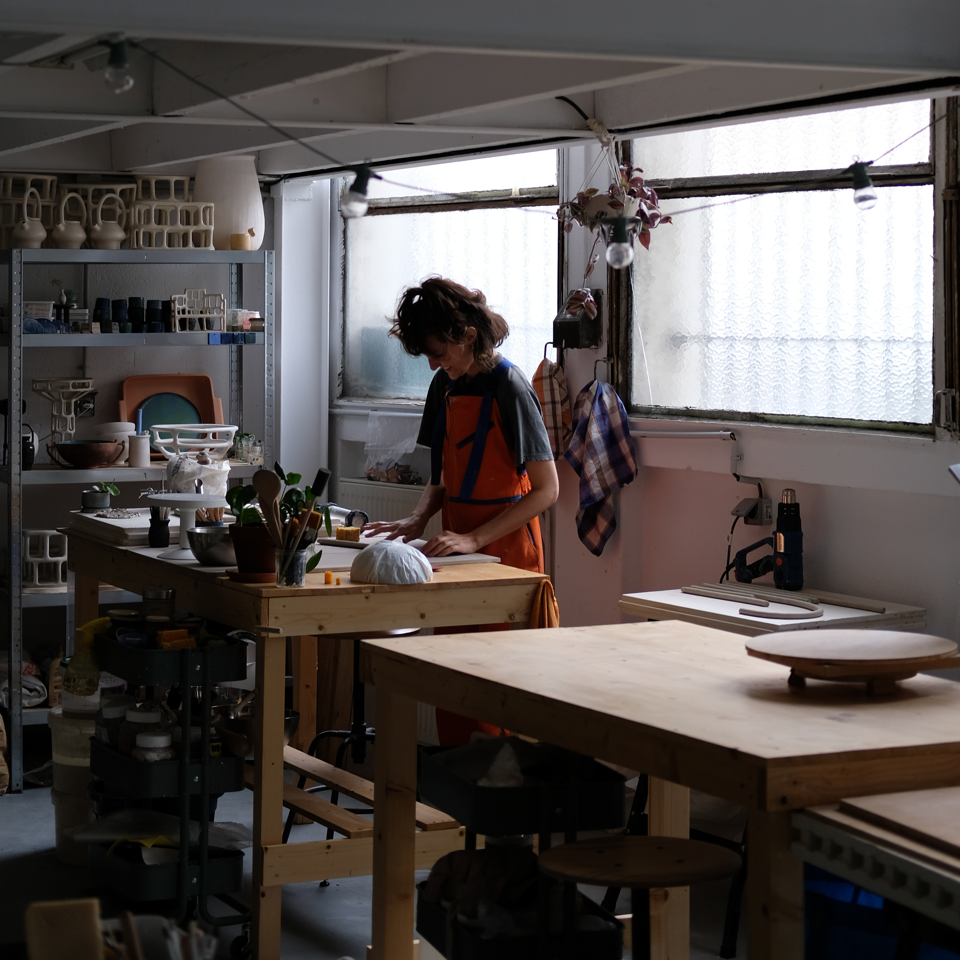
She doesn't plan the end result. She listens to what the material wants to say. IAAI — Ia Kutateladze, Georgian, Berlin-based — on intuition, meditation, and the excitement of surprising yourself with your own process.
She left fashion, opened Flour Shop, and the Wu-Tang Clan found her on Instagram. Brooklyn cake extraordinaire Amirah Kassem — Bon Appétit cover, 2017's most viral Instagram cake, Williams-Sonoma collab, and ice cream for breakfast in a Disney-themed kitchen — is still the most fun person in any room.