The Art of Advocacy: Courtney Mattison’s Ceramic Ode to Vanishing Oceans
Mattison
Coral

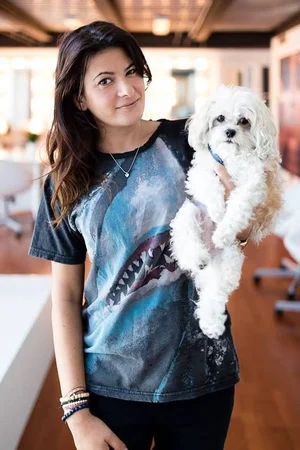
In an era where climate change often feels abstract, Courtney Mattison makes its consequences viscerally tangible, one porcelain coral at a time. Her monumental ceramic installations, painstakingly assembled from thousands of hand-sculpted marine organisms, are more than aesthetic triumphs. They are ecological elegies. The vibrant sections are what healthy reefs look like. The white sections are what bleaching looks like. Both are made of clay. Both break easily.
Born in 1985 and raised along California's coast, Mattison's childhood was shaped by tidal rhythms. Peering into crab traps with her mother, she became enthralled by the otherworldly forms of marine invertebrates, an obsession that led her to sculpt them in clay by age 17. At Skidmore College she pursued an unprecedented interdisciplinary degree in marine ecology and ceramic sculpture. Her master's research at Brown University, with coursework at RISD, explored art's role in coral reef conservation, interviewing scientists and artists alike. A semester at Australia's James Cook University, diving the Great Barrier Reef, cemented her mission.
"I realized art could translate complex science into something visceral," she recalls. "Seeing bleaching firsthand, I knew I had to use art to sound the alarm."
"Porcelain anemone tentacles break as easily as living ones. The work's vulnerability mirrors reefs' plight."
Courtney MattisonPinched coils of stoneware or porcelain, hollowed to mimic coral's delicate structure. Some installations span over 20 feet.
Hand-poked textures: thousands of tool-made holes replicate coral polyps' repetitive growth patterns. No two pieces are the same.
Glazes as narrative: vibrant blues and pinks symbolise thriving reefs. Stark white sections evoke bleaching. The same ceramic object tells two stories depending on where you look.
Material metaphor: the calcium carbonate in her glazes mirrors the limestone skeletons of real corals. "Porcelain anemone tentacles break as easily as living ones," Mattison notes. Each installation requires meticulous handling, a performative echo of conservation itself.
Studio practice as advocacy: kilns fired only when full. Clay and water recycled. Materials sourced locally. "Art about conservation must practice it," she insists.
Mattison's site-specific commissions have reached high-traffic spaces across three continents. Her 2015 installation Our Changing Seas III, featured at the Virginia Museum of Contemporary Art, depicted a thriving reef dissolving into bleached ruin: a visual before and after. Each location is chosen to place the ocean's crisis in front of people who might not otherwise encounter it.
Partnering with Dr. Sylvia Earle's Mission Blue initiative, Mattison's art highlights Hope Spots, critical marine areas needing protection. In 2020, her design for a UN Postal Administration Earth Day stamp disseminated her message to an entirely different audience. The intersection of fine art and climate policy is not a side note to her practice. It is the practice.

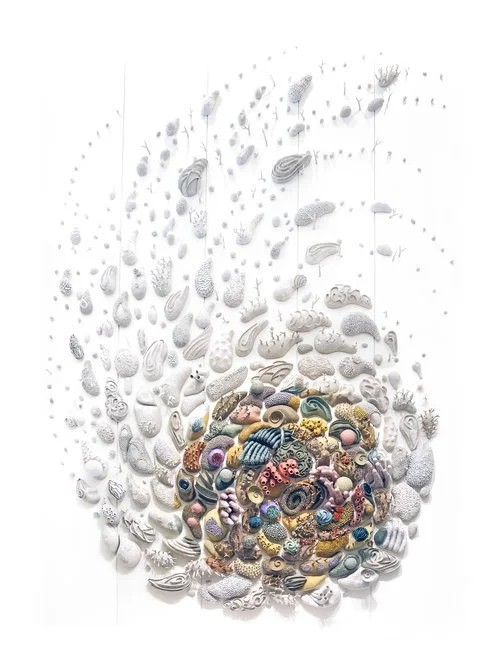

Image courtesy of the artist.
“I want viewers to feel wonder first, then responsibility. If my art makes someone pause and rethink their plastic use or carbon footprint, that’s a victory.”