Lisa Geue: An Ocean on a Vessel
Geue
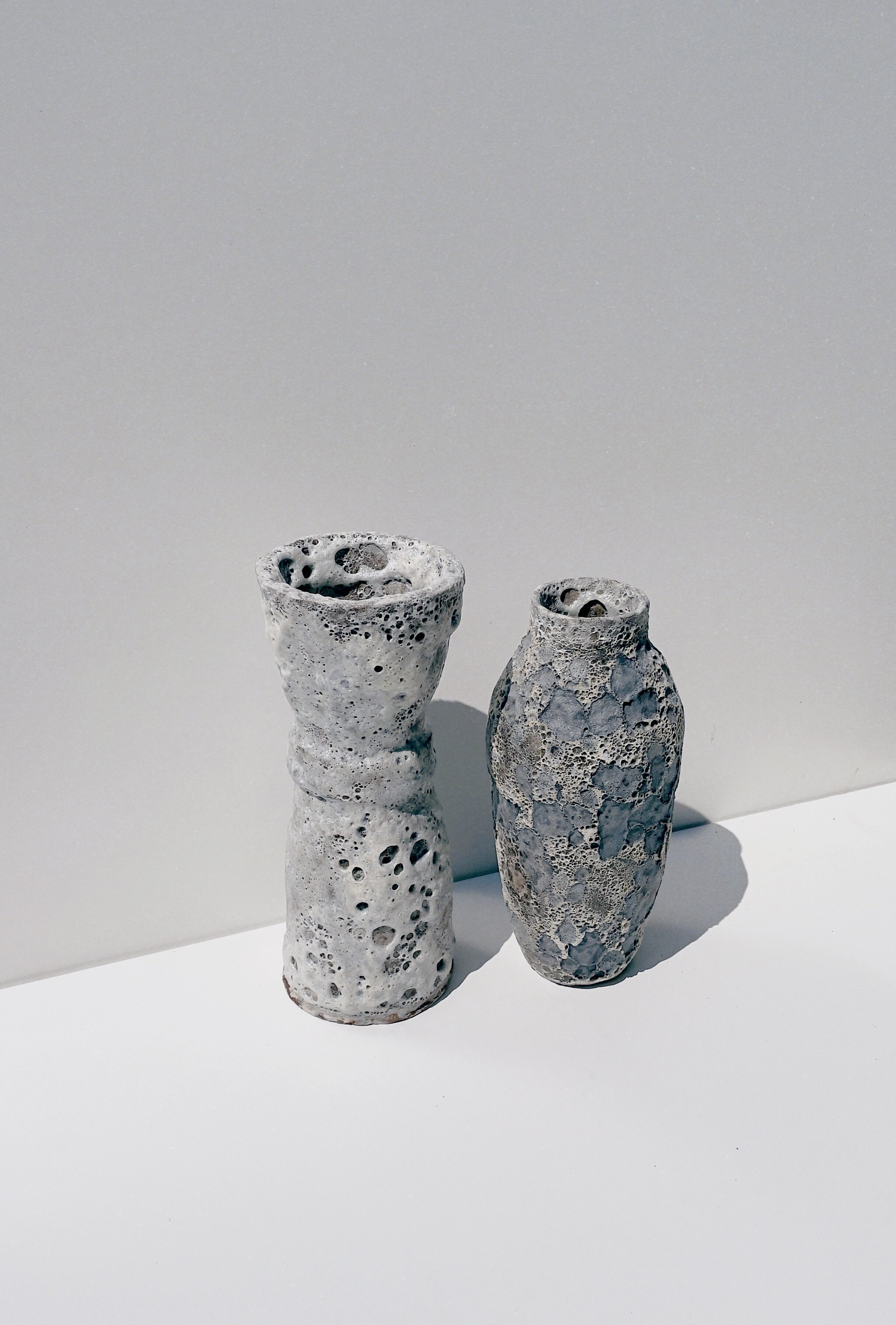
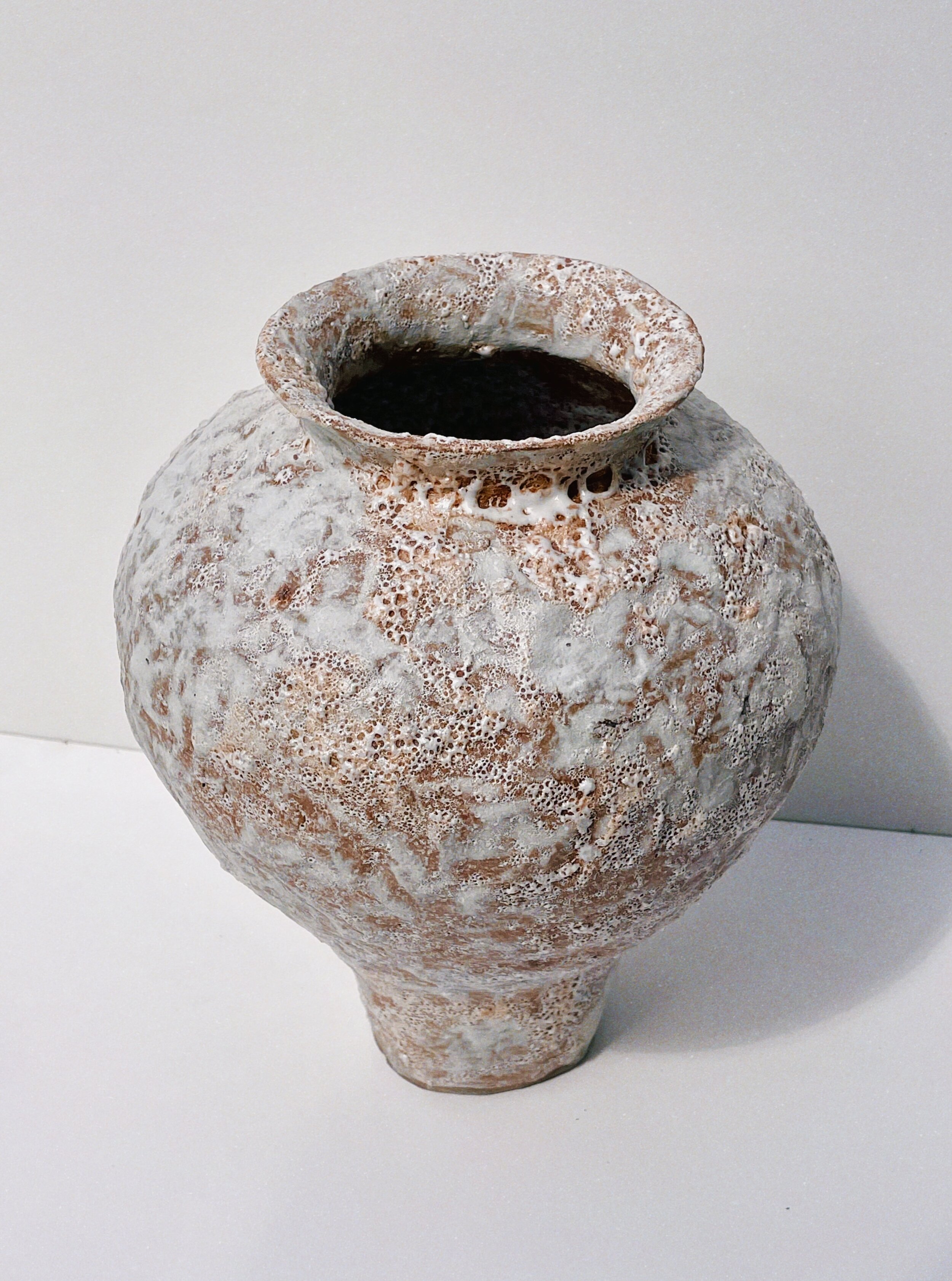
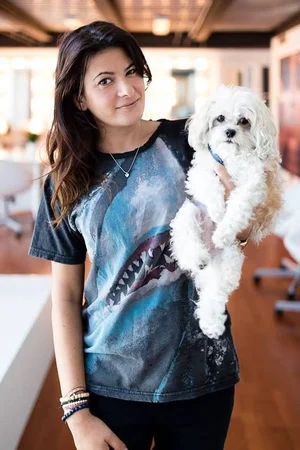
Lisa Geue is an artist who works primarily in ceramics, creating ancient shape inspired vessels and organic looking sculptures with a focus on form and experimental glazing. With a background in photography and film, composition plays a role in both the visual language and the photographic archive-like quality of her work. Born in Germany, she studied Photography at the Academy of Visual Arts Leipzig from 2013 to 2019. In 2019 she travelled to Naarm and Jan Juc, Australia, and lived at the ocean.
Deepening her connection with nature, natural processes like mineralisation, decomposition of coastal rocks through saltwater, and cycles like high and low tide became inspiration for her practice. She currently lives in the countryside near Berlin. She creates her own glazes using minerals, sand, carbonates, shells, wood ash, soda and rainwater only.
Tell us about yourself, Lisa.
I'm currently based in the countryside of Germany, near Berlin. I used to live in Australia before and my mindset is still there and I miss it every day. I went to Art School to study photography but I never really felt fulfilled doing that. I took a break from art for about four years and recently, after touching clay for the first time, it just clicked. One year later, I can't imagine doing anything else.
Greatest inspirations and influences?
Learning about the history of ceramics and pottery is still an ongoing process. I have always appreciated and felt drawn to indigenous practices and ancient techniques. Not only in ceramics, but also in other crafts like Kijoka-bashofu, the Japanese craft of making cloth from the banana fibre, Japanese bamboo weaving, natural dyeing with plant-derived dye, or Pit- and Anagama fired pottery. Practices like that have been a significant influence in terms of resourcing mindfully and appreciating the craft you are doing. In pottery, the Jomon period probably had the biggest influence on me. But also modern artists like the queen herself, Lucie Rie, Toshiko Takaezu, and Trisha Donnelly.
Tell us about your creative process.
It has a fragmentary character. I do not force the process of creating anymore, so there are times of 'empty' weeks between a first idea and a finished work. Yet when it comes to glazing I am consistent. Creating your own glazes comes with challenges and a lot of experimentation. From the beginning I would create glazes using minerals, sand, shells, wood ash and carbonates. In doing that I can create glazes that have a unique texture but reproducing them can be difficult.
I call my pieces 'objects' because they have been revoked of their function yet the archetypal shape of the vessel and its symbolism remain intact. Appreciating ceramicists who work with wild, raw clay, I would love to harvest my own to have full control of every step of my practice.
How has the pandemic affected your creativity?
A person I know who has been deeply affected by the current pandemic said to me that everything that is currently happening is actually a reflection of what we are doing to the world. And I agree. I do not see the world changing, I see another symptom of us being disconnected from the world and everything around us. Humans tend to think they are detached from other living beings, nature or even other humans, when indeed our actions create ramifications. If we do not fundamentally change our way of modern thinking, I see it ending badly.
Icons in your opinion?
Ruth Asawa, Jane Elliott, and Lucie Rie of course. To name a few.
What does wellbeing mean to you?
Wellbeing is a cornerstone to mental health, empathy and consequently creativity. I have always been a forest and ocean person. There I find inner peace and I feel comfortable living in solitude. We should listen more to our bodies and when needed, we should at least take a break from what we are doing.
"I call my pieces 'objects' because they have been revoked of their function yet the archetypal shape of the vessel and its symbolism remain intact."
Lisa Geue"I do not see the world changing, I see another symptom of us being disconnected from the world and everything around us. Humans tend to think they are detached from other living beings, nature or even other humans, when indeed our actions create ramifications."
I have always been a forest and ocean person.
There I find inner peace.
Wellbeing is a cornerstone to creativity.
Read more artists working in clay at ninunina.com/ceramic-art.