Antakly Projects / Food Art
Food Art.
When the table
becomes the canvas.
On beauty, urgency, and the artists transforming the everyday into the extraordinary
There is a moment, if you have ever stood in front of Laila Gohar's work, when you forget entirely that what you are looking at was made to be eaten. Butter sculpted into fragments recalling ancient Greek marble. Koi-shaped jellies with flowers suspended inside them like specimens caught mid-bloom. Tables that feel simultaneously archaeological and alive.
Gohar did not invent food art. But she did something more consequential: she showed the world what it was capable of. That moment of recognition sent a wave through culture. And with that wave came, inevitably, a flood of imitators. She was among the first to do this with genuine artistic intention. What followed was a whole world claiming the same origin story.
But the story of food art is older, stranger, and far more serious than any single moment of cultural virality can contain. Food has always been a carrier of meaning. Roman frescoes celebrated abundance. Baroque still lifes used the ripeness and rot of a pear to meditate on vanity and mortality. In the 20th century, Daniel Spoerri's Eat Art movement made the table itself into a readymade, fixing the remnants of meals onto canvases as finished works. What these movements shared was an understanding that food is never just food. It is labor and land, culture and class, memory and desire, compressed into something you hold in your hand.
What has changed, in this particular cultural moment, is the urgency. We are living through a time when the politics of land, labor, hunger, and identity are inseparable from what we grow, cook, serve, and share. And then consider the other side of that equation: the spectacle. Look at what the Met Gala has become. I say this as someone who loves fashion deeply. But there is something genuinely unsettling about watching that particular circus unfold each May, a procession of increasingly theatrical excess at a moment when the world is in the state that it is. The Hunger Games comparisons write themselves. It has become a performance so removed from meaning that it circles back around to saying something, just not what its participants intend. Food art, at its most serious, is the exact counter-argument. It takes the most basic human material and asks what it actually means. It finds the extraordinary in the humble. It chooses depth over spectacle. These artists are not dressing for the cameras. They are asking questions the cameras do not know how to frame.
"Food art can be a protest, a love letter, a luxury experience, a monument to something disappearing. Sometimes it is all of these at once."
The most serious artists working in this field are doing all of these things simultaneously, and doing them with butter and citrus and gelatin and the everyday materials of a kitchen table. This is a medium that belongs to everyone, which is precisely why the most interesting practitioners are doing the most unexpected things with it.
Essential Reference
New York / Born Egypt / Food Artist, Designer, Collaborator
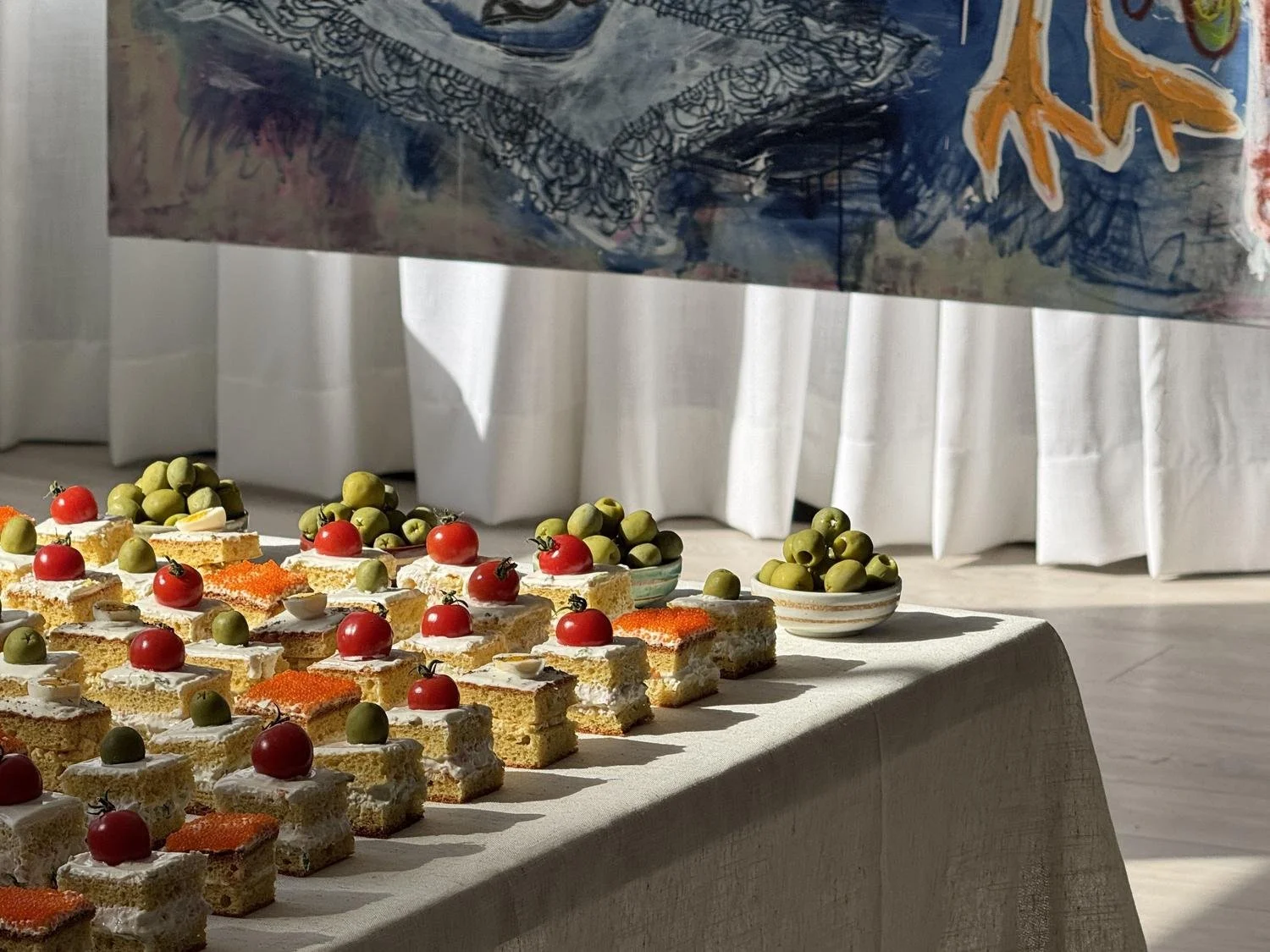
If there is one artist who has defined what food art means at this particular cultural moment, it is Laila Gohar. Born in Egypt and based in New York for the last decade, Gohar works at a scale and with a sensibility that is entirely her own. Her installations occupy a space between the culinary and the fine arts that she has essentially invented for herself: classical sculptures made from polished butter, strings of oyster shells draped among Calla lilies, a life-size armchair made entirely of bread.
She has collaborated with Prada, Simone Rocha, Hermes, and Comme des Garcons, not because she decorates their events, but because she transforms them. She has released homeware with Danish brand HAY and co-founded Gohar World, the artisanal lifestyle boutique she runs with her sister Nadia. When Gohar is involved, the food becomes the experience. The table becomes the artwork. The act of eating becomes something you remember.
At Salone del Mobile 2026 in Milan, Gohar unveiled her most theatrical gesture yet: a traditional carousel in the Giardino delle Arti, its original figures replaced with oversized fruits and vegetables, part sculpture, part interactive stage set. The installation launched in collaboration with Swedish fashion brand Arket to celebrate her first ready-to-wear collection, stopping visitors mid-stride throughout design week. It is the kind of work that reminds you why a carousel felt magical in the first place.
What makes her practice extraordinary is the refusal to choose between beauty and seriousness. Her work is visually arresting and grounded in genuine artistic intelligence. She has exhibited in museums and galleries internationally, and her influence on how the broader culture thinks about food as a medium is immeasurable. Not because food art begins and ends with her, but because she committed to this work with a fullness of intention that set the standard for everything that followed.
A final note, because it would be an omission not to say it: Laila Gohar is also one of the most effortlessly, genuinely stylish people working anywhere in culture today. She would make our best dressed list without a second thought.
No artist in this space makes the political stakes of food more viscerally felt than Mirna Bamieh. Born in East Jerusalem, now based in Lisbon following displacement amid violence in Gaza and the West Bank, Bamieh has built a practice that spans film, photography, ceramics, and live art, always returning to food as a carrier of memory and resistance. Her work does not ask to be admired from a distance. It asks you to understand something, and to carry it with you when you leave the room.
01
East Jerusalem, now Lisbon
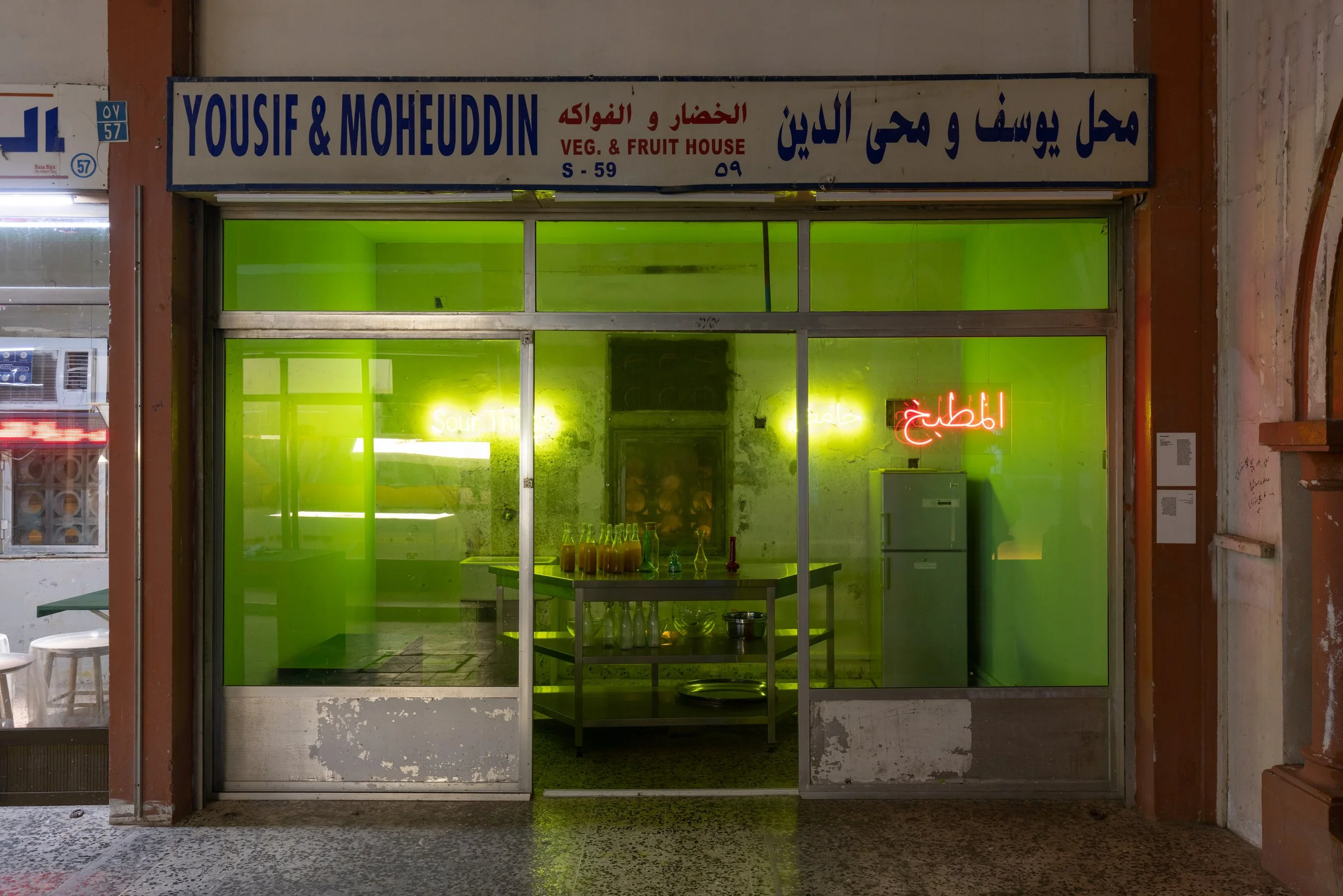
Her multi-media installation Bitter Things: In the Name of an Orange was a direct conversation with Ghassan Kanafani's 1962 story of a Palestinian family displaced from Jaffa during the Nakba, watching orange groves disappear into the distance. In Bamieh's hands, marmalade and broken clay become a form of mourning that no other medium could carry as honestly. Sour Things: The Kitchen explored fermentation as cultural preservation, jars of lemons a metaphor for everything that occupation attempts to erase and that a people finds ways, quietly and persistently, to keep.
"Farming culture runs in our blood. When you dispossess the Palestinian from the land, you are unsettling how they deal with the world."
02
New York
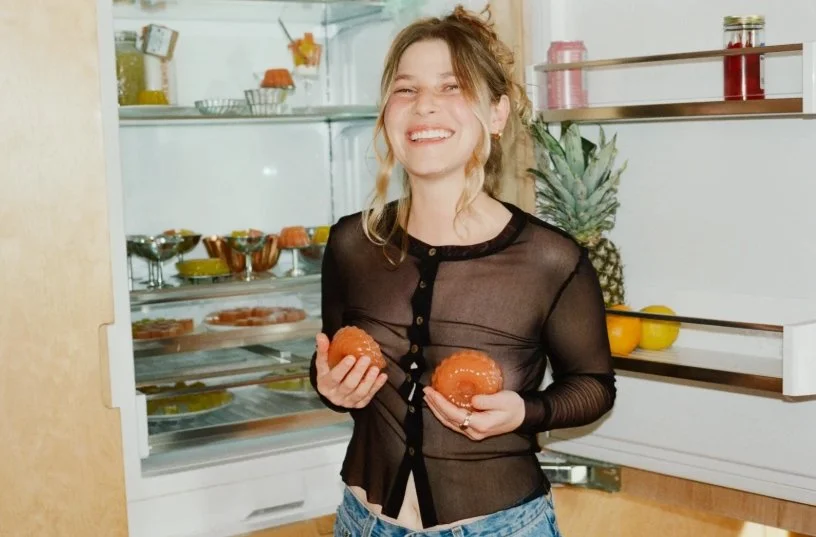
Her edible hors d'oeuvres at the Venice Biennale stopped guests mid-conversation: ikura suspended in lychee martini jelly, tomatoes and burrata floating in a salty honey jello like a sensual Caprese snowglobe. Her line Gelee reframes nourishment as play, guided by the conviction that joy is a form of nutrition.
"There's something so true about joy and play being a vital nutrient to both our body and soul."
03
International
A food stylist and artist who creates what she calls food paintings, intricate arrangements in which color, texture, and composition do the work that pigment does on canvas. Her installation Foraged in Buenos Aires invited guests into a recreated forest ecosystem where they engaged with food through instinct rather than convention. Part gallery, part wilderness.
04
London / Oxford
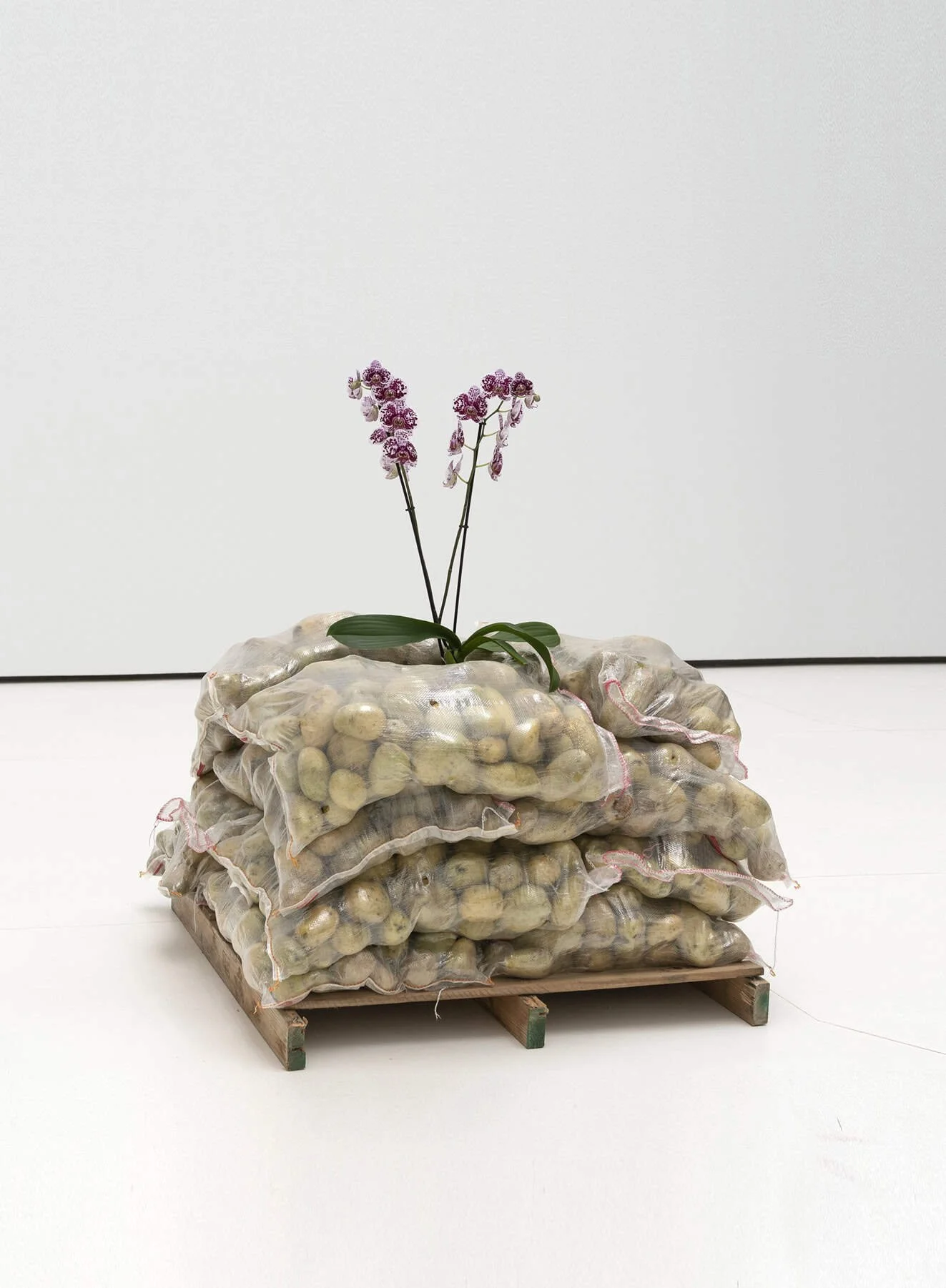
A Spanish-Welsh artist pursuing a PhD at the Ruskin School of Art, Oxford. His installations and sculptures graft together queer dissent and agricultural politics, using foodstuffs and industrial materials to examine the relationship between surplus, land, and bodies rendered disposable by economic systems. His work is both vengeful and fragile, and deliberately so.
05
Paola A. Sanchez Ariza
Espacio Crudo
Art director, creative director, and founder of Espacio Crudo. Sanchez Ariza brings deep literacy in visual culture and food history to art direction, photography, set design, and editorial projects. Her practice is built on the conviction that food in the visual frame is never neutral, and her understanding of how image and ingredient intertwine as social history is among the most rigorous in the field.
06
New York / Fig Waspe
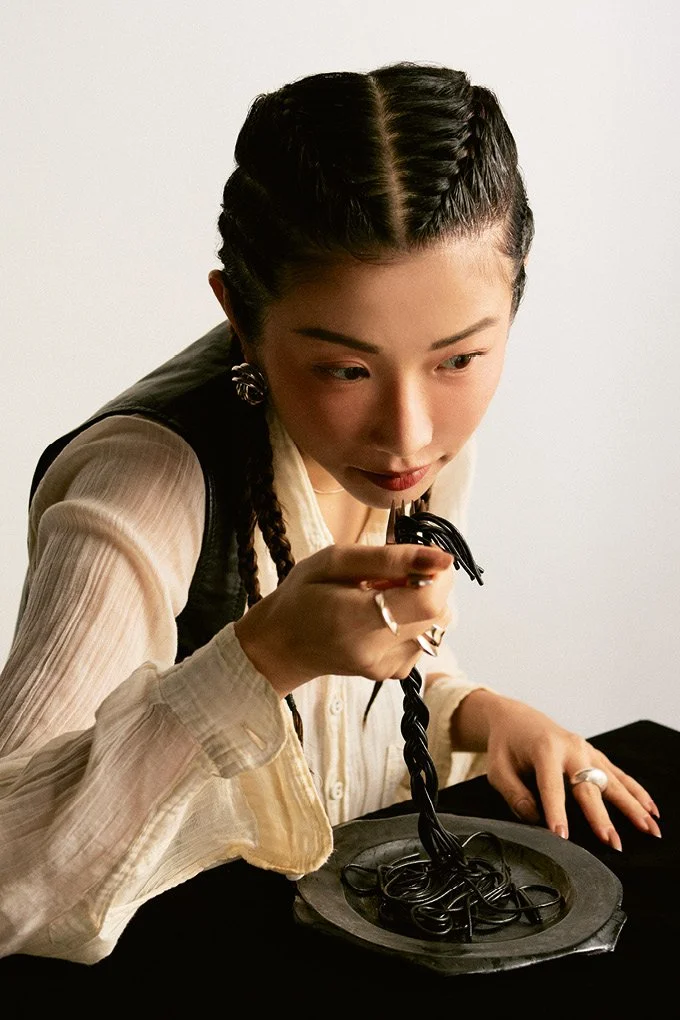
Her studio takes its name from the fig wasp, whose continual sacrifice has propagated the fig tree since ancient times. Trained in Michelin-starred restaurants, Hurr's installations speak to the beauty and strangeness of earthly design and natural forces. Culinary intelligence, horticulture, and conceptual art combined into something entirely her own.
07
Los Angeles
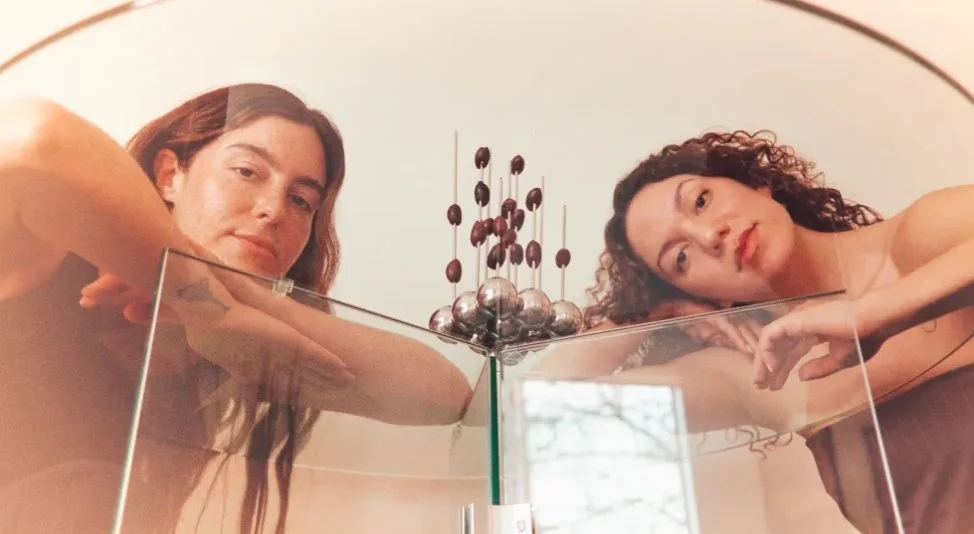
Founded by Elena Petrossian and Veronica Gonzalez, merging backgrounds in graphic design, art direction, industrial design, and hospitality. Since 2019 their edible sculptures and curated dining events have treated food as a fully designed experience, rigorous and playful in equal measure.
08
Who Eats Art
Working across event production, marketing, and conceptual food display, Gong Hua's subversive, surrealist practice operates largely outside institutional walls. Her Instagram archive, Who Eats Art, is one of the most compelling ongoing documents of what food art looks like when it lives beyond the gallery, experimental, fetishistic, and genuinely unexpected.
"Being a food artist allows me to present an alternative view to something that is such a big part of our everyday lives, while also leaving a lasting impression on the consumer."
09
Netherlands
The former graphic designer who draws on bananas. What began as a happy face on a leftover lunch has expanded into a full practice of fruitdoodles: carvings, recreations of famous artworks, and original compositions rendered in banana yellow. A reminder that the most generative creative constraints are often the ones you invent for yourself, and that joy delivered consistently, with craft and wit, is its own form of artistic commitment.
"They are asking serious questions about displacement and belonging, about consumption and desire, about what we preserve and what we allow to disappear."
What connects all of these artists, across their different scales and sensibilities and politics, is a refusal to treat food as mere sustenance or mere spectacle. The table has become one of the most contested creative spaces in contemporary culture, and the artists who work there are among the most urgent voices in it.
Food art is not a trend that arrived with Instagram and will leave with the next one. It is a practice with deep roots and a present that is more alive, more politically charged, and more aesthetically ambitious than it has ever been. The medium belongs to everyone. What you do with that is the question these artists have devoted their lives to answering.
We have been talking to artists in the kitchen and in the gallery, at the installation and at the table. We hope you enjoy meeting them as much as we have. And if this article made you think differently about what you eat, how it is made, and who made it, share it. These conversations deserve a wider room.
Antakly Projects / Art & Culture / Independent since 2003
New York