Tanmay Saxena: Poetry in Visual Form

Poetry in Visual Form
Tanmay Saxena on photography, film, fabric, and painting, and the quiet company he keeps.
Tanmay Saxena · courtesy of the artist
I spend a lot of hours looking at photography. At fairs, at exhibitions, at the National Geographic shows that come through town, scrolling accounts on Instagram late at night when I should probably be asleep. And still, it surprises me how often I find photography that is genuinely special, the kind that stops you mid-scroll, that reads less like a picture and more like a line of poetry someone happened to catch with a camera instead of a pen. There is so much talent out there. Discovering Tanmay Saxena's work was one of those moments, and I'm genuinely excited to share this conversation, along with the photography, the films, and the paintings that come with it.
Tanmay is a multi-disciplinary artist working across photography, film, fabric, and painting, born in India and based in London for the last eighteen years. His work right now feels like a duality of two complete worlds held together, a collision of fantasy with a factual veneer, emotional commentary threaded through with imagination. His subjects are mostly solitary, or in the company of people and animals not especially interested in talking. Quiet, wandering, endlessly captivated by whatever they happen to be observing.
"I studied IT and Finance and worked as a Business Analyst for a decade before realising it wasn't something I liked or was naturally meant to do. Now I feel it was a realisation that took time to come about, but I am thankful that it did. So I took the leap of faith and started my clothing label LaneFortyfive. That was my first foray into a creative field and the start of my life as an artist. I feel after that, it was merely about doing whatsoever I felt like doing, photography, making films, writing, painting, and doing absolutely nothing at times."

"A Liberation is a series that to me captures hopelessness, desperation, helplessness, and then hope all over again. I found myself in such a phase of life where this liberation is extremely slow and painful, seemingly impossible at times."
Tanmay SaxenaThis was the image that stopped me mid-scroll: a boy, a birdcage, a parrot, the open sea. It's the kind of photograph that doesn't need a caption to land, and somehow still means more once you know what it's carrying.
I think to a certain point I do decide it, to the effect that it feels to my own self as something surreal being documented rather than a fairy tale being made. Something dreamy enough to be hoped and craved for, but at the same time within the realm of possibility, albeit highly rare. The base of the story comes from something factual I may have come across. The twisting and moulding of it is what I do before I make it my own.
For a long time I knew the two influences were strongly and naturally part of what I create, but I wasn't able to draw a line between the two. Maybe because they entered my work so seamlessly and quietly that it was hard for me to know where one begins and ends. But I feel the loud, the brash, the colourful, the uninhibited comes from India, which is then embalmed and made a little subtle and sensitive by my time in London. Without this combination, my work I imagine would have looked starkly different today.
My own personality. I have always been quiet and introspective and self-talking and a sole wanderer. Most of my creative work is done, or ideas arrive, during the days when I am solitary. Recently I discovered that if I visit a museum or an exhibition in someone's company, that experience is entirely different and hugely truncated in comparison to when I go myself.
Over the last two to three years I have come to realise that most of these ideas, for me, can belong to all of these mediums, and I enjoy carrying them from one medium to another and expressing them to see how it turns out to be. Snakes or plant pots attached to humans, for example, have appeared in my photography and films and clothes and paintings. So I guess I don't attach them to one medium, and they keep travelling freely as they wish.

I think it's their non-verbal communication. We live at extremely high levels of noise these days. The moments of quietness in someone else's company are highly rare. I see two humans together not being able to sit quietly for long. Be it anxiety or restlessness or a lack of comfort with the other person or within themselves, it makes them talk for the sake of talking. If they paused and listened to their own conversation, or rather exchange of data and not even information, they'd most probably find it repetitive, redundant, and useless.
It certainly does, but I have been lucky that these agencies have portrayed my work in more or less the same vein as I created it. Sometimes I like how someone else sees it and thinks about it and expresses that thought. It provides me with a different angle to look at my own work, which I really like.

I think expression of child-like dreams, heart-ache, the ageing of nostalgia, life-changing injury, and love.
Not trying to answer, but I keep wondering, why exactly do I do it? Why do I like doing it?
Sunny days, quiet people, altruism, some films that live close to my heart. I don't like to accept this, but heart-ache too. Dreams. Assured slowness.

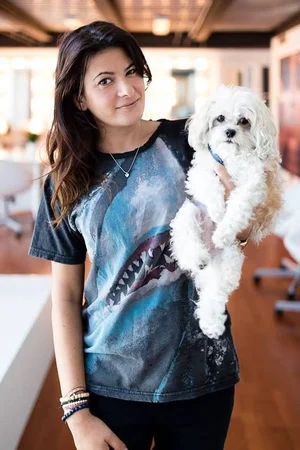
Leila Antakly is an independent cultural interviewer, editor, and founder of Antakly Projects, the platform she launched in New York in 2003 as Ninu Nina. For more than two decades, she has interviewed artists, musicians, photographers, designers, and creative thinkers across art, music, fashion, photography, film, and contemporary culture.
Her interviews are driven by curiosity, research, and direct conversation rather than celebrity, trend, or algorithm. Antakly looks for the people, ideas, and creative practices shaping culture, with particular attention to artists who deserve a deeper conversation beyond the usual press cycle.