Future Relics: The Sculptural Worlds of Robert Obier
Future Relics for a World Not Yet Built
Obier trained as an architect before he ever welded a joint. On discipline, intuition, and the Villa Siena commission.
Obier trained as both an architect and an industrial designer, and his sculptural work sits somewhere between the two disciplines: engineered forms built from traditional craftsmanship and digital fabrication in equal measure. He calls them future relics, objects that look excavated and futuristic at once, as if pulled from a civilization that hasn't happened yet.
That in-between quality is the point. Obier's work traces how craft evolves alongside new tools, and how a physical object can carry an abstract idea.
His influences range widely: the organic architecture of Frank Lloyd Wright, Andy Goldsworthy's studies of geometry in nature, and the theatrical, world-building instincts of Industrial Light & Magic. Across the work, the lines between architecture, industrial design, and art blur on purpose. Each piece is a design concept made physical and a standalone sculpture at the same time, built through a constant back-and-forth between what's handmade and what's computer-generated.


For those not familiar, how would you describe your artistic practice?
I create three dimensional artworks that are, for the most part, wall hung. I consider my work to represent the fusion of art, architecture and industrial design, with a certain element of mystery and temporal ambiguity.
You recently participated in The Room: Art, Design & Human Connection, a new arts and culture initiative presented by Gensler Los Angeles in partnership with DCDG & Co. How do you see architecture, design and art collaborating more in the future?
I would like to believe that they are completely intertwined, always. Certainly from the viewpoint of an architect. But I also believe our future salvation will require a new awakening and dedication to the humanity disciplines, and to the most essential questions of what it means to be human.

Does your architecture background inform how you create your sculptural work?
Absolutely. I spent many years developing my understanding of form language and the process I generally follow to create my designs. I've developed a very specific and personal organizational discipline that's at the heart of my work. This discipline is based on many of the eternal principles that guided past civilizations in the development of buildings and other objects throughout the centuries: scale, proportion, balance, harmony, rhythm and unity. I'm particularly interested in the interconnectedness of components, and in achieving forms that are fully complete, resolved and unified.
What are your main creative influences?
I'm truly motivated by the scope and exuberance of human creativity. I'm as fascinated by the appearance of ancient structures in ruin, and brutally natural formations and environments, as I am by the most advanced and sleek aircraft and automobiles. In other words, the effect of humanity on the world, and the world on humanity.
What keeps you curious?
Always looking for the next thing in design. From transportation to architecture to science fiction. What new processes? What new ideas? How are they informed by our history, and how do they get integrated into our lives? Human beings are incredibly adaptable, and I'm intrigued by how fast we assimilate new technologies and ideas.
What is your creative process like?
As for art, it seems most often to be quite non-deliberate, almost subconscious, especially with the abstract pieces. A bit less so with the figurative work. Most of the pieces begin with a very small, very rough sketch, often on the back of something on my desk while I'm working on something else entirely. There are certain forms and concepts I may think about very intently, but the creative moment usually occurs when I'm no longer completely focused on creating a result. I believe there's something here that speaks to the way our subconscious continues to work in the background once we've fully recognized a problem.
Do you find yourself negotiating between intuition and precision, or something else?
I often come back to the idea that we all see the world through an ageless lens. We have an awareness of the past as we live in the present and dream of the future. That state of being, along with our specific experiences, is really the source of intuition. I feel this is always present, in every thought and inspiration, even when I'm dealing with more technical and demanding activities.
More from Obier at obierstudios.com and on Instagram @obierstudios.
From the archive: Grimanesa Amoros and In the Manus x Machina Spirit.

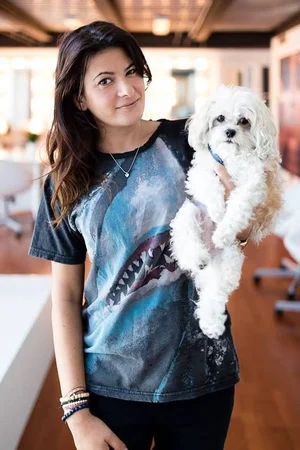
Leila Antakly is an independent cultural interviewer, editor, and founder of Antakly Projects, the platform she launched in New York in 2003 as Ninu Nina. For more than two decades, she has interviewed artists, musicians, photographers, designers, and creative thinkers across art, music, fashion, photography, film, and contemporary culture.
Her interviews are driven by curiosity, research, and direct conversation rather than celebrity, trend, or algorithm. Antakly looks for the people, ideas, and creative practices shaping culture, with particular attention to artists who deserve a deeper conversation beyond the usual press cycle.