Sabrina Charehbili Doesn't Photograph Answers
Sabrina Charehbili

Sabrina Charehbili will tell you, if you ask her directly, that she never chose photography to make beautiful images. She chose it because it taught her how to pay attention.
That distinction matters more than it might first appear. Charehbili is a Dutch-Moroccan conceptual fine art photographer, visual artist, and curator based in Rotterdam, and her practice has moved through two major bodies of work so far. El Ultimo Islote looked at plastic inside the landscape, not to make a statement about it, but to interrupt the way we look past it every day. Inherited Presence turns toward something closer to home: memory, Amazigh heritage, and the slow, unfinished work of belonging. It's currently on view as part of Les Rencontres de la Photographie, and you can see the exhibition details linked above.
What connects the two isn't subject matter. It's method. Charehbili doesn't arrive at a place with a shot list or a thesis. She walks. She waits. She lets a landscape reveal itself on its own schedule, and she treats the photograph less as a record of what she saw than as a trace of an encounter. We spoke with her about that process, about what it means to carry two cultures without treating either as fixed, and about why she'd rather leave a viewer with a better question than a tidy conclusion.
Sabrina Charehbili is a Dutch-Moroccan conceptual fine art photographer, visual artist, and curator based in Rotterdam. Her work moves from El Ultimo Islote, on plastic in the landscape, to Inherited Presence, on memory, Amazigh heritage, and belonging. See more of her work at sabrinacharehbili.com or @sabrina.charehbili.
Leila asksWho are you as an artist?
I often say that I did not choose photography because I wanted to make beautiful images. I chose it because it taught me how to pay attention.
Photography begins long before I lift the camera. More often than not, it begins with walking. I spend time in a place without expecting anything from it. I return, I observe, and little by little I begin to notice things that would have remained invisible had I arrived with a plan. Those moments have taught me that the world rarely reveals itself all at once. It asks for patience before it offers understanding.
Over time, I have come to realize that curiosity, not certainty, is what truly guides my practice. Earlier in my career, I sometimes believed I had to arrive with answers. Now I understand that the work only begins when I accept that I do not yet know what I am looking for. That uncertainty is not an obstacle. It is where discovery becomes possible.
Although I am a Dutch-Moroccan conceptual fine art photographer, visual artist, and curator based in Rotterdam, I have never thought of identity as something fixed. My Amazigh heritage has shaped the way I think about memory, cultural continuity, and belonging, but it has also taught me that belonging is not simply about where we come from. It is something we continue to build through the places we inhabit, the people we meet, and the stories we carry with us.
This understanding shapes the way I approach every landscape. I never arrive believing I already know what a place means. Instead, I try to listen before I interpret. I believe every landscape has its own history, its own rhythm, and its own quiet presence. My role is not to impose meaning upon it, but to remain open long enough for meaning to emerge.
I also believe an artwork is never completed by the artist alone. Every photograph begins with my own experience, but it only becomes complete through the experience of someone else. Rather than telling viewers what they should think or feel, I hope the work encourages them to slow down, to look carefully, and to discover something that belongs to them as much as it belongs to me.
If my work has a purpose, it is not to provide answers. It is to remind us that there is always more to see, more to feel, and more to understand than first appears. Sometimes all that is required is the willingness to remain present long enough for the world to reveal itself.
I did not choose photography because I wanted to make beautiful images. I chose it because it taught me how to pay attention.
Leila asksYour work has evolved from El Ultimo Islote to Inherited Presence. How has your artistic practice developed over time?
When I look back at my earlier work, I realize the questions have always been there, even before I had the language to express them. At the time, I believed I was photographing landscapes. Looking back now, I understand I was searching for something far less visible: the relationship between perception, memory, and the ways we connect to the world around us.
El Ultimo Islote marked an important turning point in my practice. Although the project centered on the presence of plastic within the landscape, it was never my intention to tell people what they should think about it, or to make a direct environmental statement. What interested me instead was the possibility of changing the way we look.
By photographing plastic in an unexpected way, I wanted to interrupt our automatic assumptions. Plastic is something we encounter every day, often without truly seeing it. Through these photographs, I hoped viewers would slow down, look more carefully, and begin reflecting on its presence for themselves. Rather than offering conclusions, I wanted the images to remain open, allowing each person to bring their own experiences, memories, and interpretations to the work. If someone walked away with new questions instead of clear answers, the work had achieved what I hoped it would.

Looking back, I realize this remains one of the foundations of my practice. I have never been interested in directing the viewer toward a single interpretation. Instead, I try to create photographs that remain open, works that invite contemplation and encourage people to discover their own meaning through their encounter with the image.
As my practice evolved, my attention gradually shifted from individual subjects toward the landscapes themselves. Instead of asking, "What can I photograph here?" I began asking, "What is this place revealing to me?" That subtle shift transformed the way I worked. Photography became less about recording what I saw and more about entering into a relationship with a place. It taught me that meaningful images emerge through patience, attention, and a willingness to listen before responding.
Inherited Presence grew naturally from that development. It brought me closer to questions of memory, Amazigh heritage, and belonging. Yet, as in my earlier work, my intention was never to explain those subjects or define them for the viewer. I wanted to create space for reflection, for people to encounter the work through their own memories, emotions, and experiences.
Looking back now, I realize the greatest transformation did not happen within the projects themselves. It happened within me. Earlier in my career, I sometimes believed I needed to arrive with answers. Today, I trust the questions far more than the answers. Curiosity has become my method, patience my discipline, and attentive listening the foundation of everything I create.
When I look across my practice today, I no longer see separate projects. I see different chapters of the same ongoing journey. Whether I photograph plastic, landscapes, or traces of memory, I continue to ask the same question: how can photography invite us to look more carefully at the world, and in doing so, discover something new about ourselves?
Leila asksCan you describe your creative process? How does a photograph come into being?
Every project begins long before I make a photograph.
It begins with spending time in a place without asking anything of it. I walk, observe, return, wait, and allow myself to become familiar with its rhythms. I do not arrive with a shot list or a predetermined image in mind, because I believe the strongest work emerges through encounter rather than control.
At first, I simply pay attention. I notice how light changes throughout the day, how materials respond to the weather, how silence alters the atmosphere of a landscape, and how places reveal different aspects of themselves depending on how long I am willing to stay. These observations are never separate from the work. They are the work.
People often ask whether intuition plays an important role in my practice. It does, but I do not think of intuition as something mysterious. For me, intuition develops through spending enough time looking, listening, and remaining open. It is a form of knowledge that grows through sustained attention.

I also believe every landscape has its own pace. Some places reveal themselves immediately, while others require patience. I have learned not to force that process. Instead, I try to work with the rhythm of a place rather than against it. Photography has taught me that waiting is often as important as acting.
When I finally make an image, I rarely experience it as the end of the process. It is simply the moment when everything I have observed, questioned, and felt comes together. The photograph becomes a trace of that encounter rather than a document of a particular location.
Editing follows the same philosophy. I return to the work repeatedly over time. Distance is essential, because it allows me to discover whether an image continues to speak or whether it only impressed me in the moment. I know a photograph is finished when it continues to hold my attention, when it still reveals something new each time I return to it, and when I begin to experience it with the same curiosity as someone seeing it for the first time.
Throughout this entire process, I try to resist the desire for certainty. I do not measure the success of a photograph by how accurately it explains an idea. I measure it by whether it creates space for continued discovery. If an image remains open, if it invites me to keep looking and allows someone else to enter with their own experiences, then I know it has become more than a photograph. It has become an encounter.
Ultimately, my process is not about producing images. It is about cultivating a way of paying attention. The camera is only one part of that practice. The real work lies in learning to remain present long enough for the world to reveal something I could never have planned.
Leila asksMemory, identity, and your Amazigh heritage appear throughout your work. How do these elements influence your artistic practice?
I have never experienced identity as something fixed or easily defined. To me, it is something that continues to evolve through memory, movement, and the relationships we build with people and places. It is less a destination than an ongoing conversation.
Growing up between cultures taught me that belonging is rarely as simple as geography. It is not only about where we come from, but also about where we feel recognized, where we listen, and where we allow ourselves to become part of something larger than ourselves. That understanding has profoundly shaped the way I approach my work.
My Amazigh heritage has given me a deep appreciation for oral histories, cultural continuity, and the ways knowledge is carried across generations. Yet its influence on my practice is rarely direct. Rather than illustrating my heritage, I allow it to shape the questions I ask, the sensitivity with which I approach a place, and the patience with which I allow meaning to unfold.
Memory has never interested me as something that belongs only to the past. I experience it as something alive, something that continues to shape how we inhabit the present and imagine the future. I often wonder whether landscapes remember us as much as we remember them.
That question has stayed with me for years, and it continues to influence the way I look, photograph, and reflect.

Perhaps that is why I am drawn to places that seem quiet or overlooked. They often reveal the deepest stories, not because they announce themselves, but because they ask us to slow down enough to notice them. I have learned that the most meaningful encounters rarely happen when I am searching for them. They emerge when I stop trying to control the experience and simply allow myself to be present.
Although my own history forms the starting point of my work, it is never its destination. The more deeply I explore my own experience, the more I realize the questions I am asking are shared by many of us. We all carry memories. We all search for belonging. We all try to understand our relationship with the places that shape us.
Ultimately, I do not photograph identity itself. I photograph the spaces where memory, landscape, and belonging meet. Those are the places where something essential quietly reveals itself, not only about who we are, but about how we come to feel at home in the world.
I do not photograph identity itself. I photograph the spaces where memory, landscape, and belonging meet.
Leila asksWhat do you hope people take away from your work?
I have never hoped that people would leave my work with the same conclusions I have reached. In fact, I believe a photograph becomes far more meaningful when it creates space for multiple interpretations rather than a single message.
If there is one thing I hope my work encourages, it is a different way of looking. We live in a world that often asks us to move quickly, to consume images almost instantly, and to make immediate judgments. My work asks for the opposite. It invites people to slow down, to remain with an image a little longer, and to notice what gradually begins to reveal itself through sustained attention.
I am less interested in providing answers than in creating the conditions for reflection. Every viewer brings their own memories, experiences, and perspectives to a photograph. That is not something I try to control. It is something I deeply value. The encounter between the artwork and the viewer is where meaning truly begins.
I also hope the work encourages people to reconsider their relationship with the landscapes they inhabit. We often think of landscapes as passive backgrounds to our lives, yet they constantly shape our memories, emotions, and sense of belonging. By paying closer attention to them, we may also begin to understand ourselves differently.
Although my projects emerge from my own experiences, they are never intended to remain personal. I hope they open a space where others can recognize something of themselves, not because our stories are identical, but because the questions we carry are often deeply shared.
Ultimately, I hope people leave my work with a greater sense of curiosity than certainty. If someone walks away looking at the world with a little more patience, paying closer attention to the places they pass every day, or feeling encouraged to embrace questions rather than immediate answers, the work has fulfilled its purpose.
For me, photography has never been about capturing the world. It has always been about learning how to be present within it. If that sense of presence can be shared, even for a brief moment between the work and its viewer, I believe the photograph continues to live long after it has been made.
Continue with Sabrina Charehbili
"I remain deeply grateful for the opportunity to continue asking questions through my work. Photography is not simply about making images. It is about learning to pay attention, to landscapes, to memory, to one another, and to the countless stories that quietly exist around us. If my photographs encourage even one person to slow down and look more carefully, I feel the work has already begun a conversation worth having. Thank you."
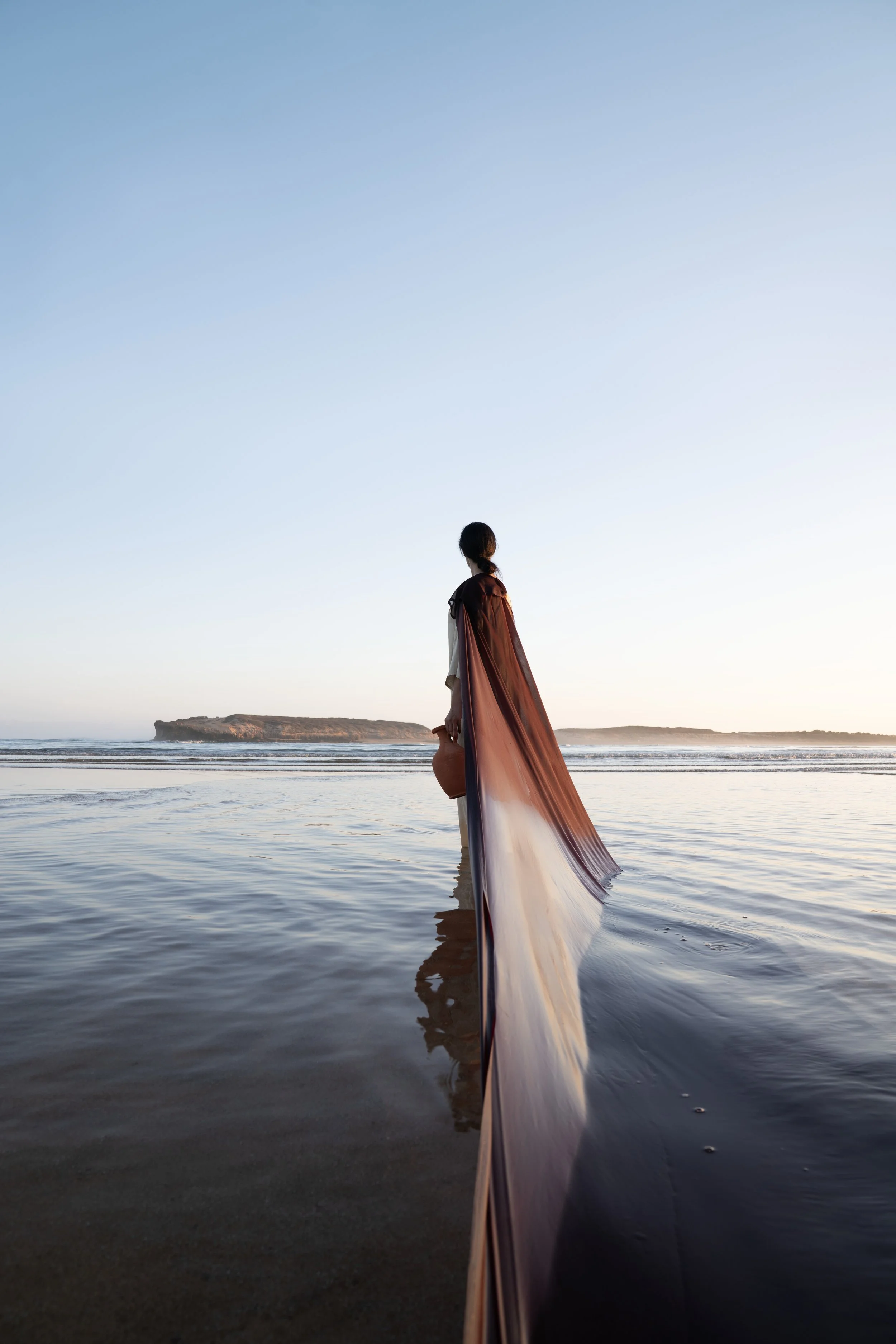
The Vessel, 2026
Inherited Presence
Oualidia, Morocco