
Mihika MeenaThe Unfiltered Soul of Indianness
Art director, storyteller, and founder of Laturia Shop. Born in the Meena tribal community of the Aravallis. Based in Jaipur, the craft capital of India.
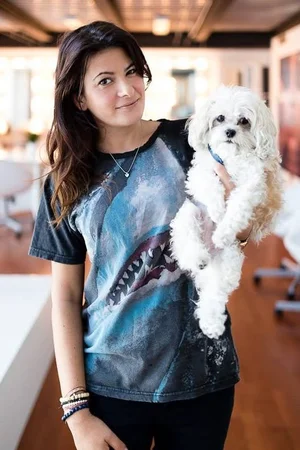
Long messy hair. Raw, unkempt, open, yet one of a kind.
Mihika Meena is an art director and storyteller born into the ancient Meena tribal community of the Aravalli mountain ranges in northern India, now based in Jaipur, working at the intersection of visual curation, craft research, and textile reimagination. Her agency anukrm, which she co-runs in Jaipur, works predominantly with craft-based brands in the city that is, by any measure, the craft capital of India.
Her personal project Le Laturia is a long-form investigation into Indian art, culture, and craft, built from years of research, travel, and a childhood spent between urban Jaipur and the villages of her extended family. She is also the founder of Laturia Shop, a small label that reimagines forgotten Indian textiles as contemporary clothing. Vintage saris become bomber jackets and miniskirts. The studio is in Jaipur's Santha Bagh hotel, by appointment only.
What does your work aim to say or do?
It mostly celebrates Indianness and the beauty in everyday things around us in this country. Born in the culturally rooted local tribal community amidst the Aravallis, and fortunate enough to have travelled the world, the unfiltered soul of Indianness is what keeps bringing me back.
Le Laturia is my journey towards exploration, curation, and creation of Indian art, craft, and culture, and bringing them to the forefront through building an understanding of their history, significance, utility, and visual aesthetics.
Tell us about your greatest inspirations and influences.
I find inspiration from everyday things around me. Living in the culturally rich landscape of Rajasthan and growing up around it, everything is super inspiring. It is the people of India, the traditions, the decorations, the jugaads (make-shifts), the everyday practices, small beliefs, the places of worship, the bazaars, the local homes, the local food and clothes, the simpler things that inspire me.
"One of my greatest influences has to be my mother. She would take me to the local market every week, to small lanes and smaller shops, and find the most beautiful, unique and artistic things there. She and her journeys have a great contribution to how my personal aesthetic shaped."
Even now, I discuss most of my ideas and work with her for feedback.
Tell us more about your creative process.
My creative process involves a lot of conversation and a lot of research. It derives from the personal work I do, my travels, my explorations. When I have an idea or am given a project, it is a reflection of everyday, simpler, mundane things that I find beauty in, which is then mixed with more elements.
The props and elements I use in photoshoots are mostly sourced locally from either where the shoot is being planned or where it takes inspiration from. Location is an integral part of my shoots: it has to be somewhere quaint, unexplored, very local. I involve a lot of local communities and people in my production, as they have a unique perspective.
Most times the final work is a lot more than what I imagined as an idea. It is a melody of everything I experience from start to finish: the people I met, the culture I came across, the conversations and so much more.
How is technology affecting your work as a creative?
The digital movement has been great and has opened a lot of avenues for artists. We can be at the end of the world and be working with someone on the other end. Everything we are thinking, creating, living can be shared, and there is an audience for each one of us.
Although technology has opened a whole new world, sometimes it gets difficult to make authentic art reach your relevant audience. It is cluttered with so many things, art and artists, some original and some not so much.
What does wellbeing mean to you?
Wellbeing is being healthy and happy. I practise meditation and yoga regularly. I make sure to disconnect from digital life every now and then, surround myself with nature, family, and dogs. Finding the joy in simpler things, slowing down, giving my mind the time and space to relax. That is what keeps me sane.
Forgotten Indian textiles reimagined as contemporary clothing.
Mihika is currently working on a small batch of textile-centric contemporary clothing using local textiles: vintage saris becoming bomber jackets and miniskirts, the blingy ceremonial fabrics from the back of someone's grandmother's closet finding a new body to live in.
India has an abundance of textiles, and an abundance of forgotten ones. The label is not about revival in the nostalgic sense. It is about finding what was always beautiful and making it wearable now.
When asked who she hopes to see her clothes on: "Diljit Dosanjh, hands down. Erykah Badu. Artists from the Indian diaspora like Rajakumari or Neelam Gill. And Jackie Shroff and Dimple Kapadia. They are legends."
Who she hopes to see in Laturia Shop clothing:
Stay curious,

Photography and Art Direction