Ianko López: Not a Journalist, Not a Critic
The Madrid art writer on Proust, a book he wished he had written, Theodora of Byzantium, and why the city’s best culture runs on guerrilla means.

“I am not an art critic either, although I would like to write about art the way Marcel Proust does.”
Ianko López, to Antakly Projects
Who he is
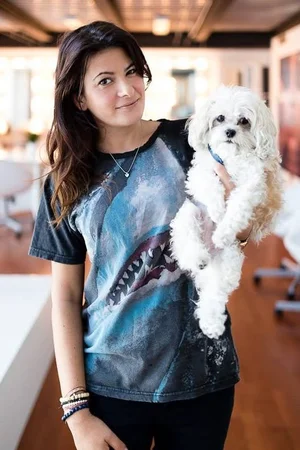
Ianko López writes about art and culture for El País, including its men’s magazine ICON, and for Vanity Fair Spain. He is from Bilbao, has lived in several countries, and is mostly based in Madrid. He came to the subject sideways: he studied business administration first, and turned to art history later.
That route shows in how he writes. He told us he doesn’t think of himself as a journalist and avoids the clichés of the trade, preferring a conversation that reads like a chat over a canonical interview. His touchstones are writers who also stood outside journalism: Truman Capote, David Foster Wallace, and above all Proust.
We first spoke during the pandemic. His answers still hold, and his list of icons, which runs from Amanda Gorman to a sixth-century empress, may be the best we have ever been given.
Your greatest inspirations or influences?
I find it difficult to define my influences. To begin with, although I write in the media, I do not usually define myself as a journalist, not only because I did not study journalism, but also because I never visit the newsrooms and I pay no attention to many of the standards by which journalists should be guided. Many times I consciously try to avoid the journalistic style, which is often stuffed with clichés and banalities. For example, when I write a conversation I try to make it look more like an informal chat than a canonical interview.
That is why perhaps my influences come from outsiders of journalism, such as Truman Capote or David Foster Wallace, although in practice I have not been required to write in the corrosive tone of these authors. I am not an art critic either, although I would like to write about art the way Marcel Proust does in In Search of Lost Time. And Proust was certainly not a critic either.
I also recently read a book called The Optic Nerve, where the Argentine writer María Gainza does something similar. When I first read this book I felt it was something that I would have liked to write myself, which made me feel both hostility and admiration towards its author (laughs). So the most reasonable thing is to consider it an influence too.
In art, I am fortunate to find inspiration everywhere, from archaic Greek sculpture to the work of the Spanish artist Elena Asins to El Greco, Watteau, Klee or the Dada movement.
How has this year changed you, or how you see the world changing?
Maybe it’s too early to say. What I do realise is that at the beginning of the pandemic, in the phase of the hard lockdown, I was commissioned to write a series of pieces about paintings for Condé Nast Traveler, and I naturally used an emotional tone, though I have always avoided sentimentality. Reviewing those articles afterwards I felt alarmed or even embarrassed, so I guess the change was temporary, not permanent (laughs).
As for the general changes in the world, at the moment I can only point out things that are quite obvious, such as the rise of virtual media, the acceleration of the online market and the need to invent exchange contexts different from traditional face-to-face markets. However, I still think that the face-to-face factor is essential in art.
An icon of our time?
If the question is who most clearly represents and embodies the majority values of the present, my answer might be Amanda Gorman. Being optimistic, of course. But if the question is rather who has an iconic value for me, I am not sure. I have had the filmmaker Pedro Almodóvar as a reference for many reasons, and he has also managed to have a quite relevant iconic value himself. Other than him, most of my icons are not modern-day people. Is it OK if I mention Theodora of Byzantium or Madame de La Fayette?
Antakly ProjectsAbsolutely, Ianko.
How do you see the cultural life of Madrid changing?
This is a very interesting question. The changes are very clear, but what is more difficult to anticipate is whether those changes will be permanent or not. On the one hand, I find that the most culturally interesting things that have happened in Madrid come from small private initiatives, with modest, almost guerrilla means.
On the other hand, there are some big public institutions that still work very well, such as the Reina Sofía Museum or the Teatro Real, for whose existence I give thanks every day, since they have contributed a lot to my well-being in these times when leisure and other ways of releasing energy are so diminished. I also believe that one of the greatest cultural assets of Madrid, not appreciated as it deserves, is its art galleries, where you can have access to the art of our time.
His references, in pictures
A filmmaker, an empress and a novel he wished he had written: three of the touchstones he named.


What he’s been doing
- OngoingStill writing art and culture pieces for El País and ICON, and for Vanity Fair Spain.
- August 2023In conversation with the British sculptor Thomas J Price at Hauser & Wirth Menorca.
- October 2026Recent bylines include an interview with Miguel Zugaza, director of the Museo de Bellas Artes de Bilbao, for Vanity Fair Spain, and a profile of hotel designer Pierre-Yves Rochon for El País.
Elena Asins, whose work he stands in front of above, died in 2015. Born in Madrid in 1940, she was one of the first generation of artists to use computers to generate art; the Museo Reina Sofía gave her a major retrospective in 2011.
Recommended reading
Questions
Who is Ianko López?
A Madrid-based cultural journalist and art writer from Bilbao. He studied business administration and later art history, and writes for El País (including ICON), Vanity Fair Spain and Condé Nast Traveler Spain.
Which book did Ianko López name as an influence?
El nervio óptico by the Argentine writer María Gainza, published in English as Optic Nerve, translated by Thomas Bunstead. He said it was a book he wished he had written himself.
Who was Elena Asins?
A Spanish artist and writer (Madrid, 1940 – Azpirotz, Navarra, 2015), one of the first generation of artists to use computers to generate art. The Museo Reina Sofía gave her a major retrospective in 2011.
What does Ianko López think of Madrid’s cultural life?
He told us the most interesting things in Madrid come from small private initiatives with almost guerrilla means, that public institutions like the Reina Sofía and the Teatro Real still work very well, and that the city’s galleries are its most undervalued cultural asset.