JoeSturges
A self-taught drummer and composer from Madrid who writes down the story before he writes the song.

We published this conversation on 20 April 2020, in the middle of Spain’s lockdown. Joe had just released his first EP into a world where nobody could go to a concert. His last answer has stayed with me ever since: that artists are necessary “not only for spectacle and entertainment, but for living.” That spring, when all of us were getting through the days on books, films and records, it sounded obvious. Six years on, it sounds braver.
He also told us that Ryuichi Sakamoto was his biggest influence: an artist for whom every project meant something, in a time when songs are forgotten two weeks after they’re released. Sakamoto died in 2023. Reading Joe again, I hear the same instinct: to work slowly, and only make the thing when you know what it has to say.
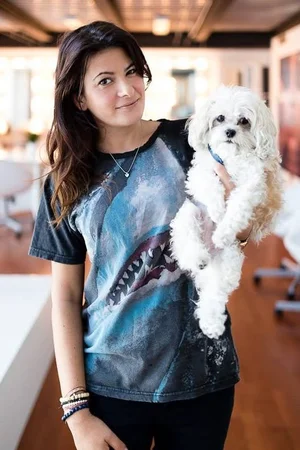
Leila Antakly · Founder, Antakly Projects
Artists are
necessary
Tell us about yourself, Joe.
I started playing music when I was very young; I got my first drum kit at about four years old. After some days I broke it from playing it too much, but I always felt a very strong connection to music, playing games with myself trying to recognise songs just from the intro chords, or guessing the tunes that played in all the shops and places in the background everywhere I went.
At 12, I got a ridiculous toy-like electronic drum kit, and then after much practice I got an acoustic one. From that point it was endless hours of practice, gigging, more practice, and eventually composing and writing my own music. I released my first EP, Awareness, this April.
Highlights?
Learning from both Paul Stocker and Javier Vercher. Paul Stocker was my mentor for a couple of years when I was eighteen, and I met Javier Vercher while doing my master’s degree. Both are master saxophone players and musicians who have deeply influenced me, as a person and as a musician, with their stories, philosophy and energy. I was honoured to have Vercher play on one of my compositions on the EP.
Greatest inspirations or influences?
Ryuichi Sakamoto has been my biggest musical influence. I feel very connected to his music and to his approach to creating art in general. He is an activist and an explorer of sounds, and I feel all of his projects have a deeper meaning that correlates to him as a person. I find that admirable in these non-stop creative times, when a million new projects and songs come out every day and are forgotten a couple of weeks later when the next big thing is released.
I also get a lot of inspiration from chefs, architects, writers: honest creators in general, and most importantly, good people.
“If I don’t know the meaning fully, it’s rare that the song gets finished.”Joe Sturges
Tell us about your creative process.
It’s very slow, and I am still searching for the trigger that makes it all click. When I compose, the process is very much story-driven. It usually begins with the typical phone recording, then sitting down at the piano, but it’s not until I realise what I want to say with the song, what specific story or memory I want to tell with the music, that the process comes together.
With “Summer,” a track on the EP, I knew it was going to be about being too worried about day-to-day struggles to enjoy living in the now. To tell that story in a more defined way, I wrote a couple of paragraphs of text, really explaining the meaning to myself, and this gave me a lot of insight into the sections and parts of the composition. If I don’t know the meaning fully, it’s rare that the song gets finished, and writing down on a piece of paper what I want to say usually makes every section of the song much clearer and easier to compose.
How do you think the creative industry will be affected by the current situation?
Who can really tell how everything is going to change after the pandemic is gone. I only hope people are starting to appreciate, first, that the health system and the people working in it are deeply unappreciated, and second, that artists are necessary too, not only for spectacle and entertainment, but for living. I’m sure no one has spent their isolation without reading a book, listening to an album, watching a movie, and so on.
Joe Sturges on Spotify
Two EPs, two stories
Awareness
Four tracks, seventeen minutes, recorded at Jazztone Studios in Valencia. The title is his own instruction to himself: be present, live for the now. Javier Vercher plays tenor saxophone on “Near a Cherry Tree,” and Joe moves from drums to piano on “Three Days Under a Moon.” All About Jazz called it an accomplished debut of real emotional depth.
- Awareness
- Near a Cherry Tree
- Three Days Under a Moon
- Summer

Cabin Bound
The first record by Joe and the guitarist Lucas de Mulder: four instrumental songs, each in a different style, all with a cinematic feel. The drummer who writes stories down before he plays them, working with a guitarist on music made to be pictured.
Influences
Madrid, by way of everywhere
Joe Sturges is an Anglo-Spanish drummer, multi-instrumentalist and composer, born and based in Madrid. He is self-taught, and found his sound by playing and touring across jazz, hip hop, folk and classical settings. Alongside his own records, he writes for film and video games and plays with artists including Lucas de Mulder, Trinidad Jiménez, Javier Vercher, Omar Alcaide and Sara Sístole.
More music from the archive
Curious about their work, not the moment.
Leila Antakly founded Antakly Projects in New York in 2003, as Ninu Nina. For more than twenty years it has published conversations with artists, musicians, photographers, designers and thinkers across art, music, fashion, film and contemporary culture.
Interviews are chosen through curiosity and research, not celebrity, trend or algorithm, with particular attention to artists who deserve a deeper conversation than the usual press cycle allows. The archive asks how people think, what shapes their work and where their ideas sit in a wider cultural conversation, not simply what they are promoting.