LeilaAntakly
You hear it first.
A conversation with my sister, who built a platform out of genuine curiosity, an MTV-era obsession and an unshakeable belief that connection is everything.

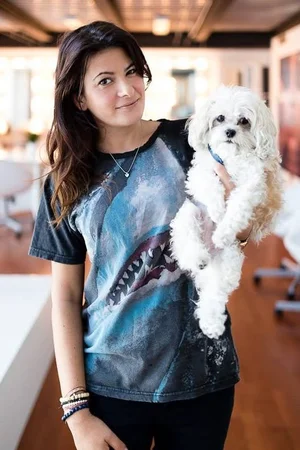
My sister Leila never set out to build one more blog or one more arty website. What began as a hobby, a way to celebrate the creative people in her orbit, slowly and quietly grew into something far more enduring.
Ninu Nina, the platform she founded and now calls Antakly Projects, is equal parts editorial journal and love letter: to the artists, photographers, designers, activists and changemakers she finds inspiring. Early-career creatives, bold ideas, strong visuals. Before the algorithm decides what’s relevant, before the industry decides what’s important, she is already paying attention and asking questions.
Her motto, “you hear it first,” borrows the name of MTV’s old showcase for new artists.

The MTV kid
“I’ve always been obsessed with music, MTV and music videos. Kids in my class wanted to be lawyers and doctors, but I wanted to be a video director. Working in editorial has somehow allowed me to be a part of this creative world.”
Leila AntaklyLondon, early 90s

“As a teenager you’d find me hanging out here in awe, watching and listening to DJs.”
Unity Records was born out of the ashes of Red Records on Beak Street in the early 90s, and in Leila’s telling it was the underground dance record shop in London: the place for the latest rave, jungle and drum & bass, house, garage, soul and funk.
She was at boarding school in the UK, and her friends there shaped her taste in music and pop culture. “Growing up in the UK at that time,” she says, “was amazing.”


The magazines of the moment
If you want to know where Antakly Projects got its taste for covers that shout and pages that argue, start here.
Mix and match
Leila says her influences resist easy categories. Music spanning genres, eras and moods sits at the centre, orbited by a deep reverence for nature and an eye for fashion that is anything but conventional. She loves brands that treat clothing as art, and independent designers who put craft above everything else.
“Gothy sweaters and Cacharel flower-print shirts. I have a weird style combo, and I don’t take it too seriously, because fashion should be fun.”

What do you think of the concept of influencers?
“I am allergic to the words algorithm and influencers.”
So whose style inspires you?
“Long list! 80s Madonna: I love every look of hers from that time. I love the style of the Missoni family, all of them! All New Yorkers inspire me. I just love going outside and walking; everyone I see inspires me. And people who embrace their uniqueness and who don’t take themselves too seriously!”
And brands?
“Part of style is being able to explore, mix and match, and let your personality shine through. You can’t just go into a store and dress in a brand from A to Z. How boring is that? Or hire a stylist to tell you what to wear? Hmm, no thanks.”
“I’ll never forget seeing mom in a red Ferrari racing tracksuit with heels. She looked absolutely spectacular.”Leila, on her mother’s style in the 80s
New York shaped her fashion sense in ways she traces to specific people: the stylist Camilla Nickerson at Vogue, and the legendary Patricia Field, with whom she worked on editorial productions more than once. She applies the same rule to art: “I’d rather buy or collect photography than fashion. Forget what the industry tells you is valuable. Always buy things you love that speak to you.”
Designers she champions

The director who never was
Had things gone differently, Leila might have been calling the shots on a music video set. Her north stars are the directors who turned the music video into a visual art form in the late 80s and 90s. Their work still shapes how she thinks about imagery, storytelling, and the relationship between sound and vision.
Her path curved through film production instead, landing her on projects she describes, with characteristic self-deprecation, as “among the worst-rated on Rotten Tomatoes.” She speaks of that time not with embarrassment but with pride: the pride of doing the work, of being inside the machine, of learning what she loved up close.
- Mark Romanek
- Anton Corbijn
- Floria Sigismondi
- …and many more
“I love the arts, and photography in particular. Working in film production, even awful ones, has helped me develop an eye.”
How it works
Ask Leila about monetisation and she deflects cleanly. That has never been the point. The platform has stayed ad-free by design, so every editorial decision comes from genuine interest rather than commercial obligation. “There are no sponsored features,” she says, “no brand arrangements colouring the coverage.”
Find them
“Most of the time I interview friends. More recently artists introduce their work by email or through their PR agency.”
Take note
“Or I’ll come across their work at a gallery, a fair or while travelling. I’ll just take note of their name and randomly message them.”
Do the research
“I love doing my research before starting an interview. Connecting is very important, and having intentional questions ready in advance.”
Let them answer
“I much prefer to meet in person, but most of the time I send questions by email so they can answer when they have the time.”
The interviewer
The person asking the questions on this page isn’t new to it. Manuela has been interviewing for the site since 2009, starting with Washington DC’s dance scene, and later wrote about her own obsession. Three pieces from her archive:
 January 2009 · Interview
Nadastrom
The DC duo of Dave Nada and Matt Nordstrom. Nada went on to help create moombahton, the sound NPR would call “born in D.C., bred worldwide.”
June 2009 · InterviewNouveau Riche
The DC DJ collective who met at XM Radio and won City Paper’s Best Dance Party of 2008. “They paced the night like a story.”
 August 2019 · Essay
My Sunglasses at Night
“Some people have an addiction for bags and shoes. Mine are sunglasses.”
It will keep growing the way it always has: by word of mouth, on its own terms, led by my sister’s curiosity. The rule is simple. If it’s worth her attention, it’s worth a feature.
Manuela AntaklyQuestions
Who is Leila Antakly?
The founder and editor of Antakly Projects, formerly Ninu Nina, an independent, ad-free platform of interviews with artists, photographers, designers, musicians and changemakers. She went to boarding school in the UK, worked in film production, and draws much of her style from New York.
Where does the name Ninu Nina come from?
It borrows from the late-1970s Robin Williams sitcom Mork & Mindy and plays on niño and niña, Spanish for boy and girl.
Does Antakly Projects publish sponsored content?
No. The platform is ad-free by design, with no sponsored features and no brand arrangements shaping the coverage.