Tuğçe Arıöz: The Art of Imperfection
Tuğçe Arıöz and the
Art of Imperfection
On documentary eyes, quantum physics, and pushing AI toward error.

Tuğçe Arıöz, performance still. Courtesy of the artist.
Tuğçe Arıöz doesn't split her life into before and after AI. Trained in art history at Hacettepe University, she came up through documentary filmmaking and art direction before oil paint, digital collage, and video became her working vocabulary. Now artificial intelligence has entered that vocabulary too, not as a shortcut, but as another way of asking the same old questions: what is real, what is memory, what gets left behind when a story is told.
That's what makes her work feel urgent right now. We're all trying to figure out what AI actually is to us, a tool, a collaborator, a threat, a mirror. Arıöz has already been living inside that question for years. She uses AI the way she uses oil paint or a camera, picking it up when it serves the image and putting it down when it doesn't. She pushes it toward error on purpose. She's not interested in what the technology does perfectly. She's interested in what happens in the gap between her intention and its accident.
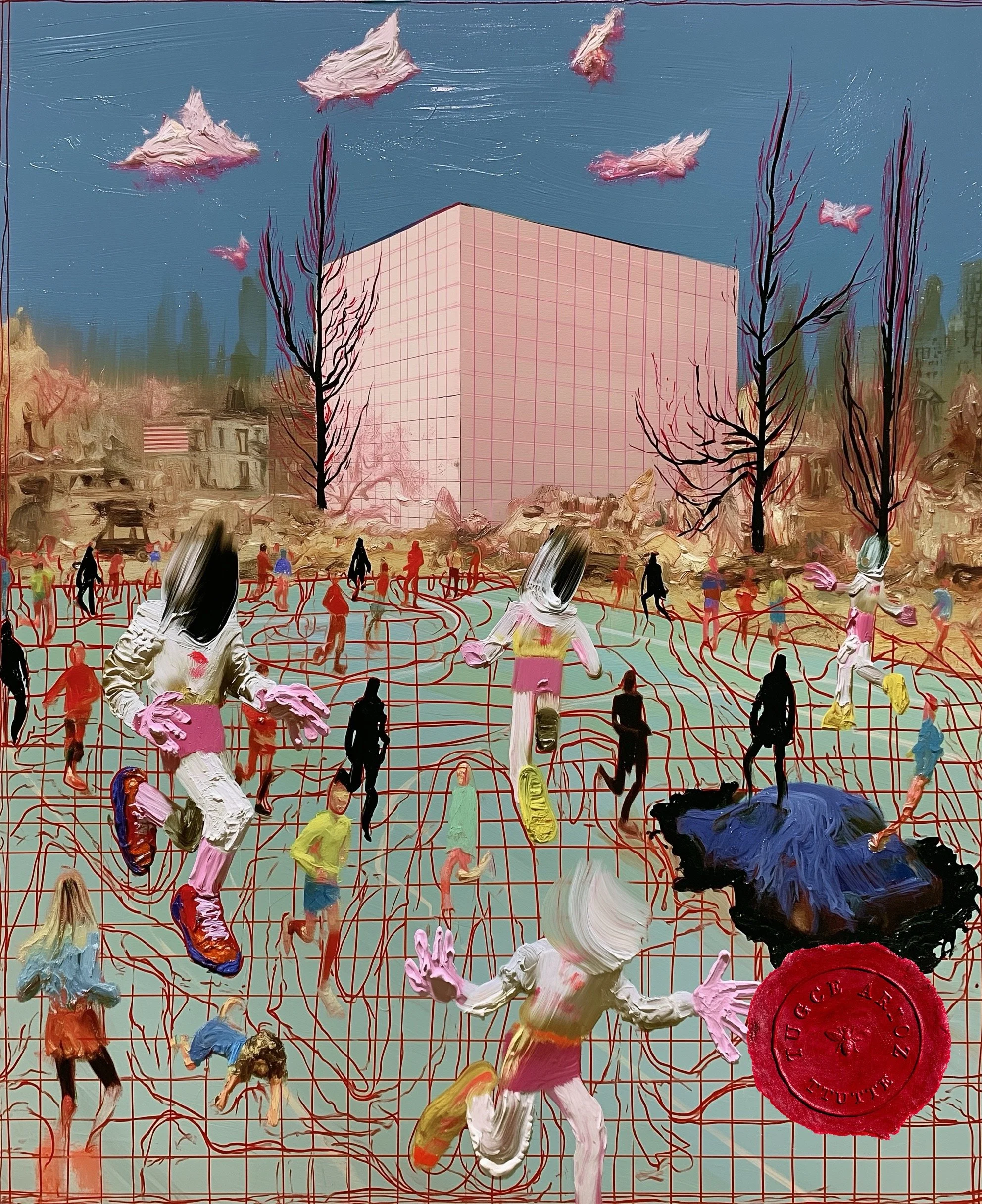
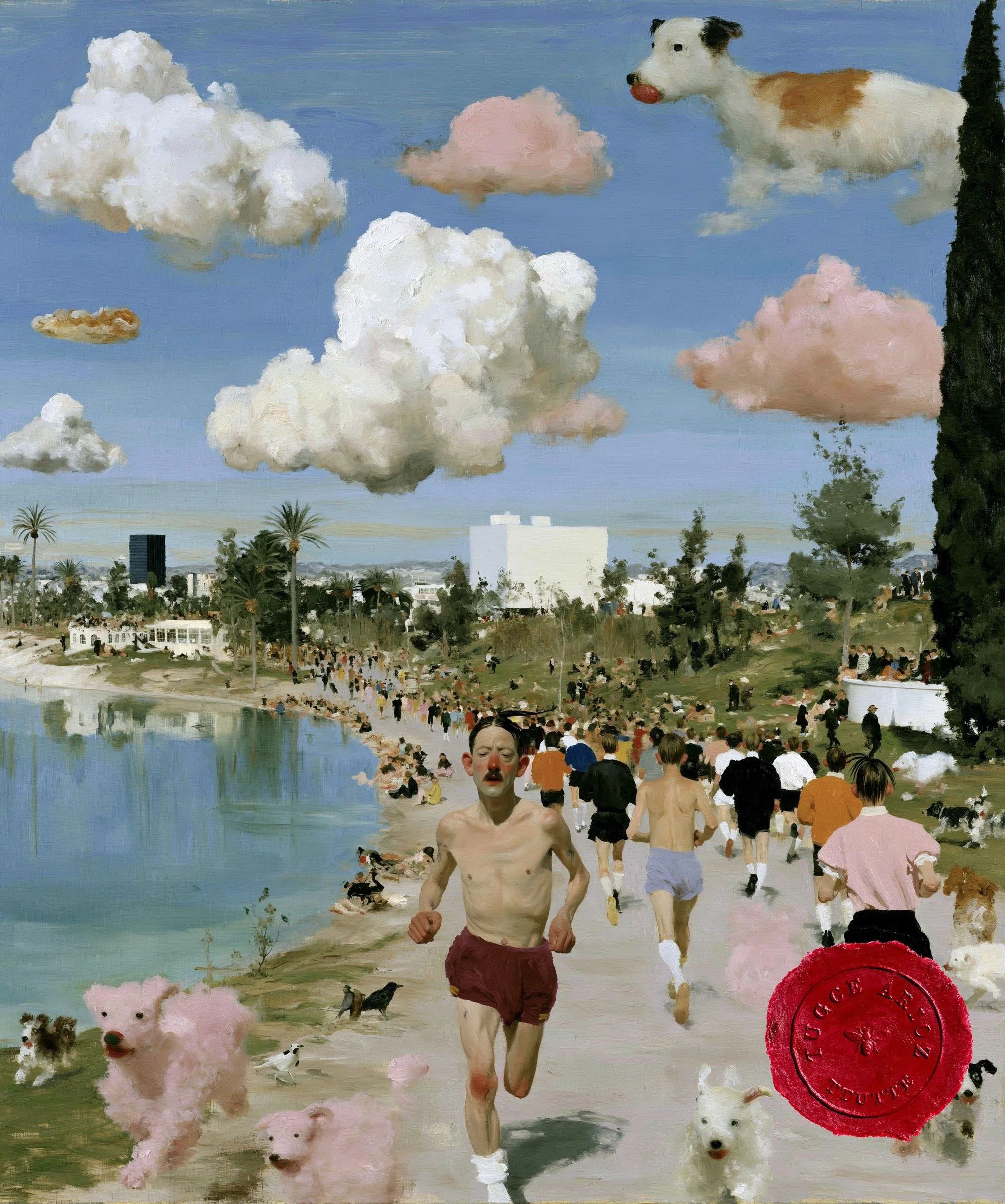
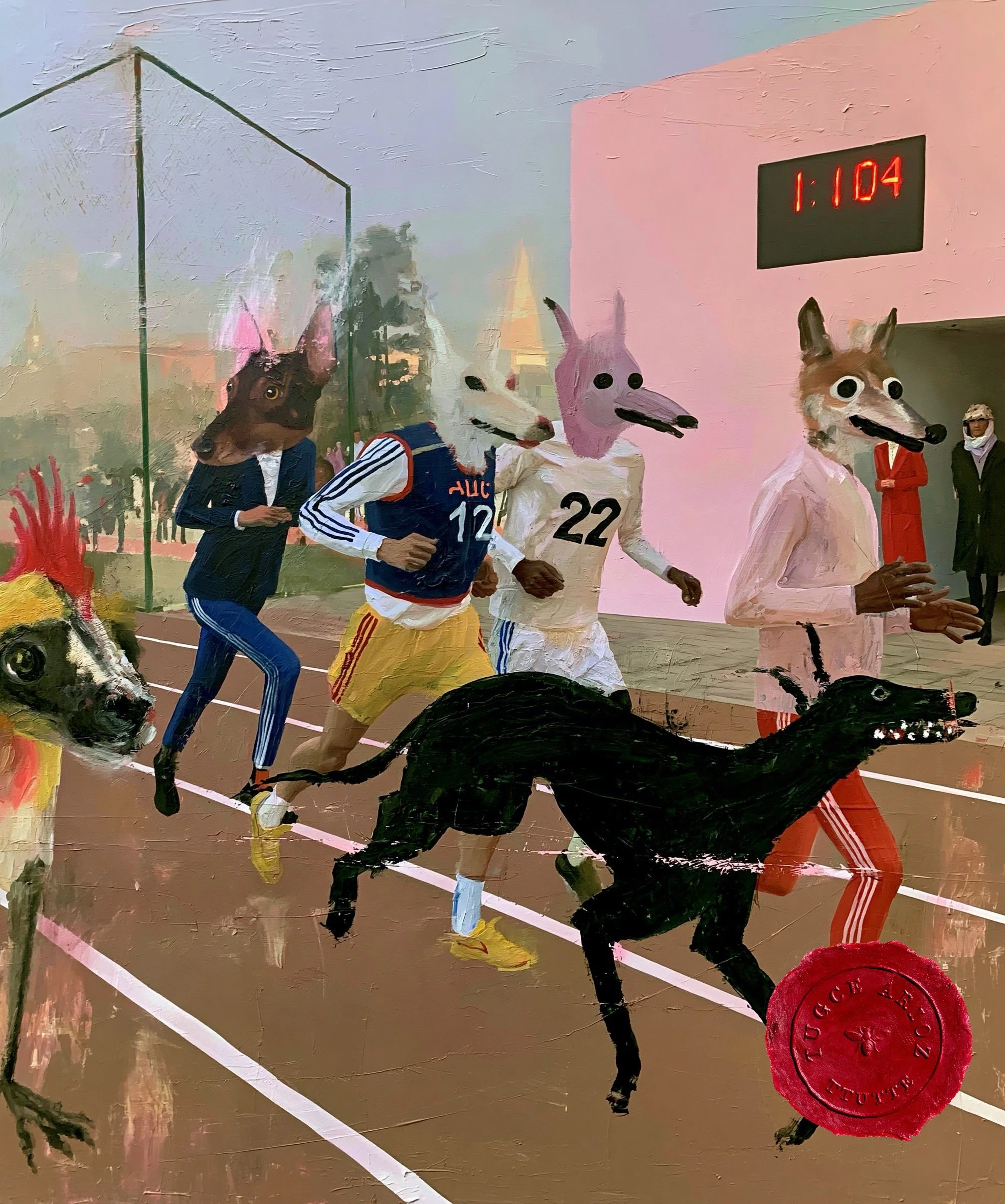
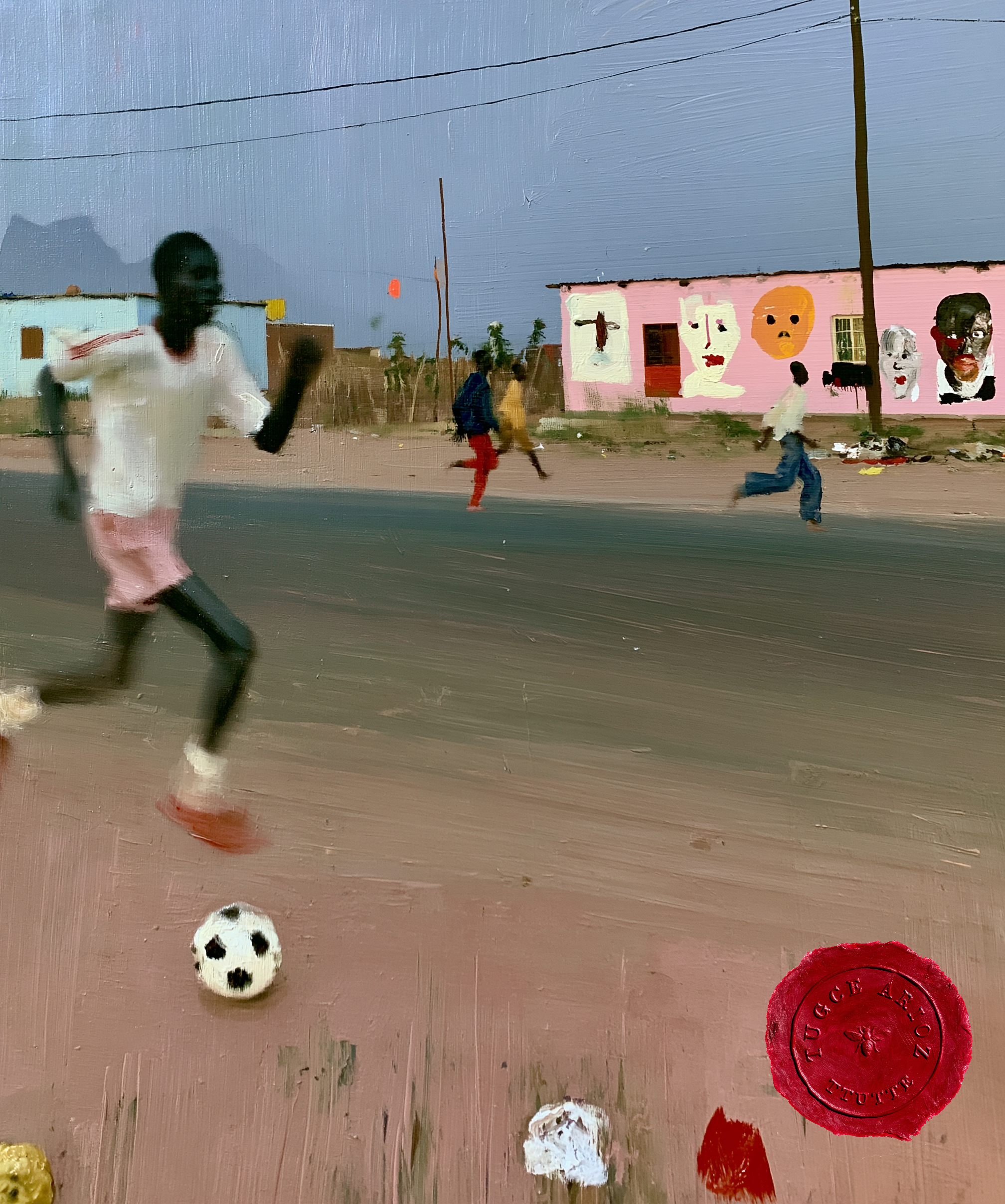
Her work pulls from quantum physics, Sufism, sociophysics, and her own Circassian heritage, not as concepts to illustrate but as ways of seeing that all seem to end up in the same place. She calls this the Art of Imperfection: looking at something without hunting for what's wrong with it. In a moment when so much art made with AI chases polish, Arıöz is doing the opposite. She's chasing the crack in the image, the place where control runs out and something truer slips through.
A Circassian-Turkish artist working across oil painting, digital collage, photo manipulation, and video. Her first solo exhibition ran for six months at Digitaliseum in Malmö, Sweden, followed by an artist talk at Malmö University and growing interest from Paris and Rome.
I don't really see documentary filmmaking as a different way of looking that art history failed to teach me. Quite the opposite: I think it was the layered perspective I gained through art history that led me toward cinema, documentary, and art direction in the first place. It taught me to look not only at what an image shows, but behind it, beside it, into its history, its iconography, and the world of thought it belongs to.
Cinema and documentary took all of that and put it into motion and time. Constructed narratives, things that seem possible, or completely impossible, to bring together, coincidences, spaces, people… watching them become a living work, even if only for a few minutes, felt like testing what I had learned in art history in another field. If art history taught me how to read the layers of an image, cinema showed me how those layers begin to live when they encounter one another.
I was feeding my own practice even while documenting other people's stories, so there was never a clear division between "their stories" and "my images" for me. This may sound a little strange, but rather than separating stories from one another, I learned to look at myself through them, and at them through myself.
Over time, this developed into a kind of cinematic eye, and eventually I began to see this way not only while making work, but in everyday life. People, places, documents, encounters, small details belonging to other lives… I saw them less as separate stories and more as fragments that could acquire meaning at different moments and attach themselves to one another.
So there was never a particular moment when I could say, "I stopped telling other people's stories and started telling my own." I think my own images had been slowly forming, from the beginning, out of all those other stories I had been looking at.
I think my native language is not a medium, but the image itself. When I think of something, I don't begin by classifying it as "oil painting" or "digital." First there is an image, an atmosphere, sometimes a small detail, or simply a feeling. Then I see what it needs.
I don't really think of myself as translating between mediums either. I use them more like different words in the same sentence. Something that begins in oil paint might move into photography and then digital manipulation; something formed digitally might lead me back to a physical intervention. Sometimes movement becomes necessary, and the work turns into video.
Technique is not an identity that comes before the idea for me. So if I had to name a "native medium," my answer wouldn't be oil painting or digital, it would be my way of seeing. The mediums change; the gaze remains.

When I first encountered AI, it didn't feel as though I had encountered something entirely foreign. I had already been interested for a long time in possibility, the unseen, the strange ways people and societies behave, and how unstable what we call reality can be. AI found a very natural place within all of that curiosity. Maybe that's why I never saw it as a technology suddenly added to my practice, but as a new door into questions I was already asking.
So I don't see it entirely as a collaborator, nor simply as a tool I direct. I bring it into the process when I want it there and take it out when I don't. I disrupt it, push it toward error, and reconstruct what comes out through other mediums. Its capacity for perfection doesn't interest me very much. I'm much more interested in what can happen somewhere between control and chance.
And I don't think of it as a "borrowed subconscious" either, perhaps the opposite. It has become one of the places where I can most freely externalize my own subconscious. I can confront things that have been moving around in my mind for years, things I sometimes couldn't find an image for, in entirely different forms. Maybe that's what excites me most about it: working with a very new technology somehow keeps bringing me back to very old questions.
"Its capacity for perfection doesn't interest me very much. I'm much more interested in what can happen somewhere between control and chance."
Tuğçe Arıöz, on working with AII think I began to notice it as my work started to resemble me more. I never consciously intended to bring quantum physics, Sufism, sociophysics, or existence together. They were simply things that gradually found their way toward one another.
A sentence I write beneath a work, the exact time I choose to share it, the music I choose, a color, the state of the moon that day, an intention I'm carrying inside, even the lady next door… Somehow, in my world, they can all meet in the same place. I'm constantly making connections between things that seem unrelated. I think my work thinks a little like that too.
For a long time, I thought this was a private language that only I understood. But sometimes I receive a message from someone who has felt something I never explicitly put into words. In those moments, the work feels a little more like me, and I recognize a little more of myself in it.
I would choose a figure of mine with one ballerina leg and one horse leg, with golden blood running down from the horse leg. But I don't want to say what the imperfection is in that work. Maybe, for me, Art of Imperfection is exactly that: looking at something without searching for what is wrong with it. I never saw that figure as a body that needed to be corrected. To me, it is already exactly as it should be.
I think excitement. Mystery can hide inside an image, and humor can slip into the smallest detail, but excitement is something very alive and immediate. Maybe I can freeze the excitement I feel while making a work inside the image, but I have no control over whether it will come alive again when someone I've never met stands in front of it months or years later. So when someone looks at my work and somehow feels a fragment of the excitement I once felt, I still find that incredibly strange.
There was a period when something very strange started happening. I would make certain works, and then the images or situations inside them would appear in my life, sometimes shortly afterward, sometimes much later. I don't mean this literally as prophecy; it was more like encountering something in real life that I had already constructed inside an image. They were very strange experiences.
And then there were other works I had made that everyone found sweet, even adorable, but I physically couldn't look at them. They made me nauseous. Some of them genuinely put me in bed, and there are still works I find difficult to look back at. And I was the one who made them.
I think a djinn got into them somewhere. ((;
My Circassian heritage is an explicit part of my identity as a woman and of my family history, and I like acknowledging that. But when I look at my work, I don't think I see a directly Circassian trace or a consciously Circassian iconography.
What is interesting is that it appeared not so much in my images, but in the place I chose in order to make them. Some time ago, I moved my studio to the Circassian village where my grandmother lived. It is surrounded by nature, it is where I feel good, and it is now where I live. It feels as though my roots and my dreams called me back here.
And since I began living here, I genuinely feel that I make better work. Maybe my Circassian heritage doesn't appear literally inside the work, but perhaps it brought me back to the place where the work could emerge.
I think I have to distinguish between the audience and the structures that create space for the work to meet that audience. In Turkey, I have people who have followed my work for years, who have lived through its changes and evolution alongside me, and who know the way I think. The communication I have with them is completely different and very close to me; sometimes they can sense where a work came from without my having to explain why I made it.
But there is another side to it. While in Turkey I have so far mostly participated in group exhibitions, it was in Europe that people who had been following my work from afar offered me the space for my first solo exhibition. I was invited to Malmö for a solo exhibition that ran for around six months, and that experience eventually led to an artist talk with Malmö University. Over the last two years, I have also been receiving interest and invitations from Paris and Rome.
So I can't really say with certainty how my symbols are read differently in Sweden, France, or Turkey. Having an audience in Turkey that has walked alongside me for years is one thing; having people in Europe discover me from afar and give me a space in which I can build my own world is another. Both are very precious to me.
I think I'm most influenced by the things I can't make sense of, because I already know what to do with the things I understand.
I think the biggest turning point was realizing that I had stopped making my work around my life and started building my life around being able to make my work.
I'm curious too. There will be new exhibitions, of course. Maybe I'll join an artist program in Europe and spend some time making work there; maybe I'll go to the Arabian Peninsula and breathe in an entirely different atmosphere. Right now, all of these possibilities are circling around me. I think I'll step into one of them and see where it takes me.
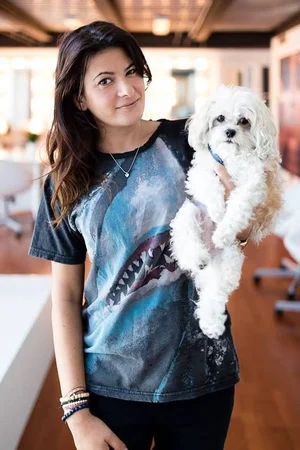
Leila Antakly is the founder of Antakly Projects, the platform she launched in New York in 2003 as Ninu Nina. For more than two decades, the platform has featured interviews with artists, musicians, photographers, designers, and creative thinkers across art, music, fashion, photography, film, and contemporary culture.
Interviews are driven by curiosity, research, and direct conversations rather than celebrity, trend, or algorithm. Antakly looks for the people, ideas, and creative practices shaping culture, with particular attention to artists who deserve a deeper conversation beyond the usual press cycle. The Antakly Projects archive documents creative voices across generations, disciplines, and cities, focused not simply on what someone is promoting, but on how they think, what influences their work, and where their ideas fit within a larger cultural conversation.
Tugce Arioz Video