Sofiane Pamart on MOVIE's Piano Score Book
Scene by Scene
Sofiane Pamart and Adrien Beaujeant on turning MOVIE's piano score into a treasure, a conversation with Leila Antakly.

MOVIE, directed by Sofiane Pamart. Los Angeles, California, April 17, 2026.
Sofiane Pamart does not think of a piano score as paperwork. He thinks of it as an object, something with weight and a spine, something that belongs on a shelf as much as on a music stand. That instinct is the whole premise behind MOVIE, his latest album, and the piano score book that has just arrived alongside it.
Pamart was named a Knight of the Order of Arts and Letters in 2025, French recognition for a career that has never quite stayed inside the lines of classical music. MOVIE carries an enviable guest list: J Balvin, Rema, Christine and the Queens, Melody Gardot, Nelly Furtado. For this feature I wanted to look somewhere else entirely, not at the music, but at the object built to carry it forward.
The record itself was written for orchestra, choir, and a rotating cast of guest voices, built like a sequence of half remembered film scenes. Translating that back down to two hands and eighty eight keys was never going to be a simple reduction, and Pamart never treated it as one. Every piece in the book appears twice: once as his own solo arrangement, phrased and pedaled the way he would actually sit down and play it, and once as a lead sheet, stripped back to melody and chords, left open for whoever picks it up next.
The visual side carries just as much intention. Pamart has spent years building this world with designer and illustrator Adrien Beaujeant and creative director Guillaume Héritier. Every album gets its own color, its own typography, its own materials, and somehow, lined up next to each other, they still read as chapters of the same book. The MOVIE score book leans all the way into that idea. It borrows from vintage screenplay covers and old film title sequences, and it was built to survive being handled: opened, played from, set back on a shelf.
Adrien Beaujeant, known as Adri, is a Belgian creative director who moves fluidly between graphic design, illustration, and art direction. His work spans music, fashion, and food (all of our favorite things), but the throughline is always the same: coherence, and a commitment to storytelling. Adri brings a singular sensitivity to everything he touches, rooted in instinct, story, and collaboration.
Built around the language of cinema, MOVIE unfolds like a sequence of imagined scenes in which the piano narrates memory, image, and feeling. The accompanying score book reimagines the record for solo piano while carrying its visual identity into print through Beaujeant's gorgeous artwork, typography, and illustrations.

With Sofiane Pamart and Adrien Beaujeant.
When you translated these cinematic soundscapes back to solo piano, what was the biggest musical challenge? Were there moments where you had to rethink the composition rather than simply arrange it?
The biggest challenge was the voices. On MOVIE I shared the screen with incredible artists, and each of them has their own grain, their own story. At the piano, my right hand becomes the singer. I have to make the melody sound like a human voice: make it breathe, give it phrasing.
Then comes the question of the left hand. It's the whole art of accompaniment. What do I choose underneath – arpeggios, chords, a simple bass line? And at what moment does it need to change? A verse and a chorus can't live on the same texture. The left hand is like the lighting of a scene: you don't notice it, but it guides everything you feel.
And there's a balance to hold. I want to be respectful of the original version, and at the same time fully assume that this is a different version. I'm not imitating the song. I'm telling the same story in the language of the piano.
Adrien, when you first listened to MOVIE, what were your initial visual impressions?
Whenever I work on one of Sofiane's projects, I receive the music very early in the process. It stays with me throughout the entire creative journey.
What defines his music is that it's both timeless and universal. Everyone can make it their own and interpret it differently. That freedom is essential, and it's also why we never try to impose a single interpretation through the visuals. We always leave room for people to create their own.
From there, everything begins with conversations and a shared vision, which I reinterpret through my own sensitivity. The process is almost always the same. It starts with the central theme imagined by Sofiane and Guillaume. Together, they build the narrative, the intention and the emotional direction of the project. We then spend a long time discussing it before I begin the first visual explorations.
For MOVIE, the entire art direction was built around that idea. There are many cinematic references throughout the project, but they deliberately remain diffuse. They never aim to illustrate one specific film – they evoke our collective memory of cinema instead.
MOVIE doesn't reference one particular film but rather our collective memory of cinema. Why was it important to evoke the feeling of cinema instead of illustrating a specific story?
Precisely because Sofiane's music offers that freedom of interpretation. We didn't want to confine the listener to a specific narrative or to a recognizable cinematic reference.
Cinema is a universal language. Everyone has their own memories, their own favorite films and their own emotional connections. By evoking that collective memory rather than referencing one particular work, everyone can project their own story onto the album.
In the score book, every piece appears in two forms: your own solo piano arrangement and a lead sheet that invites musicians to create their own interpretation. Why was it important for you to leave this creative space instead of presenting only the "definitive" version of your music?
Because I don't believe in a definitive version. My solo arrangement is the transcription of how, spontaneously, I would tell the story in the language of the piano. But it's only one version.
The solo arrangement shows how I play the piece. The lead sheet shows the piece itself: the melody, the chords, the skeleton. When a musician reads my arrangement, they follow my hands. When they read the lead sheet, they follow their own. Both paths are interesting.
A song on the piano never exists in one form. It sounds true when the player becomes one with what is being said, whether it's through the interpretation or the arrangement. I know it's not common to have both approaches in the same book, but I believe they serve the same purpose: to play as if you were the one who created the song, to make it yours.
The visual universe of MOVIE extends beyond the album itself, into the vinyl edition, printed materials and now the piano score book. Did you always intend to build an immersive universe?
Yes, and that's precisely the strength of this collaboration. That ambition has existed from day one.
From the very beginning, our goal was never simply to design album covers, but to build an entire collection. Each project has its own identity – its own colour, typography, graphic language and materiality. Yet when you place them together, they immediately feel like they're part of the same universe.
I often compare it to a library of books or a collection of films. Each piece stands on its own, but together they contribute to a much larger body of work. That consistency now allows us to naturally extend each album into objects, merchandise, printed editions and installations without feeling like we're merely adapting an existing identity.
The MOVIE piano score book is much more than a collection of sheet music, it feels like an artist's book or a collectible design object. How did you approach its design?
From the beginning, we never wanted to design just another piano score book. We wanted to create an object, something people could use to play, but also keep on a bookshelf or proudly display.
We approached it as a natural extension of the MOVIE universe. References to vintage screenplay covers, classic film title sequences and cinema books emerged naturally throughout the design process. Every decision, from the paper stock and typography to the layout and illustrations, contributes to that narrative.
I strongly believe that physical objects still hold real value when they tell a story. At a time when everything is becoming digital, a printed book should offer something more. It should invite people to touch it, explore it, preserve it and pass it on.

What does a printed score represent to you in an age where most people experience music through streaming?
A printed score is the opposite of streaming. Streaming gives you the music in one second. The score gives you nothing right away. You have to open it, read it, work, and play it yourself. It asks for your time.
When you stream a song, you're a listener. When you play it from the score, you become the musician. The music passes through your own hands. That's a completely different relationship.
There's also the object itself. A score book is something you can hold, something that sits on your piano and waits for you. A score is memory. Of the music, and of the feelings and thoughts you experienced through it. I design each book with care because I want it to be something you keep, something you pass on.
And I don't want to put one against the other. I love streaming too. Vinyl, streaming, sheet music, they're different doors into the same room. Streaming lets you discover a song in a second. Vinyl lets you sit with it. The score lets you become it. I want it all. The more ways we have to love music, the richer we are.
Looking back, where does MOVIE sit within the visual universe you've been building together over all these years?
I'd say it's both.
MOVIE is the culmination of many ideas we've been developing for years: the desire to build a coherent visual universe, to treat every project as part of a larger collection, and to create objects that go beyond their original function.
At the same time, it marks an ambitious new chapter in Sofiane's career, with major international collaborations and monumental orchestral productions that open up exciting new possibilities.
Ultimately, I think this collaboration works because it continues to evolve. We never try to recreate what we've already done. Every project should add a new layer to our shared universe while remaining faithful to the story we've been telling together since day one.
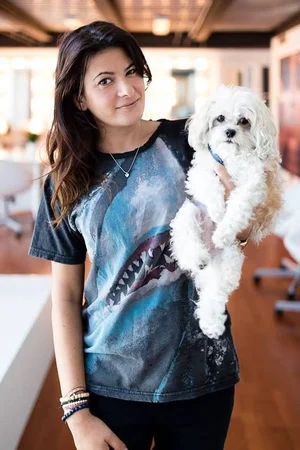
Leila Antakly is an independent cultural interviewer, editor, and founder of Antakly Projects, the platform she launched in New York in 2003 as Ninu Nina. For more than two decades, she has interviewed artists, musicians, photographers, designers, and creative thinkers across art, music, fashion, photography, film, and contemporary culture.
Her interviews are driven by curiosity, research, and direct conversation rather than celebrity, trend, or algorithm. Antakly looks for the people, ideas, and creative practices shaping culture, with particular attention to artists who deserve a deeper conversation beyond the usual press cycle. The Antakly Projects archive documents creative voices across generations, disciplines, and cities, focused not simply on what someone is promoting, but on how they think, what influences their work, and where their ideas fit within a larger cultural conversation.

A French pianist and composer known for bringing classical piano into dialogue with hip-hop, electronic music, and contemporary culture. In a 2022 conversation, Leila Antakly spoke with Pamart about his album LETTER, his creative process, and his belief that classical music should cross boundaries between genres and audiences. Read the 2022 interview →

A Belgian creative director working across graphic design, illustration, and art direction, building coherent visual identities in music, fashion, and food. He has led the visual universe behind Sofiane Pamart's albums for years, MOVIE included. beaujeant.com · @adribjt
Discover more conversations with pianists, composers, and musicians, including Koki Nakano, Vanessa Wagner, Max Petersen, Dobrawa Czocher, Renzo Vitale, Parra for Cuva, and other artists working across classical, contemporary, electronic, and experimental music.
Explore the Piano Archive