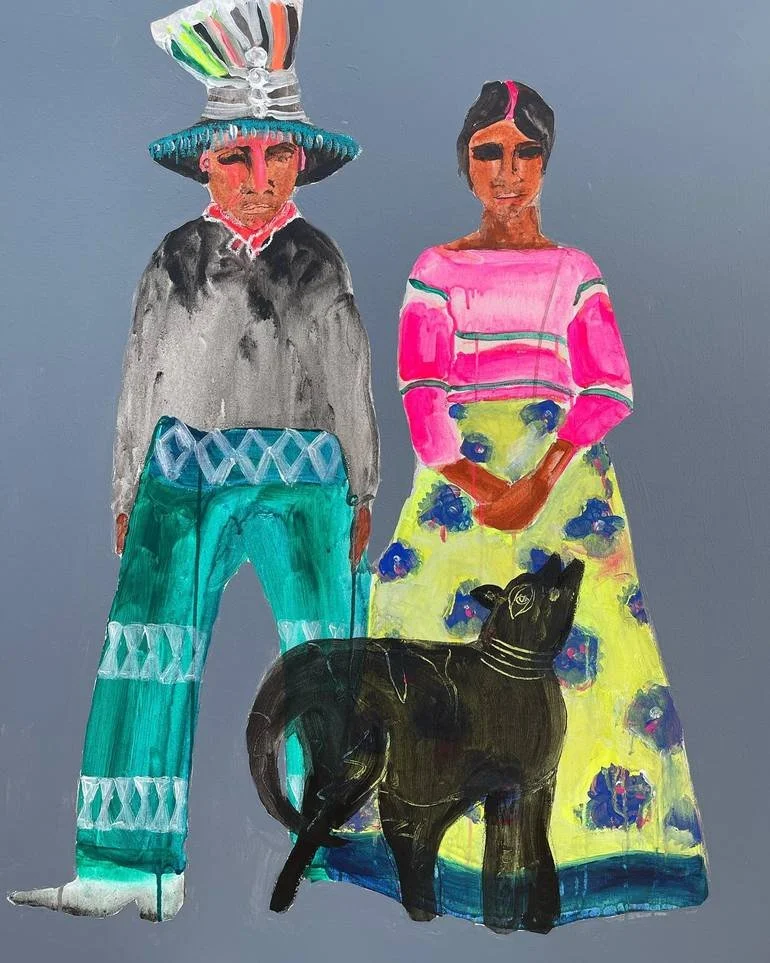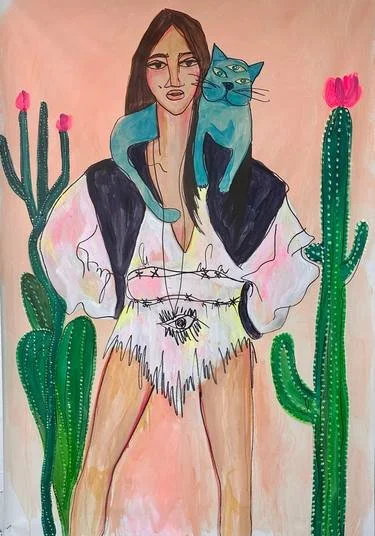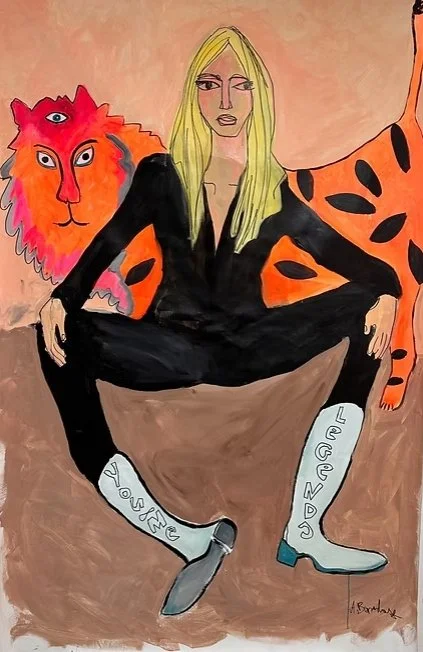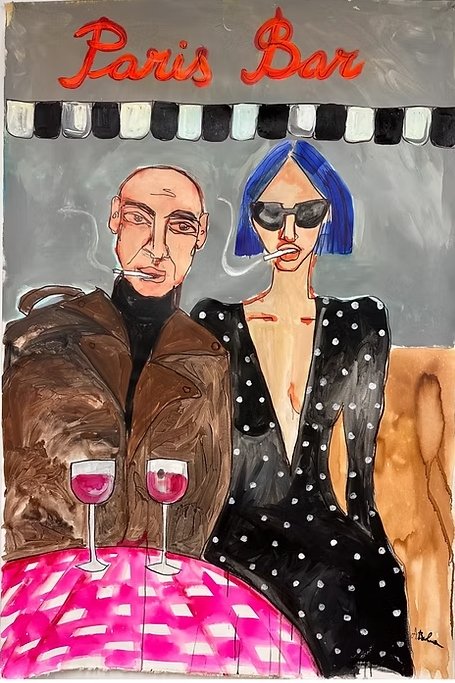
Aga Baranska: An Artist's Journey Toward Universal Connection
Aga
Baranska
Artist of Romani heritage · Poland & the London College of Fashion · a global wanderer
She paints contemporary talismans for a distracted age. Anchors that ask you to pause, to breathe, to stay, drawn from Maya cosmology and a lifetime of falling in love with the world.
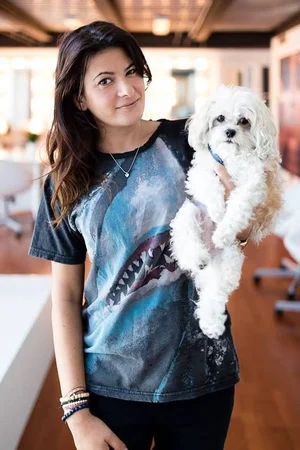
Aga Baranska’s path to becoming an artist was not a straight line, and that is exactly what makes her work so rich. From model to photographer, fashion designer to gallery assistant, every step has informed her practice. A graduate of both the Visual Art School in Poland and the London College of Fashion, she creates paintings, textiles, and sculptures that traverse cultures and religions, drawing deeply from her Romani heritage and years of global wandering.
Mexican culture, and particularly the spiritual side of Maya cosmology, profoundly shapes her work. But for Aga, art is not about representing a single culture. It is about creating a universal language. On Instagram she asks questions like “Can art attract love?” She wants people to feel free, to feel magic, to feel hypnotized when they meet her work.
We sat down with Aga to talk about ancient talismans in the digital age, art as healing, and why she paints without planning.

What inspires you most?
“I am constantly falling in love with the world. When I travel, my eyes are always searching for symbols, fabrics, rituals, gestures, colors, and human stories.”
“Workshops with children inspire me deeply. They are fearless creators. They remind me what true artistic freedom looks like. I am also inspired by long conversations with my husband, and by my two close artist friends: Ania Górnicka, a photographer, and Rebecca Manners, a designer whose work constantly pushes boundaries.”
“I am constantly falling in love with the world.”
Pencils in every pocket, from the age of five.
“I didn’t come from an artistic family, but my parents supported my desire to paint from the beginning. As a child I had pencils in every pocket and attended art classes from the age of five. Entering art secondary school felt like heaven.”
“Before Poland joined the EU, I received a scholarship and was accepted to the University of the Arts London. It was another world, culturally and creatively, and it expanded my vision completely. Since then, living between places like Tokyo, Berlin, London, and Ibiza has deeply shaped my work. But painting has always been my constant language.”
What does that phrase mean?
“Ancient talismans were part of everyday life. They carried protection, intention, identity. Today, our attention is fragmented. My paintings function as anchors. They invite the viewer to pause. To breathe. To stay.”
“When I paint, I feel like I enter another portal, a space outside of time. I hope the viewer can step into that same portal, even for a moment. In a distracted world, presence itself becomes sacred.”
“In a distracted world, presence itself becomes sacred.”
She listens more than she decides.
“I don’t plan my paintings. I take my time. Sometimes I can sit for a long while just looking at what I have already painted. The process feels like meditation. It is quiet and slow. I listen more than I decide.”
“Shapes, symbols, and colors begin to appear, almost as if I am channeling another dimension. In a world that moves fast and demands constant action, this way of working feels essential. It allows something deeper and more truthful to come through.”
“I listen more than I decide.”
On reintegrating art, ritual, and the everyday.
“What fascinates me about Mayan cosmology, and many indigenous cultures, is that art was not separate from life. A bowl, a garment, a wall, everything carried symbolism and meaning. Today we divide everything: work, spirituality, creativity, rest.”
“My hope is that my paintings gently dissolve those borders. That someone might hang a painting in their living room and feel that it is not just an object, but a presence, something that carries intention into daily life.”
Sometimes beauty itself is activism.
“Artists shape imagination. And imagination shapes how we treat the world. If we see nature as sacred rather than as a resource, our behavior changes. Having worked closely with a shamanic family in Peru, I experienced how deeply interconnected we are.”
“Sometimes beauty itself is activism. If my work makes someone feel tenderness toward nature, that softness creates responsibility.”
How to use them without commodifying them.
“Ancient symbols are not trends. They carry depth. I approach them with research, travel, and humility. I don’t copy. I transform through my own lived experience. It is a contemporary dialogue with the past. Integrity comes from intention. If the intention is honest, the work carries weight.”
Healing is about remembering wholeness.
“When someone stands in front of my painting and their breath slows, or they feel seen, something real happens in the body. During difficult times, collectors have told me the works feel like companions or guardians.”
“Art cannot fix the world, but it can create a safe inner space. And sometimes that is enough.”
Comfortable not knowing.
“I am in a place where I feel comfortable not knowing. I keep painting. I keep listening. I try to be kind, to others and to myself. And I trust that life will unfold as it should.”
Antakly Projects, originally Ninu Nina, has been in conversation with the most inspiring voices in art, photography, design and culture since 2003. Interview by Leila Antakly. Aga Baranska’s paintings are made to be lived with: presences that carry intention into a distracted world.
All works © Aga Baranska. Thank you to Aga for the conversation.
agabaranska.art → Instagram @agabaranska →
Explore the full Antakly archive →
And for the personal rants on life, opinions you didn’t ask for, and the occasional existential spiral: follow me on Substack. Follow us at @antakly.projects on Instagram.
Stay curious. ✦