
Stem by Stem: FENRA on Why He Took His Own Song Apart to Build Something New
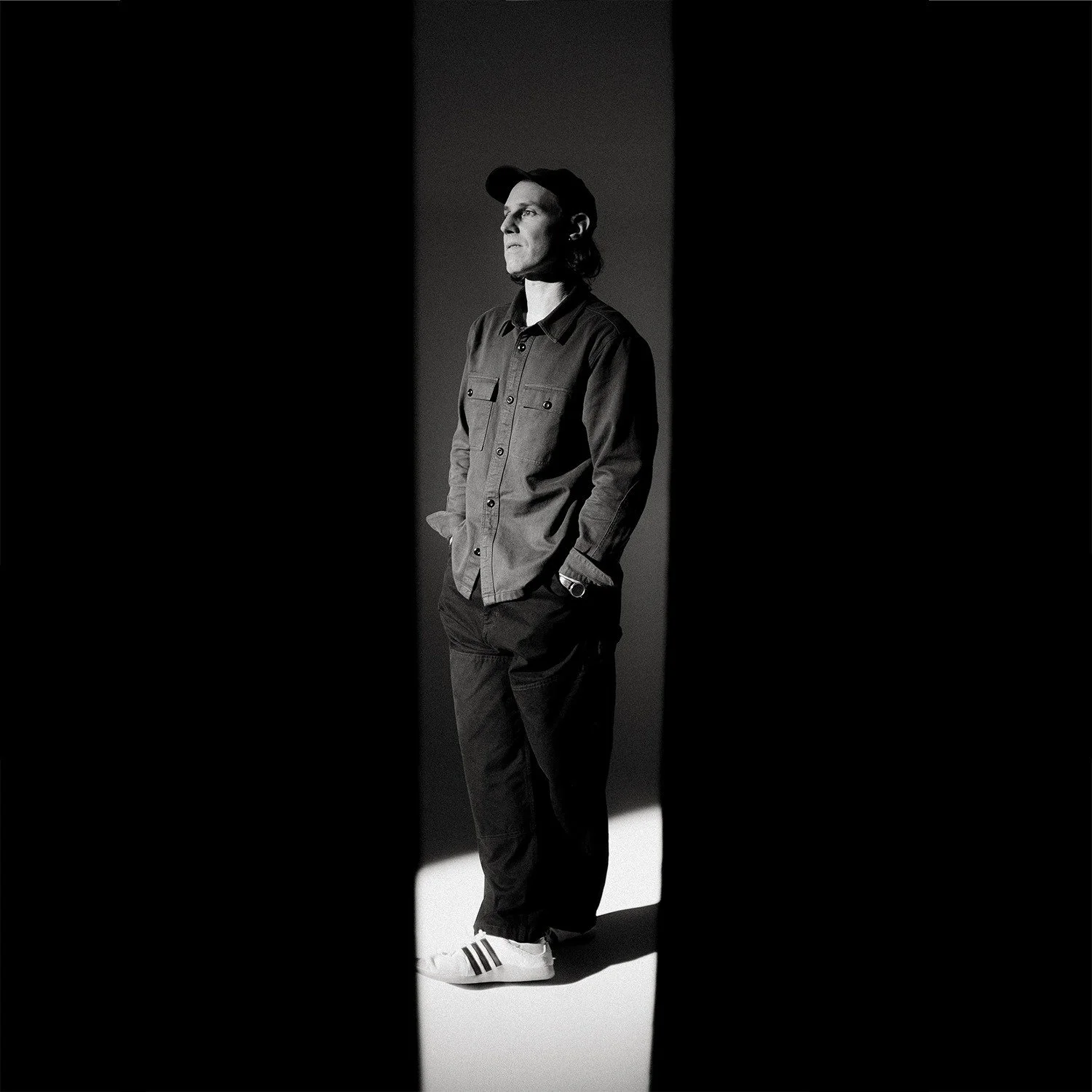
Image credit: Jay Buezo
Portland-based producer FENRA has released his sophomore EP, CHICAGO, alongside its mesmerizing focus track "CHICAGO PM," via Base Layer Records. Taking the title track from his debut EP, Delusional, and transforming its stems into three entirely new pieces while preserving the soul of the original.
Born in Santa Rosa, California and now based in Portland, Oregon, FENRA is the electronic moniker of producer B Laws. Raised in an artistic household, he first discovered his love of harmony through church hymns heard alongside his grandmother. A self-taught guitarist by 14, he went on to explore synths, vocals, and drums in touring bands that took him across the US, Europe, and Asia — experience he now channels into a distinctive electronic sound.
Drawing on the influence of pioneers like Caribou, Four Tet, Bonobo, DJ Koze, and the minimalist elegance of Philip Glass, FENRA crafts music that bridges the cinematic with the deeply personal. With CHICAGO, he offers a compelling new chapter in his genre-blurring story — one sure to resonate with fans of those very artists.
Q: You describe teaching yourself guitar at 14 as following curiosity rather than rules and that's clearly still how you work today, sitting down without a key, a tempo, or even a genre in mind. How do you know when something you've made is finished, if there's no framework telling you when you've arrived?
That’s a great question. When you don’t start with rules, it’s very easy to just keep refining forever.
For me, finishing has more to do with distance than with perfection. I’ll usually step away from a piece for a few days and come back to it with fresh ears. If I can listen without immediately wanting to change something, and it still feels alive, that’s a strong sign.
I tend to ask myself a few simple things: does this sound like FENRA? Is it doing what it set out to do emotionally? and does it feel like a complete thought? If it passes those tests, I’ll share it with a few trusted friends to get some perspective. I only act on feedback that resonates with something I already feel.
After that I try to impose some limits so I don’t spiral. I’ll mix in a focused window, maybe two or three hours, print it, and then live with it outside the studio. I’ll listen on a run or in the car and make notes without reopening the session, which helps me stay in the right headspace.
If I still want to hear it again the next day, not because I’m analyzing it but because I actually enjoy it, then it’s probably done. And if it isn’t, it goes into the graveyard. I revisit those sketches every few months, and sometimes something clicks because I’ve changed, not because the track did.
Q: The Prodigy and The Chemical Brothers on one side, harmony filling a room on the other — those are two very different kinds of intensity. Do you think FENRA is trying to reconcile those two feelings, or are they actually closer than they seem?
I am not trying to reconcile them so much as to let them co-exist. I am drawn to physical driving energy, but I also love very sensitive, soft sounds. Fragile pads, small bits of noise, a little bit of empty space, things that feel almost breakable. FENRA probably lives somewhere in that overlap.
Q: Four Tet brought you back to electronic music specifically because of how he blends human imperfection with precise production, things that feel slightly off, things that swirl. When you're working, how do you protect that quality of imperfection? Is it something you have to consciously resist fixing?
I’d say more often than not I’m actually trying to make things less perfect, not stopping myself from fixing mistakes. A lot of my tracks start on a grid with MIDI, so the raw materials are very clean and precise. As I build the arrangement, I’m gradually introducing friction. I’ll nudge drum hits slightly off the beat, detune notes, automate things so they drift or swirl instead of sitting still. I’m trying to get back to something that feels human, or at least alive.
I also try to commit to sounds that already have character in them. If something comes from a synth or a recording with a bit of instability, noise, or movement, I’ll lean into that rather than polishing it away. Those tiny irregularities are often what makes a loop feel like it’s breathing.
There is definitely a temptation to over-clean things, especially once you start mixing. At that stage I have to be careful not to sand off the edges that made the track interesting in the first place. Sometimes I’ll A/B against an earlier bounce just to make sure I haven’t accidentally made it too tidy.
So it’s less about protecting accidents and more about actively designing imperfection into something that began perfectly straight.
Q: What's the most unexpected sound you've ever sampled or been moved to use, and where did it come from?
I recently I ripped a recording from YouTube and accidentally captured part of the commercial before it. Something about the texture — the compression, the abrupt cut, the slightly blown-out sound, felt oddly right in the song.
I ended up using that instead of the thing I went looking for. I’m really drawn to sounds that carry accidental history in them. It makes it more interesting for me and I hope that some of that comes through in the work.
Q: You went from MTV Music Generator on a PlayStation to touring three continents to making solo electronic music in Oregon. At what point in that journey did FENRA — this specific artistic identity — actually become clear to you? Was there a moment, or did it arrive gradually?
It definitely wasn’t a single moment, it arrived gradually and quietly.
For a long time I was just making music in whatever context I was in — bands, touring, production work — responding to the moment. Even when it was creative, it was still for something.
FENRA became clear when I stripped all of that away and started making music alone again, without an external goal or role to fill. Just me and a laptop, making sound with no clear end-point. I did this for months and made hundreds of sketches. I started noticing patterns. Things I was drawn to. A perspective that felt like me. At some point I chose one thread of that and gave it a name. That became FENRA.
Q: Tell us more about the CHICAGO EP.
With the CHICAGO EP I set myself a simple constraint: only use material from the original track and see how far it could be pushed. I’ve always loved the idea of taking a tiny piece of sound and stretching it into an entire world, so this was my version of that challenge using my own stems.
Each version pulls the same DNA in a completely different direction. CHICAGO AM, PM, and REM are all tied to times of day, with REM referencing sleep. They’re meant to feel like different states you move through rather than traditional remixes. PM is probably the most direct — a heavier, late-night energy, almost a Detroit techno take on the song. The REM version goes the opposite way. It’s designed to be looped indefinitely, almost like a sleep soundtrack, where the music dissolves into atmosphere. I liked the idea that one piece of music could contain multiple lives depending on how you reshape it.
Thank you for taking the time to dig into the project so thoughtfully Leila, I’m grateful for the space to speak about it in this way.
Follow FENRA:
Website -Instagram - Soundcloud - Spotify
Interview by Leila Antakly