Ellie Campbell Hand-Painted Rotoscope Animation Interview
Interview · Animation · North Somerset
Ellie Campbell Painting the dance floor, one frame at a time.
Real footage, turned into hand-painted rotoscope animation. Every frame in acrylic. Every frame by hand.
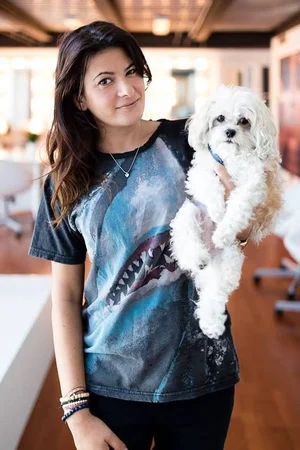
Ellie Campbell is an artist and animator based in North Somerset. After studying Fine Art at Loughborough University, she built a practice where traditional painting meets digital sequencing.
She takes real footage and turns it into hand-painted rotoscope animation, frame by frame, each one painted in acrylic. The results are gloriously imperfect: exaggerated bodies and familiar moments made strange again.
- Ravers
- A duck crossing a pond
- Cows
- Someone sipping a cold, frosty pint
Ellie leans into the personal touches, too. She lets the original footage show through, adds cheeky googly eyes, and slips in dance moves that feel straight out of a 90s rave between frames.
The point is that you can see the time it took. In a world of smooth, automated motion, the effort becomes part of the message.
Her practice comes down to a commitment to manual labour, and to translating digital energy into something you could almost touch. The sequences hover somewhere between stillness and motion.


Three frames, a few hundredths of a second apart. Each one a painting.
What's the first piece of animation you remember wanting to take apart to see how it worked?
Oddly specific, but Aardman's animations intrigued me a lot. One that really stuck with me was their Angry Kid series, for the blend of live footage and stop motion, and how it was produced. I took part in the BFI's animation boot camp and was lucky enough to tour Aardman's studios and even see the Angry Kid mask, which I found extremely fascinating. There is something so admirable about the meticulous work and dedication that goes into their productions, or frankly any stop motion work.
Which artist made you think, "I'm allowed to do this"?
Alberto Mielgo. I got hooked on Love, Death & Robots, and his work was mesmerising, to say the least. When I saw Jibaro, it was a shock to my core. It was so inspiring and beautiful, how an artist can mix digital and traditional in such a creative way.
"My work is too digital for traditional gallery spaces, but I'm not making polished animation that would land me a job in the industry."
That's something I struggle with, feeling like I'm not good enough for either side. An artist like Alberto Mielgo makes me feel good about being experimental and mixing a bit of both.
Who influences you outside of art and animation?
Music is a huge part of my inspiration, and I think it has shaped who I am today. Live concerts feel immersive, alive and emotional. I love them so much. Two musicians have stuck with me since I was about 15: Frank Ocean and Beyoncé.
Frank Ocean is a true visionary, always ahead of the curve. His work is intensely raw, but you can listen to it years later and it still feels groundbreaking and timeless. Beyoncé's process and relentless work ethic inspire me massively. She doesn't just drop albums; she builds fully realised, cinematic stories, with total command of her vision. That pushes me to keep working through difficult times and hold my work to a high standard.
You were editing video at 13. When did digital stop being enough?
I still love video editing. It was fun to learn and it helped develop my skills into what they are now. I stepped away from it to focus on fine art at school, but I kept drifting back between projects, and eventually those digital elements bled right back into my work.
It's been a push and pull. Sometimes I'd lean completely into traditional art and feel it wasn't quite hitting where I wanted; other times purely digital work lost its excitement for me. The sweet spot is where those two worlds collide.
How many painted frames go into one second, and what happens to them afterwards?
I usually do 20 frames per second. The lowest I've gone is 18, since that's how many frames I can fit on a page. When they're finished, I roll them up and tuck them away in my art shed as a little archive.
I do think they exist as paintings too. I'd love to play with exhibiting just the painted part rather than the animation: a broken-down version, showing the transition from one frame to the next.
What does "digital energy into physical texture" look like at your desk?
It's a cycle, from digital to physical and back again:
- Start at the laptop, searching for footage that says exactly what I want, or using footage I filmed myself.
- Edit it, or leave it raw, then export every single frame as a photo.
- Turn the frames into contact sheets. That's where the painting begins.
- Spend hours painting every frame, layering over the original. Sometimes I paint the distortions by hand so it looks more authentic and jittery.
- Photograph each painted frame and put them back together in editing, like a puzzle.
Where does the work live most truthfully: on screen, or in the stack of canvases?
I love both, but the work is better realised on a screen. Still, the physical stack of painted frames is where the soul lives.
On screen I get to see everything moving together, and add music when I post it. I definitely overthink that part: what song fits? Does it make sense in context? Will it make or break the piece? We live in a digital world where people move fast. I want my art to capture that snappy energy, but with enough depth that it isn't just meant to be watched once.
What's a mistake in a frame that you decided to keep?
A cow chewing, part of the music video for Finlay Birch's "Weight Will Unwind." I didn't have a proper place to work at the time, so I painted on the kitchen table, and the overly warm lighting reflected back on some of the frames.
I hated it at first. Then I felt it added something. My work is quick and textured, and the glare just became another part of the texture. It worked weirdly well.
How does working from North Somerset shape the pace of the work?
It's a great place for my work. I live somewhere quieter, with a beach and a local community, but not far from one of the busiest, most vibrant creative hotspots in the UK. I get the best of both worlds, and I think that shows in my art.
If someone watches your animation 20 years from now, what do you hope they notice?
That the process is what makes it unapologetically human.
"With AI art everywhere, I believe art that is imperfect and clearly made by hand will become a sought-after aesthetic, even a luxury."
Every company that relies on AI for its visual identity ends up a boring carbon copy of the others.
See it move
Ellie posts her work as @ragnoollz, always with the soundtrack she agonised over.
Quick answers
Who is Ellie Campbell?
An artist and animator based in North Somerset, England, who studied Fine Art at Loughborough University. She makes hand-painted rotoscope animation, painting every frame in acrylic over real footage.
How does she make her animations?
She exports every frame of a piece of footage, prints the frames onto contact sheets, paints over each one in acrylic, then photographs the paintings and reassembles them in editing, usually at around 20 frames per second.
Who inspires her?
Aardman's Angry Kid, the animator Alberto Mielgo (Jibaro), and musicians Frank Ocean and Beyoncé.
- Ellie Campbell, interview with Antakly Projects, October 2026
- Creative Boom — Ellie Campbell turns club nights into hand-painted, gloriously wonky animations