A Thousand Cuts: Unveiling the Veil of Domestic Abuse
Art · Photography · London / India
Sujata Setia
Sony Photography Award winner. A Thousand Cuts: paper-cut portraits made with domestic abuse survivors, reclaiming the narrative one incision at a time.

Why this conversation
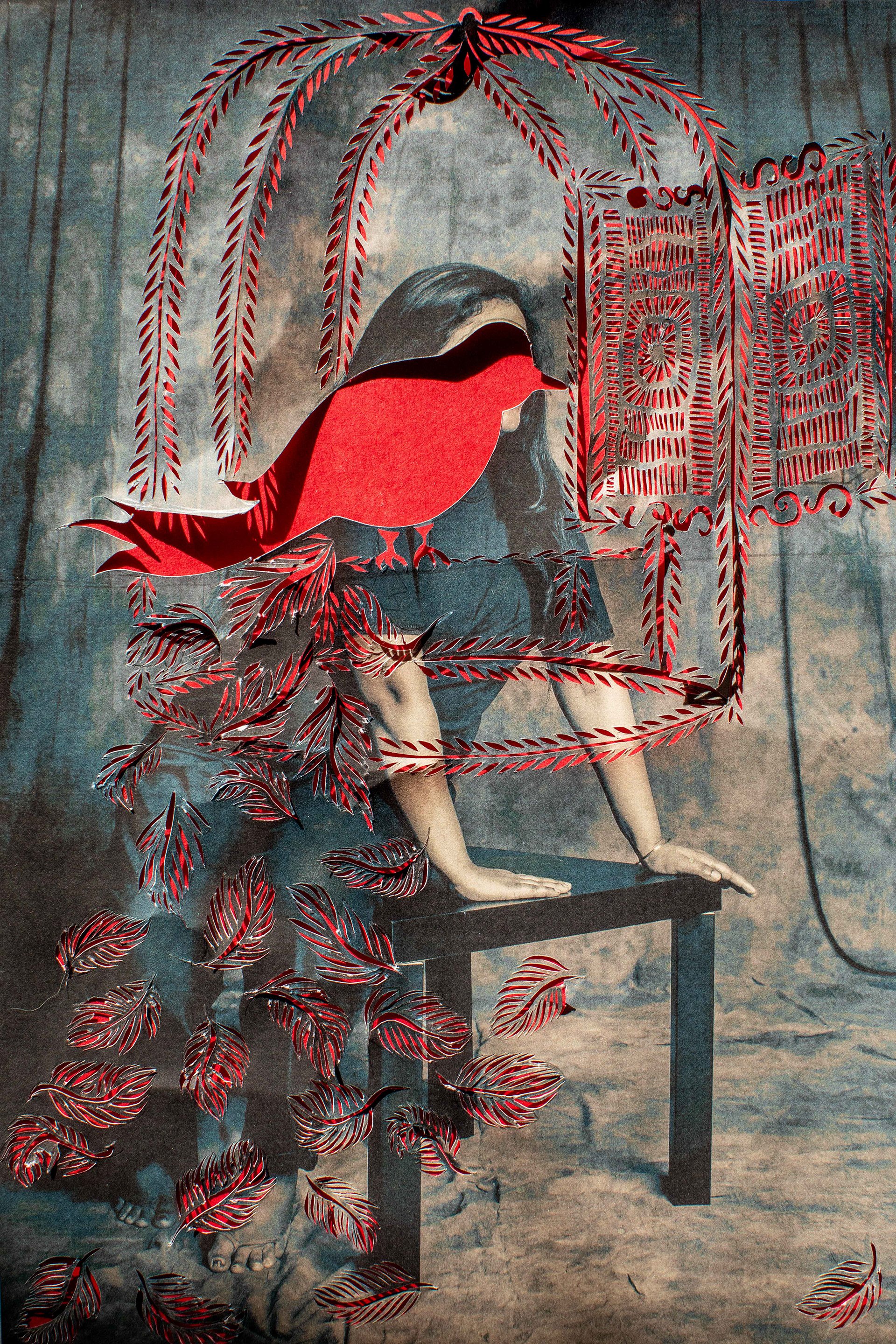
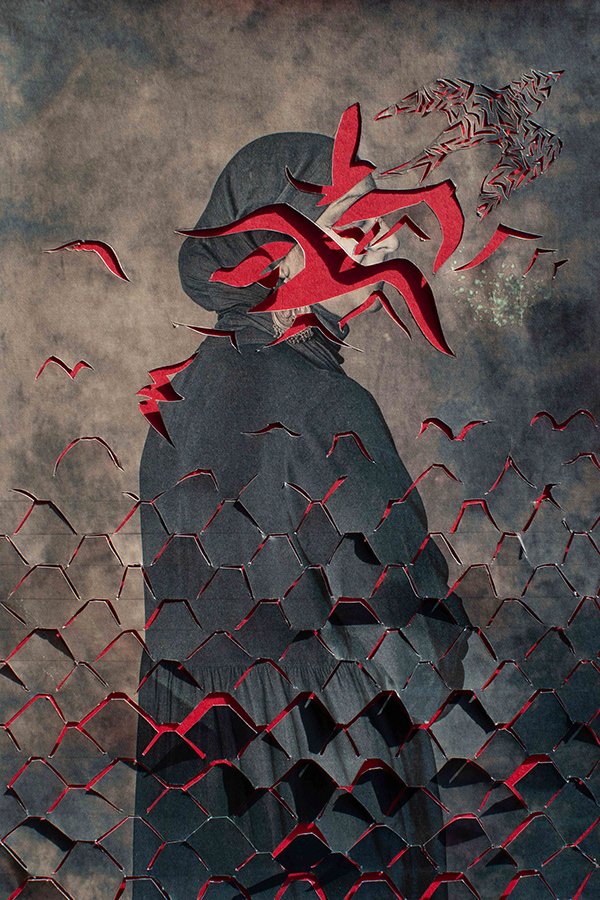
This artist is one of my favorite discoveries. Sujata Setia's "A Thousand Cuts" is a series that makes you hold your breath. Drawing on the ancient practice of Lingchi, death by a thousand cuts, she photographs portraits of domestic abuse survivors printed on thin A4 paper, then cuts into them. The vivid red underneath is not decoration. It signifies martyrdom, strength, and the promise of a new beginning. Every woman in the project had complete control over how she was portrayed, contributing to the symbols and cuts that would become part of her image. For many, these cuts became a form of liberation: an opportunity to reclaim their narrative in ways that were both empowering and healing. Setia became more than an artist. She became a collaborator, a listener, and a partner in each woman's journey towards freedom.
For as long as I remember, art has been my anchor.
Sujata SetiaA Thousand Cuts
The metaphorical resonance of Lingchi is palpable throughout Setia's work. She captures the continuous erosion of the soul through the act of chipping away at the participant's portrait. Each cut on the paper not only symbolizes the fragility of existence but also serves as a reminder of the enduring pain inflicted upon the abused. It is the artist's deliberate choice to keep the project at a domestic scale, using resources available within the home, further emphasizing the intimate and personal nature of the violence that occurs within the household.
The thin sheets of paper, fragile and delicate, emphasize the vulnerability of these women's lives, trapped in cycles of violence that chip away at their identity and spirit. Through the collaborative process of creating this series, Setia and the survivors embarked on a journey of healing and self-discovery. Through the normalization of dialogue and the amplification of individual narratives, Setia envisions a future where the collective trauma of domestic violence is acknowledged and addressed with empathy and understanding.

The Artist
Sujata Setia is not formally trained in the language of photography. Following a successful career in journalism in India, she pursued a Master's in International Relations in the UK. It was a battle with clinical depression that led her to discover photography as a form of healing. Her artistic practice is deeply autobiographical, rooted in the exploration of emotions and experiences.
As a South Asian woman and a survivor of child sexual abuse and domestic violence, "otherness" has been at the core of her lived experiences and, through that, her photographic practice. Whether through race, gender, various presentations of power, or different social systems, she presents a study of the multidimensional model of the "other," the trivialised, the subaltern narratives. She combines traditional artistic interventions and photography to call attention to the boundary of cultural imperialism, a boundary marked by the casual, ever-present act of unseeing and unarchiving the "other."
I combine traditional artistic interventions and photography to call attention to the casual, ever-present act of unseeing the "other."
Sujata SetiaSelected Awards
- 2026Sony World Photography Awards, Photographer of the Year
- 2022British Journal of Photography, Female in Focus, Winner
- 2021Tokyo International Foto Awards, Photographer of the Year
- 2021Association of Photographers Open Awards, Gold Winner
- 2021The Independent Photographer, Portrait Award Winner
- 2021Indian Photo Fest, Portrait Award Winner
Find Sujata Setia
- Website: sujatasetia.com
- About the artist: sujatasetia.com/about
You will also love
Art, identity and community across the subcontinent.
Two decades of artists across the region. The broader context for work like this.
Conversations with artists across every discipline, since 2003.