MUSICAL DUO KRONIK LEILA
Kronik Leila
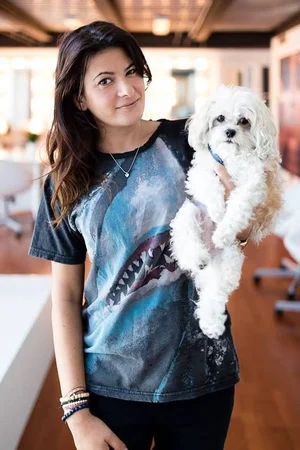
Arda and Basak Tuncer write, play, produce, mix, master, and direct every frame themselves.
Two sisters spend twenty years inside classical music, and then turn the whole ship around. Arda and Basak Tuncer, the twins behind Kronik Leila, didn't just add a few synths. They took authorship of everything: the lyrics, the arrangement, the vocals, the production, the mixing and mastering, even the direction of their own videos. That kind of total, self-made practice is exactly what I am always looking for.
What kept me curious was the sound itself. Their main instrument is the clarinet, and they bend it between the long air of Anatolia, a jazz solo, and a Baroque line, then run it through electronic tools and stack their two voices into choral, polyphonic layers. Two sisters, many voices. It is collaboration at its most intimate, the kind only siblings can really pull off.
And yes, there was a small serendipity in the name. They are called Kronik Leila, and they ended our exchange, conducted from opposite sides of the world, with a simple "Thank you, Leila." That is the whole promise of this kind of platform: a real conversation across any distance.
Antakly Projects · Music Series · Istanbul
Arda and Basak Tuncer.

Two sisters, one studio, every step their own.
Arda Tuncer and Basak Tuncer, aka Kronik Leila, are twin sisters based in Istanbul. After more than twenty years on their classical music journeys together, they switched the route to electronic music, and they are behind the wheel at every stage: lyrics, arrangement, vocals, production, and even the mixing and mastering.
In July 2021 they made a strong start with their debut single Yuva, blending trip-hop, escape room, and art-pop. They welcomed 2022 with their third single, Secret Tale, and direct all of their own videos. While the electronic structure carries experimental beats, the sisters add choral, polyphonic vocal recordings. The piano lays the basic chords and sometimes the theme, while the clarinet, their main instrument, nods sometimes to the long air of Anatolia, sometimes to jazz, sometimes to symphonic works.
Find them on Instagram and SoundCloud, and follow Arda at @arda.tun.cer and Basak at @basaktuncerm, whose photography also lives on PhotoVogue.
Tell us about your greatest inspirations or influences?
Every artist, piece of art, or story we come across impresses us, inspires us, and gives us new ideas, no matter what their genre is.
ArdaPersonally, I love Baroque arias, and as a clarinetist I never had the chance to play music of the Baroque period, except for certain adaptations, because the clarinet was not one of the most popular instruments of the era. Now, having the possibility to blend Baroque-style musical structures with electronic tools in my arrangements is the Wonderwall that pumps me up.
BasakI've been a big fan of jazz for years, so my ideas, influenced by jazz rather than classical, show up in our music. I've been listening to a lot of experimental R&B over the past few years. The use of beats in such a variety of ways today has been a huge source of inspiration. Even for us, it was a surprise that we used the human voice as an offbeat in our last release, Secret Tale. It was fun.
Tell us a bit about your creative process?
We do every step ourselves in our home studio. We own the lyrics, music, arrangement, vocals, instruments, mixing and mastering, and even our videos' shooting and editing stages. Sometimes we start with the lyrics and bring the rest, sometimes a melody or beat idea becomes the starting point. We do not follow a single songwriting technique, and this further freedom fuels our creative process. Since we have been developing our musical and writing skills from a very young age, this flexibility does not allow us to lose our way, but instead lets us be guided by each different idea.
How has the pandemic affected your creativity and how do you see the world changing?
BasakThe pandemic caused us to enter this path together.
ArdaWe experienced a kind of awakening in that uncertainty, bad news, and anxiety, and we saw that it was not just for us. There were losses worldwide, and everyone was asking, "What would I do if these days were over?" So we see that people all around the world are entering a period of making up for something.
BasakI was already doing my own thing as a photographer, but I had never made my music before. Shortly before the pandemic, I started working on instruments and vocals again. At that time, I just wanted to reconnect with what has truly made me happy since I was a kid, nothing else on my mind. The pandemic made me realize how vital this bond is, and that I do not want to go away again.
ArdaOn the other hand, I built a classical music career as a clarinet artist in Europe for about ten years, and frankly I was warmly welcomed by music societies in France and Italy. My work was paying off. But at the same time there was a growing longing in me that I didn't know what it was. It wasn't a longing for home. It was a longing for my creative side, which I had put aside for so long that I vaguely remembered its existence. So when Basak came up with this idea of producing our songs, something stirred inside me for the first time in a long time, and I said, "Let's get started right away."
Who do you consider to be an icon of our time?
The prominent name for both of us is David Bowie. His ageless, innovative music, his influence on fashion, and his breaking of the bigoted view of many people against diversity make him one of the greatest icons of the century we left behind, and of the 2000s for sure.
What does wellbeing mean to you, and what do you practice?
ArdaI think wellbeing is seeking and finding what makes you feel good and present in life, other than what you have been told. When we feel that something is not right, stopping and listening to that feeling, taking time for ourselves, and especially paying attention to the signs our body sends us, all lead us to the path to wellbeing. I am experiencing that writing, meditation, and yoga are transformative practices, and I intend to continue.
BasakWriting, meditation, physical activities, these are the things I regularly practice too. At one point I was feeling lost, having a hard time feeling well, but I didn't know why or what to do to get out of there. Just then, I came across these questions in a book: "What made you happy in your childhood, what did you want to do and be in your childhood?" Finding answers to these questions helped me a lot at that time. Since then, I have been trying to keep my heart's wishes in mind. Besides, it's good to read books and develop new skills.
Anything else you would like to share?
We are grateful for living in such a time. We can find various tools that make it possible to produce music anywhere, anytime we want, and publish it. Furthermore, we are here giving an interview despite being in different parts of the world. Thank you, Leila. And who knows what else will be possible in time?
Images courtesy of the artists. Listen to Kronik Leila on SoundCloud.
Part of the Antakly Projects music archive, conversations with the people making the sound. Explore more music interviews.
Stay curious,