MuzunguSisters
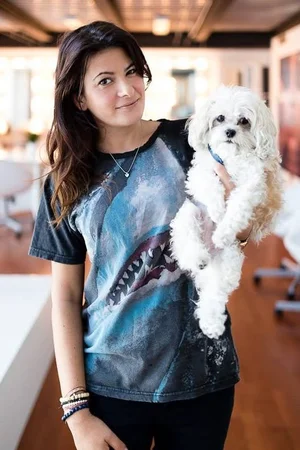
Two friends, one rule: only sell what they'd wear themselves. We spoke to Dana Alikhani and Tatiana Santo Domingo the year they launched. Fifteen years on, they work with 41 artisan communities.
Swahili, noun. Usually traced to zunguka, to turn around, to wander. It was first used in the eighteenth century for traders who seemed to roam without purpose.
In East Africa today it's the everyday word for a foreigner, usually a white one, said with affection or not. The brand took the older sense: the wanderer.
Two globe-trotters, one shop
The idea came in 2009, when Dana and Tatiana were both living in New York. Dana had just finished a master's in human rights at Columbia and was working on fair labour. Tatiana was the one who came back from every trip with something extraordinary from a market.
Friends kept asking where their things came from. The answer became Muzungu Sisters, which launched in 2011: clothes and accessories bought straight from artisans, many of them working in crafts that are disappearing.
“We both share a passion for discovering new cultures. Muzungu Sisters was born from a desire to promote the work of local artisans, particularly those whose crafts may be endangered.”Dana Alikhani
The first edit had linen gaucho trousers and leather belts from Argentina, Peruvian jackets, Sicilian straw baskets, Moroccan moccasins and Kashmiri shawls. Their test for every piece was simple.
“Our target customer is someone just like us. If we were to come upon it, it would be our dream shop.”Tatiana Santo Domingo

Favourite destinations

Dana Alikhani
Born and raised in Cyprus, of Iranian heritage. She studied social anthropology at SOAS and human rights at Columbia, and worked for UNHCR, Human Rights Watch and as a Middle East political analyst before Muzungu.
What drives her- Her parents and her heritage
- Street style and third cultures
- Edward Said's work on Orientalism
- Traditional textiles
- World travel and global discourse
Tatiana Santo Domingo
Born in New York, of Brazilian-Colombian origin, raised in Switzerland and France. She studied photography and visual communication in London, then worked at AEFFE, at Giovanni Bianco's studio GB65 and at Vanity Fair. She curates what Muzungu sells.
She married Andrea Casiraghi in Monaco in 2013 and is also known as Tatiana Casiraghi.
What drives her- Travelling
- Her family
- Her friends
- Art and music
Pack like a Muzungu
Footwear
Ikat Venetian slippers, Aquazzura Coachella boots and Stubbs & Wootton.
Finishing touch
Sunday Riley face oil, red lipstick, and orange blossom essence from the souks of Marrakech.
Pop-up favourites
The Sicilian basket with red pom-poms, ikat slippers and the Iran clutch.
Icons of style
Talitha Getty, Millicent Rogers, Freya Stark, Bakhtiari tribeswomen, and world leaders in national dress, from Hamid Karzai to Evo Morales.
Reading
Prospect, The Economist, The New Yorker, Bidoun, Monocle, New York magazine, Human Rights Watch, HAND/EYE.
Dream trip
Machu Picchu, and Salta and Jujuy in Argentina.
Footwear
“Barefoot.”
Finishing touch
“Red lipstick.”
Pop-up favourites
The pom-pom mochila bag, and the Olympia Le-Tan × Muzungu Sisters Brazil clutch.
Icons of style
Talitha Getty, Marianne Faithfull, Marchesa Casati.
Reading
Courrier International, National Geographic, Vanity Fair, Purple Diary, The Sartorialist, Spoonfed.
Dream trip
Luang Prabang, India and Cambodia.

Curious. Adventurous. Colourful.
No seasons and no trend calendar. Pieces are made in small runs by the artisans who have always made them, and sold to people who'd rather own one good thing than ten.
Still wandering, fifteen years in
“Anthropology taught me to question everything, to look for shared meaning, and made me mindful of fetishising ‘the other’. Human rights gave me the other side of it: an obsession with knowing who made something, under what conditions, how they were paid, and whether the relationship could actually benefit them in the long term.”Dana Alikhani

You might love
Explore the full archive. And for the personal rants, opinions you didn't ask for and the occasional existential spiral, follow me on Substack.