MatildeGattoni
Telling the stories of remote and forgotten places, and connecting the dots back to us.
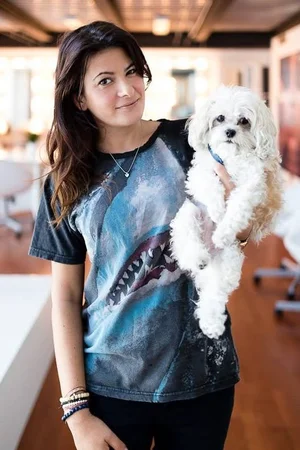
Matilde Gattoni is a French-Italian photojournalist who has documented climate change, land exploitation, migration and conflict since 2000, when she began her career covering the Second Intifada. After a decade based in the Middle East, she co-founded Tandem Reportages with journalist Matteo Fagotto to produce long-form stories from the front lines of the climate crisis. Her work on Lake Victoria won the Prix Camille Lepage in 2025.
Prix Camille Lepage 2025 winner
The earth we share
Prix Camille Lepage
Awarded for her work on the consequences of climate change and overfishing on Lake Victoria, across Kenya, Uganda and Tanzania. The project was shown at the 38th Visa pour l’Image festival in Perpignan in 2026.
Ocean Rage at Barrobjectif
Her series on coastal erosion along the coasts of Ghana, Togo and Benin was exhibited at the 25th Barrobjectif festival in France.
The Earth We Share
A multi-platform series built from ten years of work with Matteo Fagotto and Indigenous communities on four continents, on how traditional knowledge can help communities adapt to climate change.
Her work has been exhibited at the Annenberg Space for Photography in Los Angeles, the Noorderlicht Gallery in the Netherlands, Photoville in New York and the European Parliament in Brussels, and recognised by the IPA, Px3, LensCulture and San Francisco International awards. She was a guest of the Xposure festival in Sharjah in 2026.
Ocean Rage
Shot along the coasts of Ghana, Togo and Benin, Ocean Rage follows what rising seas are doing to West Africa’s fishing communities. Villages that thrived for generations have become rows of ruined houses and ghost towns in little more than twenty years. While governments try to protect cities and industrial sites, thousands of villages are left on their own.
Warmer water has pushed fish stocks further offshore; erosion and salt have eaten into farmland and fresh water. With their livelihoods gone, the most resourceful people leave, and the work that remains is often fuel smuggling or illegal sand mining.
Gattoni presents it not as a local problem but as a warning: a preview of what happens when progress, inequality and the environment fall out of balance.

“Sometimes I want to cry, but a king cannot cry.”
Togbe Agbavi Koffi, 60, chief of Agbavi, Togo. As a child, his home stood on land now 1.5 km out to sea.

Connect the dots
We spoke with Matilde in 2021, during the pandemic, when she was living in Barcelona.
Tell us about yourself.
I have lived ten years in the Middle East and I’m now based in Barcelona, Spain. I like telling stories of the remote and forgotten areas of the world and connecting the dots.
Tell us about your greatest inspirations or influences.
I guess everything that has forged me as a person: my past, the books I read, the music I listen to, the people I meet when I travel, a movie, a painting, the sound of the wind blowing in the leaves. Anything that triggers my attention and gets stuck in my head for some reason.
Tell us a bit about your creative process.
I worked on assignment for ten years when I was based in the Middle East, and now I work together with a journalist. We research stories that catch our interest and discuss together whether they are worth producing, since we have an international clientele. Once we give ourselves the green light, we prepare the trip.
We’re usually in the field for two to six weeks, depending on the story. Then we come home, edit our work and pitch it to our clients.
How has the pandemic affected your creativity?
We haven’t been able to travel much, but we have managed to produce some stories here in Spain. Personally I still find it hard to adapt, and I won’t lie: I do hope we will be able to get back to a normal life. Maybe a little wiser and more grateful, at least some of us.
We are producing our very first podcast, for Audible, on one of the greatest stories we have worked on. It should be available in October. Stay tuned!
Who do you consider an icon?
No one. As much as I love being inspired by the creative people around me, I think the concept of an icon is a bit outdated, and dangerous in some way. Be yourself; don’t follow anyone’s path.
What does wellbeing mean to you, and what do you practise?
Peace of mind, feeling lively, centred, creative, open to the world, connected with nature. I’d say sport and photography help keep me sane and put some order in this crazy and beautiful world we live in.
Be yourself. Don’t follow anyone’s path.
Matilde Gattoni
From Hebron to Tandem
Gattoni first travelled with a camera at 19, to Morocco, carrying an old camera of her father’s. Her career began in 2000 in Hebron, at the start of the Second Intifada. UN assignments followed in Eritrea and Tajikistan, on the effects of war and drought; in Eritrea, the country where her father was born, it felt like returning to her roots.
For about eight years she was based between Dubai and Beirut, shooting for the Financial Times, TIME, Newsweek and Der Spiegel. Her stories have since appeared in The Guardian, The Observer, Geo, Vanity Fair, ELLE and GQ, among others.
Tandem Reportages, the partnership she founded with journalist Matteo Fagotto, was their answer to a press that rarely funds more than a few days on a story. As she told LensCulture, “we don’t cover the news.” Instead they spend weeks in remote places, linking them back to readers in the West.
All the photographers in our archive
Documentary, fashion, fine art and film stills, from 2003 to now.
Roberto de la Torre
Remote communities and the ancestral rituals that still shape them.
Kaveh Maghsoudi
Making pictures inside Iran, within its restrictions.
Curious about their work, not the moment.
Leila Antakly founded Antakly Projects in New York in 2003, as Ninu Nina. For more than twenty years it has published conversations with artists, musicians, photographers, designers and thinkers across art, music, fashion, film and contemporary culture.
Interviews are chosen through curiosity and research, not celebrity, trend or algorithm, with particular attention to artists who deserve a deeper conversation than the usual press cycle allows. The archive asks how people think, what shapes their work and where their ideas sit in a wider cultural conversation, not simply what they are promoting.