CarlotaCabrera

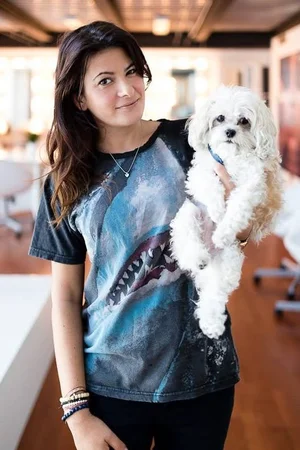
She grew up surrounded by Canary Islands carnival: elaborate costumes, immersive environments, visual storytelling. She still builds worlds that way.
Carlota Cabrera is a Canary Islands-born set designer and art director whose work blends bold imagination with tactile, nature-driven aesthetics. She approaches her craft as a form of artistic expression, drawing inspiration from surrealism, Dadaism, and the organic shapes, colours and textures of the natural world.
Her early fascination with carnival continues to inform her practice, where she combines prop-making expertise, scenic painting and a finely tuned attention to detail. Alongside her design work, she nurtures a deep passion for floristry and floral installation, exploring space and emotion through living materials and sculptural botanicals.
Carlota currently divides her time between London and the Canary Islands, drawing on both as she develops interdisciplinary, visually rich worlds for photography, moving image and live spaces.
carlota-cabrera.com ↗The call sheet
Her creative process, in her words“It normally starts off with an image of something that I see either in a book, magazine or online which sparks something in my brain.”
“Obsessively picking up on things I come across over the next few days or weeks which also contribute to it.”
“A curated vision of the elements which I have in my head.”
“From that point forth is when I have to start thinking about how to actually make all these things a reality.”
Painting, sculpting, sewing, building. “I also equally love working with my hands.”
“I feel like I can truly leave a part of myself in those objects that have been made for a specific purpose.”
On why she makes as much of each set herself as she canThe interview
Art direction and set design · Interview by Leila Antakly · 2021Carlota, thank you for being with us. Please tell us a bit about yourself.
Born and raised in the Canary Islands, I left my hometown to study performance design in the UK, where, after finishing my degree, I began my career in set design. Having moved to London, I started finding my way into this industry. Once I realised that my passion lies in working with large-scale objects and spatial design, I began focusing on and learning about all the different aspects of set design and all the alternative avenues it can be used in. I am currently still living in London; however, over the past year I have begun spending more time working in Spain, and I am quite enjoying jumping between the two.
Greatest inspirations or influences?
My influences change a lot throughout the years. I find myself fascinated by a lot of different and juxtaposing things at the same time, so I always find it hard to pinpoint them. However, a forever source of inspiration for me is the surrealist movement. Their work inspires me greatly and has always helped me think not only of the contextual meaning and sense of objects, but of how to push them into becoming something else. I love the way Dalí's, Magritte's and Ernst's work challenges the notions of sense, and the way they play with colour is also a huge source of inspiration for my work. Recently I discovered the work of Honoré Sharrer, and I am really inspired by her choice of colours and composition.
In all honesty, I can be inspired by almost anything; even the most random objects and finds can spark a thought for me. Looking back, I think this past year, when everything slowed down, I've had time to really look at things, and so I've found myself more aware of everything around me. Probably a side effect of having been locked up for a long time this year! Lately I can be inspired by anything from a piece of fruit at the local market to something completely random that catches my eye on my way to work… It truly has been a revelation!
Tell us about your creative process and things you are looking forward to.
My creative process is always somewhat shambolic and erratic. It normally starts off with an image of something that I see either in a book, magazine or online which sparks something in my brain. Once inspired, it's usually a process of having the idea in my head and then sitting on it for a little while, trying to deconstruct it and at the same time obsessively picking up on things I come across over the next few days or weeks which also contribute to it.
After that period of thinking, once I want to get the project moving, I sit down and research the idea, either on the internet or in books, and end up pulling together a set of mood boards and some scribbles which help me narrow down my ideas and give them a sense of narrative to work from. Mood boards are an incredibly important part of my process: they are a curated vision of the elements which I have in my head, and they help massively with curating my vision, gathering a colour palette and a general look and feel for the concept. Once that process is done, in some cases I start drawing up the elements and making them into a sketch or a 3D model to work from. From that point forth is when I have to start thinking about how to actually make all these things a reality.
The making process is also extremely important for me. Over the years I have realised that as much as I love designing and coming up with concepts and ideas, I equally love working with my hands, be it painting, sculpting, sewing or building. It is extremely hard for me when, due to time restraints, I have to send off some elements to be made by someone else, as I feel that I lose touch with certain elements of the set as well as creative control. The process of making is incredibly special to me, as I feel like I can truly leave a part of myself in those objects that have been made for a specific purpose, and which to me give a special sense to the set that no bought or hired objects do.
How has this year changed your creativity, and how do you see the world moving forward?
2020 was a creative rollercoaster of a year for me. It started off with the prospect of some very exciting large-scale projects and jobs planned throughout the year, and seeing them flop one by one was very painful. I had been working on some large-scale art installations over the past two years, which were going to be fabricated during the summer, and having them disappear was terribly sad. I had in my head that 2020 was going to be an incredibly important year for me professionally, as I had some very exciting things in the pipeline, but as for most people, it all changed.
The initial lockdown was tough for me creatively, as all of a sudden the sense I gave to work had disappeared and I felt a sudden creative block. Looking back, I realise it was probably that I had no clue what to do with so much spare time. Having spent the past six years of my life feeling like I was always rushing and never had enough time to accomplish my own projects between jobs, it felt very alien to suddenly have three months to myself.
After a few months of barely any creative outlets, it completely flipped, and for the rest of the year I haven't stopped thinking, creating, making and being inspired, thrilled to have an outlet again. It has been wonderful to feel that spark again, and I am truly grateful for the creative juices that give a lot of sense to my life! This year has also been great for making me question my own practice and finally decide which aspects of my work I want to focus on in the future.
“I spend most of my life looking forwards and living for the future, and barely ever being present.”
I hope this period of time will make people (myself included) realise that we need to be grateful for all that we have. For me it has been a massive lesson, as I realised that I spend most of my life looking forwards and living for the future and barely ever being present and grateful for all the wonderful things in my life that I take for granted. I do believe that having time out from the usual way of life has allowed a lot of people to really question their lives, and having the space for those reflections has been immensely important.
Icons, in your opinion?
I am not a fan of icons; however, I do believe in inspiring people. It is obvious that the world is full of creative and inspiring individuals, but I am personally inspired by artists who manage to use their work to campaign for positive activism and social change. Artists such as Nadia Lee Cohen, Tim Walker, Judy Chicago and Vivienne Westwood always resonate with me, because I see how they push against social and political boundaries through their work, and I am in awe of anyone who can do both: create beautiful art while making it radical and meaningful.
Sets, still lifes, objects
Selected work


Credits
PublicationsEsquireHarper's BazaarBritish & international VoguePuss PussRakes ProgressL'Officiel Hommes ItaliaTeeth MagazineChapelle Magazine
ClientsZara ManZara KidsMangoJigsawDebenhamsReebokDouglasBootsLast FrameAnsonsReservedReserved KidsJenny FairyStylebopCadburygiffgaffNot On The High StreetApujan
On her Instagram
@carlota.cabrera ↗You might love
Explore the full archive. And for the personal rants, opinions you didn't ask for and the occasional existential spiral, follow me on Substack.