Visual Artist Isidora Krstic
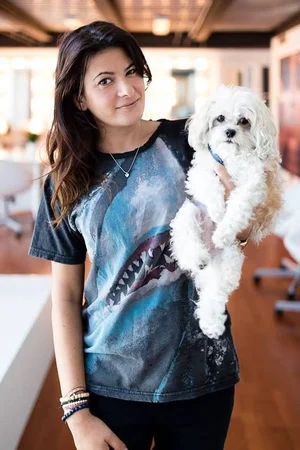
Isidora Krstić
Artist, curator, translator. She works across installation, painting, video, sculpture. Her subject is memory, embodiment, the body as a site of trauma and politics.

Isidora Krstić was born in Belgrade in 1987, a year that would see the city transform before her eyes. She spent part of her childhood in Johannesburg, where Nelson Mandela had just become president, witnessing another world in the making. She studied painting at the Academy in Belgrade, then moved to Vienna, where she got an MA in Art and Science. She has been based there for seven years, but her work moves across mediums and borders. Installation, painting, video, sculpture, collage, print. She co-founded U10 Art Space with six artist friends, a platform that has now grown to eight years old. What runs through all of it is a commitment to dealing with life in its honest complexity, particularly the ways memory and trauma live in the body, and how the body itself becomes a vessel for political meaning.
Influences and Disciplines
Krstić draws inspiration from work that immerses the viewer in something larger than a single medium. She cites Peter Rehberg's sound installation at the Kunsthalle Wien and Victoria Vesna's Noise Aquarium, works that blur the boundaries between art forms. She is continually moved by Antiquity, Egyptian and Baroque art. Among contemporary artists, she finds particular strength in the work of Kiki Smith, Louise Bourgeois and Marina Abramović, artists who have centred the body and its vulnerabilities in their practice.
Recently, the film Midsommar left a strong impression on her. Good books, series, films, music, conversations, a piece of art that speaks to vulnerability. These are what fuel her thinking. She listens to podcasts while she works, good interviews, This American Life, WTF with Marc Maron. She reads the New Yorker, follows illustrators and comic artists. She loves the internet. She also gets lost in late-night YouTube scrolls of cooking videos, which deserves an honourable mention.
I get inspired by things that deal with life in all of its complexities in an honest, vulnerable way.Isidora Krstić
In Conversation
Isidora Krstić × Antakly Projects
How do you feel the art world is going to change in the coming decade?
I feel we are seeing so many different points of view, art that transcends disciplinary boundaries and that is not tied to or dependent on a specific media for its expression. I think we will see more interdisciplinary collaboration between art, sciences and other fields. I also think that painting and some more so-called traditional expressions are finding a new place in today's world, and I think that is really exciting. I also think there will continue to be a re-definition of what art is and what it does.
What are the challenges of what you do?
There are many. I guess the first one is the financial instability or better said, the uncertainty. Often times I wanted to just throw everything away as it is not always encouraging, balancing one, two or three side jobs with sustaining an art career. On the bright side of it, I learned a lot through the jobs I did too, so somehow I wouldn't change the previous experience either.
What draws you to working across different mediums?
My work transcends strict disciplinary boundaries, often breaking down traditional artistic procedures and methods. The way I work with a space and the architecture of the exhibition space is very important to me. Whether it is through installation, painting, drawing, video, sculpture, collage or print, what matters is that the medium serves the idea, not the other way around. The topics I explore: memory, the embodiment of personal and generational trauma, exoticism, the body as a socio-political entity. These need to breathe and move across different forms.
The body becomes a vessel for political meaning. For rest, for trauma, for what it means to be human in a changing world.Isidora Krstić
On Precarity and the Sea
In preparing for a residency in Balchik, at the Black Sea, Krstić thought about her own precarious position as an artist. The rising cost of living puts existential needs in the forefront. Seaside holidays, time for rest and relaxation, these are increasingly becoming a luxury. The residency sat in a typical holiday destination, but the expectation of producing work felt in dissonance with her desire to simply rest. She decided to make that desire the subject itself. In an untypical move, she placed herself as the subject of a video piece, capturing repeated attempts at achieving a state of weightlessness in water, diving and ascending to the surface again and again. The work holds both the impossible desire for escape and the weight that pulls us back, a meditation on what it means to make art while living precariously.
isidorakrstic.com Instagram U10 Art Space
About Antakly Projects
Antakly Projects has been in conversation with artists and creatives from around the world since 2003.
Explore the full archive →And for the personal rants, opinions you didn't ask for, and the occasional existential spiral: follow me on Substack
Follow us on @antakly.projects (instagram) ✦ Stay curious.