Art, Territory and Nature
Rodolfo Andaur
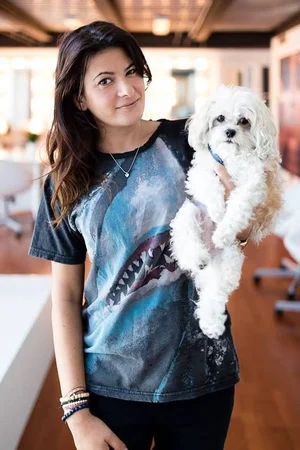
Chilean curator. His practice interrogates territory, climate, and the cosmovision of indigenous peoples. Art as a tool for decolonisation and environmental responsibility.

Rodolfo Andaur was born in Iquique in 1979, in the north of Chile, where the Atacama desert stretches endlessly. He studied journalism and holds an MA in Art History. But his curatorial practice has never been confined to white walls or institutional settings. He works in territories. He organises exploration trips through deserts and jungles with artists, thinkers, researchers. The goal is always the same: to use art as a political tool, to interrogate what climate change and extraction have done to the land, and to listen to indigenous cosmovisions of nature that might teach us how to protect it. His projects have taken him across Latin America, Europe, and beyond, gathering artists and curators for conversations that happen in the landscape itself, where the body requires constant resetting.
Territory as Method
Latin American cinema has been a crucial influence on Andaur's thinking, providing him with conceptual frameworks and new landscapes to imagine. His projects are organized around the exploration trip as methodology, combining art, research, and direct engagement with environmental damage. He refuses the title of curator in the traditional sense, insisting instead that his work approaches sustainability, territory, and geography in outdoor contexts. Nature allows him to work in its landscape. All of these imaginaries remark new symbols, languages and borders.
His most recent major project is an exploration trip through the Bolivian Chiquitanía, organised with Kiosko gallery, bringing together twenty artists and thinkers to interrogate the nature damaged by fires at the end of 2019. The project is rooted in a conviction that we need to get close to indigenous cosmovisions of nature, to rescue ideas that might protect it from human irresponsibility.
Art is a political tool. It is time to use it in that way. Time is out.Rodolfo Andaur
In Conversation
Rodolfo Andaur × Antakly Projects
Your greatest inspirations or influences?
For sure visual arts culture inspire me every day, however Latin American cinema gives me a lot of issues to write virtuoso concepts, territories and evoke new landscapes.
Can you tell us about project Fragua?
Fragua is a project organised by Galeria Barrios Bajos in Valdivia, in the south of Chile. The directors Gabriela Urrutia and Elisa Figueroa invited me to work on the coastline of that region with more than 40 people, most of them visual artists. This project focused on exploration trip methodology to understand the anthropocene. I also read some poems with the Mexican curator Amanda de la Garza. The main goal was to combine our voices with the nature and how the participants connect with this atmosphere in a damage context.
What are the challenges of what you do?
The visual art culture named me as curator, a person whose main projects are related with art exhibition. However my main projects are approaching with sustainability, territory and geography outdoor. Nature allows me to work in its landscape. All of these imaginaries remark new symbols, languages and borders.
How do you see the art world changing, and how do you see the impact of climate change in your work?
I am from Chile and the consequences of climate change are super strong. We are living in a horrifying epoch. So my projects can be a respectful form of address to the people who are suffering nowadays. I am sure the art world has a huge responsibility to spread the protection of nature on a global scale. Art is a political tool. It is time to use it in that way. Time is out.
Do you have favourite websites, publications or social media?
I think to name only a couple of pages is not fair. I look at many super cool pages in relation with creativity. But I can tell you about some interesting publications: A Billion Black Anthropocenes or None by Kathryn Yusoff, Decolonizing Nature by T.J. Demos, and some of the publications of the Bolivian sociologist Silvia Rivera Cusicanqui.
What is the most interesting response you have heard regarding your work?
Most of the people I have worked with say I have the commitment to expand the artists' work into several branches of knowledge.
Many interesting dialogues have arisen during walks where the body requires constant resetting.Rodolfo Andaur
A Note on Territory and Extraction
Rodolfo cites T.J. Demos' Decolonizing Nature, and the correlation to what is happening in the Middle East is not incidental. The logic that treats nature as exploitable resource is identical to the logic that has justified territorial occupation and geopolitical extraction. Both arise from the same refusal to recognise land, water, and people as alive, as having their own agency and cosmology. Both demand that Western knowledge systems and economic frameworks be imposed over indigenous understanding. Rodolfo's practice resists this through a simple inversion: not the curator telling the land what it means, but the artist and thinker listening to what the land already knows. The exploration trip as methodology is a refusal of mastery. The body reset by walking becomes a form of decolonisation itself.