ARTIST MATTEO RUBBI

Matteo Rubbi: Let the Stars Sit Wherever They Will | Antakly Projects
matteorubbi.com
Antakly Projects  ·  Art  ·  Bergamo  ·  Sardinia

Matteo Rubbi

Let the Stars Sit Wherever They Will

Artist. Co-founder of Cherimus, an art association based in Sulcis, Sardinia. Carnival Nairobi 2018. A six-metre paper sun. A shipyard built inside a museum. An Atlas of the Night Sky of the Mediterranean in progress.

Bergamo, Italy  ·  b. 1980 Cherimus  ·  Sardinia Brera  ·  Montalvo  ·  Camargo
Feeling very fortunate to have the opportunity to share Matteo Rubbi's inspirations and perspective on the art world. He is one of the most genuinely important artists in this archive.

Matteo Rubbi was born not far from Bergamo in 1980. He studied industrial chemistry at high school, loved it, but was, by his own account, a mess in the lab. He studied art instead, graduating from the Brera Academy of Fine Arts in Milan in 2005. Since then he has been exploring ideas and inventing projects with other people: setting up a Solar System with people orbiting themselves, transforming museums and schools into shipyards to rebuild old vessels in 1:1 scale with waste material.

In 2007 he co-founded Cherimus with visual artists Emiliana Sabiu and Marco Colombaioni, an art association based in Sulcis, Sardinia, that experiments with alternative ways of working on the relationship between art and community. The project he is most proud of is Carnival! Nairobi (2018), in which he and artists from Italy and Kenya worked with Kenyan street educators and communities of children living on the streets to invent an entire carnival based on the participants' own dreams and ideas. The parade through the streets of Nairobi was, in his words, a real landmark in his artistic practice.

He is currently developing a residency at the Montalvo Arts Center in California and preparing for the Camargo Foundation in Marseille, where he and his partner, writer Zeyn Joukhadar, will research the history and traditions surrounding the constellations of Mediterranean peoples throughout the centuries, building what they hope will become a real Atlas of the Night Sky.

"A kid who participated in making the six-metre paper sun came to me at the opening and told me, looking very proud of herself: this show is very, very beautiful, Matteo Rubbi."
Matteo Rubbi  ·  Most interesting response to his work
The conversation
01

Tell us about yourself, Matteo.

I studied industrial chemistry at high school, loved it, but I was kind of a mess in the lab so I studied art instead. I graduated in 2005 at the art school of Brera and since then I have been exploring ideas and inventing projects with other people. That is my own way, I think: setting a Solar System with people orbiting themselves, or transforming museums and schools into shipyards to rebuild an old vessel in 1:1 scale with waste material.

In 2007 I co-founded, with visual artists Emiliana Sabiu and Marco Colombaioni, Cherimus, an art association based in Sulcis, Sardinia. We experiment with alternative ways to work on the relationship between art and community. We focus on building connections, addressing social issues, and finding possible solutions through art.

"The project I am most proud to have been part of is Carnival! Nairobi (2018). There, in Nairobi, I and other artists both from Italy and Kenya worked together with Kenyan street educators and with communities of kids living in the streets to invent an entire Carnival based on the dreams and ideas of the participants. The final parade in the streets of Nairobi was for me a real landmark in my artistic practice."

02

Your greatest inspirations and influences?

My mother used to paint in her free time. I always leafed through her art books on Impressionism and the avant-garde. At seven, I remember feeling stunned in front of the Pietà Rondanini by Michelangelo. At nine, the Camera degli Sposi by Andrea Mantegna on a school visit.

During art school, the encounter with Alberto Garutti as a teacher was fundamental. Also the work of Alighiero Boetti, Gino De Dominicis, Felix Gonzalez Torres, Chen Zhen. And the Isola Art Center in Milan, the work of Bert Theis and Mariette Shiltz, and all the people I met there.

The work of my friend Marco Colombaioni (1983-2011) and its energy is still essential in all the projects we are writing as Cherimus. The work of visual artists like Alek O., who touches and transforms objects of everyday life with rare sensitivity; and Dafne Boggeri, who over the years has challenged the rigid art system of Milan with innovative projects about art, music and publishing. The irony of Yassine Balbzioui and the happiness he has when he paints is always very contagious. With him I have gotten back to being a pretty good painter.

The work of artists, activists, and educators we collaborate with in Cherimus, such as Mass'art in Tunis, Koinonia in Kenya, Ker Thiossane in Dakar, and Art Galle (the wonderful initiative of visual artist and activist Amy Sow in Nouakchott, Mauritania), reminds me constantly of how much art is a complex, powerful, wonderful tool that requires courage, patience, and above all the ability to listen.

Last but not least, the work of my partner, writer Zeyn Joukhadar, with whom I am collaborating in various projects at present, has definitely been a bright star in these last few years.

03

What do you think of the art industry and how it works?

If by art industry we consider the totality of initiatives, projects, and collaborations that visual artists, writers, musicians, and activists are activating worldwide, especially in places considered by the richest countries to be on the margins: well, I think that industry is alive, fighting for change, industrious and innovative as never before.

If we consider instead just the institutional Western visual art world, the museums, the biennials, the art fairs: I perceive that industry as very conservative, exclusive, and very clumsy at approaching the complexity of today. Maybe because it mainly targets very privileged people's consumption while still pretending to be the only and most reliable narrative of contemporaneity.

04

What do you think about social media and its effect on the art world?

Even if personally I am quite inactive on social media, every day I can follow the work of artists all around the world who share work or articles I could not find on my own. Social media can really help with communication and collaboration between far-away initiatives, exchange of best practices, and the construction of alternative and unexpected networks.

05

Anything else you would like to share?

This year I will participate in a residency at the Montalvo Arts Center in Saratoga, CA. Next spring I will be in Marseille at the Camargo Foundation residency, where I will develop a project with my partner Zeyn Joukhadar: a research of the history and traditions surrounding the constellations of Mediterranean peoples throughout the centuries, which we would like to transform into a real Atlas of the Night Sky.

With Cherimus we are working on a cooperation project between Sardinia and Senegal about music: the collaboration between three Senegalese musicians and three Sardinian musicians gives rise to a new band called Gego Yego, with a European tour to follow. We are also working on I giardini possibili, a project aiming to create four new public parks in four small towns of Sardinia, based on workshops taking place in local schools with international artists. Check it out at cherimus.net.

Favourite handles and publications

Matteo Rubbi  ·  Recommended reading
Mass'art  ·  Tunis Ker Thiossane  ·  Dakar Art Galle  ·  Nouakchott Superheroes of Kibera Africa As A Country Isola Art Center  ·  Milan Sprint Discostan Maasai Mbili Yassine Balbzioui
"Art is a complex, powerful, wonderful tool that requires courage, patience, and above all the ability to listen."
Matteo Rubbi

Stay curious,

Leila Antakly
MatteoRubbiArt


Credits and Caption

  • Atlas Of Marvels

    2018-ongoing. In collaboration with Zeyn Joukhadar. Spray paint and calligraphy pen on paper. 317cm x 317cm.

  • Carnival! Nairobi

    2018. With Cherimus, Koinonia and the communities of kids that live in the street of Nairobi. Workshops and carnival Parade, Nairobi. Ph: Francesco Cavalli

  • Kan Ya Ma Kan

    2017. Site-specific installation. In collaboration with writer Zeyn Joukhadar. 250cm x 50cm approx. Montalvo Arts Center, Lucas Artists Residency Program. Ph: Leonardo Chiappini

  • Voyages dans la mer perdue

    2017. Le Soleil. Paper, oil pastels, adesive tape, ropes. In collaboration with the primary school and secondary school of Delme.

    CAC – la synagogue de Delme, Ph: O.H.Dancy.

  • Cieli di Belloveso ( first visual)

    2017-18. Public Art Work. Permanent Installation, granite, marble-concrete. Piazza Burri, Milan,

  • Carte du ciel

    2014-2015. Workshop (Col de Vence, Collège Vernier, Nice 23-30 June 2014), video installation. In collaboration with Leonardo Chiappini.

  • Festival internazionale degli aeroplanini di carta / The International Festival of Paper Plane

    2014-2015, Workshop, sport event. Bibliotheque National du Royame du Maroc, Rabat; Lazzaretto, Cagliari. Ph: Baptiste de Ville d’Avray

  • Bounty

    2011, Bounty nello spazio, installation view. GAMeC, Bergamo. Ph: Jacopo Menzani

  • Solar System

    2007. Performance. Centrale di Fies, Dro, Trento. Ph: Hugo Muñoz. Courtesy Galleria Civica di Arte Contemporanea Trento.

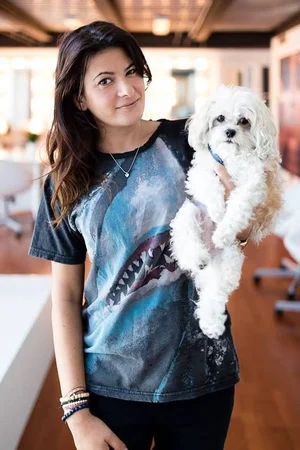
  • Portrait Cover of Matteo Rubbi Zeyn Joukhadar

Leila Antakly

Leila Antakly is the founder and editor of Antakly Projects, the independent cultural platform she launched in New York in 2003 as Ninu Nina. Syrian and Colombian, she began her career at Vogue Italia and has spent more than twenty years in conversation with artists, musicians, designers, photographers, and inspiring thinkers around the world.

https://www.ninunina.com/
Previous
Previous

A HISTORY OF MUSIC VIDEO CONTROVERSY

Next
Next

Bridging Classical Composition and Contemporary Sound