
THE DHAKA ART SUMMIT
When the Center
Moved to Dhaka
For one month, the question stopped being how South Asian artists fit into London or New York, and became what happens when Dhaka is the center of the conversation.

I have spent twenty years paying attention to artists the market had not yet noticed, and for most of that time the map looked the same: New York, London, Berlin, eventually Hong Kong. South Asian artists were let in as exceptions, footnotes to a story written somewhere else. The Dhaka Art Summit refused that arrangement. Instead of sending its artists abroad to be discovered, it brought the discoverers to Bangladesh. That inversion is the whole point, and it is why this matters far more than its modest, free, non-commercial setup lets on.
What It Is
The Summit is not an art fair. Nothing is for sale. It runs free, functioning as a research platform, an exhibition, a school, and a gathering all at once. It was founded by the collectors Nadia and Rajeeb Samdani, who realized in the late 2000s that the artists of their own country had no galleries showing them, almost no exhibitions, and barely a website between them. Their foundation began by supporting a handful of artists, and then ran into the obvious limit.
How many can we support? Five? Ten? That was not enough, so we created the Dhaka Art Summit.Nadia Samdani
By its later editions, curators and directors from Tate Modern, the Guggenheim, the Centre Pompidou, and the British Museum were flying to Dhaka to see what they had been missing. The New York Times reported fifty thousand people came.

How It Grew
The first edition, in 2012, was about Bangladesh: visibility for artists and galleries who had nowhere else to be seen. By 2014 the frame had widened to South Asia entire, with India, Pakistan, Nepal, and Sri Lanka brought into conversation with Bangladesh rather than each kept in its own national silo. The dialogue itself was the innovation.
A Sense of the Work
To feel what this actually is, consider a few of the artists. Naeem Mohaiemen, whose work on post-colonial history and correct history anchored the Summit's intellectual reputation, made a Bengali newspaper whose dystopic headlines were swapped for alternate realities. Raqs Media Collective took over a hundred and sixty of Dhaka's road signs and billboards, turning the city's notorious traffic into clock faces pointing to wordplays in Bengali. Rana Begum, born in Sylhet and working in London, built a monumental dome out of her childhood fascination with basket weaving, a play of light drawn from the Koran. Lida Abdul's films from Kabul, one of them above, find regeneration in the most broken circumstances. Shilpa Gupta turned the India and Bangladesh border into research on how nations invent themselves. And Ayesha Sultana, whose quiet, minimalist practice won the 2014 Samdani Art Award, went on to exactly the international attention the Summit was built to create.
Why It Matters
Here is the detail that stays with me. The Samdani Art Award sends a young artist to a residency at London's Delfina Foundation. It used to be a cash prize, until the foundation noticed that two recent winners simply took the money and stopped making art, because surviving as a professional artist in Dhaka is that hard. That is the real stake beneath the glamour, and it is why a free platform in Bangladesh is not a charity gesture but a structural argument.
The Summit anticipated a shift the art world is only now catching up to. For decades, contemporary art was read almost entirely through Western institutions. Dhaka asked a different question. It did not simply showcase South Asian art. It changed who gets to write art history in the first place. That, more than any single work, is its contribution.
What happens when Bangladesh, rather than London or New York, becomes the center of the conversation?The question the Dhaka Art Summit asked
About Antakly Projects
Antakly Projects has been in conversation with artists and creatives from around the world since 2003.
Explore the full archive →And for the personal rants, opinions you didn't ask for, and the occasional existential spiral: follow me on Substack
Follow us on @antakly.projects (instagram) ✦ Stay curious.
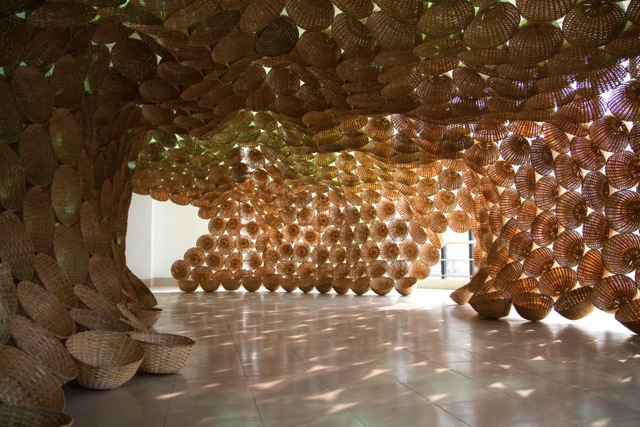
Rana Begum
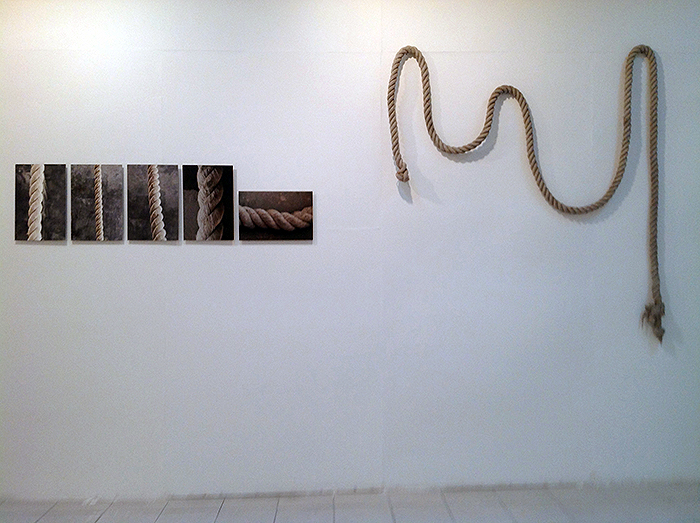
Citizens-of-Time
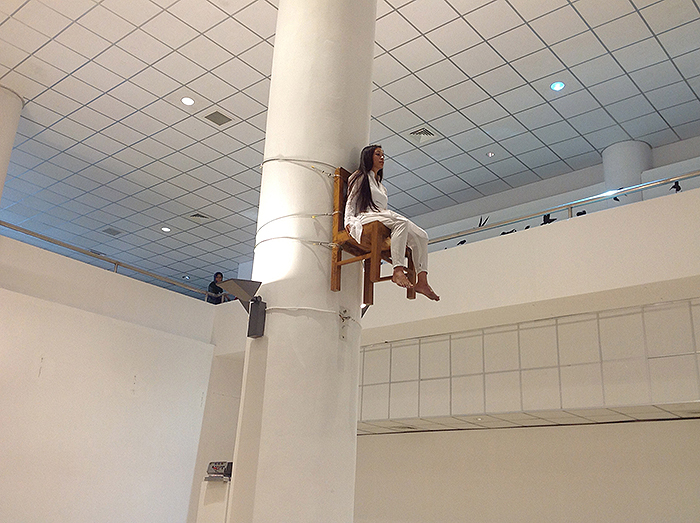
Yasmina Jahan Nupur, Sat on a Chair, 2014. Performance at Dhaka Art Summit, Dhaka, 2014. Image courtesy of the Samdani Art Foundation, Dhaka. Photo by Natasha Ginwala