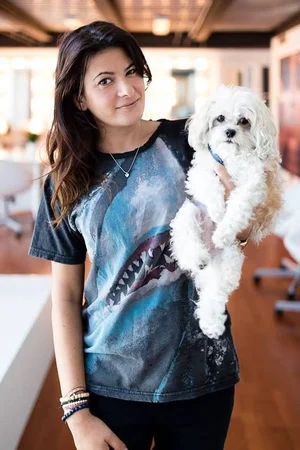
Designer Sebasian Pons
Sebastián Pons
McQueen's trusted right hand, toast of New York fashion week, and the man who, at the height of it all, quietly went home to a tiny Mallorcan village.
It was my friend Franck who introduced me to Sebastián, at his Gramercy apartment, in the years when New York was falling for him all over again.
This page holds both halves of him: our conversation from the New York years, when his label was being reborn at Gramercy Park, and the longer story of the boy from Mallorca who helped McQueen change fashion forever, and then chose to go home.
Leila
In the 70s, the Pons family's neighbours were Argentinian bohemians, an artist and a ceramicist, who taught young Sebastián to throw pots and gave him an education in the arts through books and music. "Mallorca was a utopian place," he remembers, "and diverse people from all over the world would come to make a real life for themselves, something interesting. It made me curious."
The needle came even earlier than the wheel: at six, his aunt and mother taught him to sew, and he made intricate jackets out of recycled jean materials and American memorabilia, a passion for American folk art beginning decades before he could articulate it.
At Central Saint Martins, Pons began working with Lee, as friends called Alexander McQueen, printing fabrics in the school's print shop for the designer's ready-to-wear collections. When McQueen was asked to become head designer at Givenchy, replacing John Galliano, he asked Pons to come with him.
Pons left McQueen in 2000 and moved to New York, designing several critically acclaimed collections under his own label. He returned to Spain for inspiration every season; the collections included flamenco minis and Inquisition altar boy bloomers, and Vogue applauded the work, calling him a designer to watch.
"Lee said to me, you understand how I work and how I am emotionally, and I want you to come to Paris to be my assistant."Sebastián Pons · on joining McQueen at Givenchy
When we spoke, Pons was exuberantly debuting his Fall/Winter 2012 collection. The presentation featured demi-couture womenswear inspired by American nostalgia, folk art, notes of Victorian period detail and sparkly lace.
Inspirations and influences?
The National Arts Club and Gramercy Park helped inspire the colors and vision for the collection, but my passion for American folk art started at a young age, growing up on the seaside in Mallorca. "Vintage revival is something relevant to the American story of today, and something I focus on with this collection."
Highlights of the collection?
The jacket is the focal point. The collection is like a quilt: every piece is made up of separate pieces that can be added or removed according to the changing environment of a woman as she moves through her day. The theme of the 1950s-inspired skirt and dress silhouette permeates everything, and one particular story is the bustle, inspired by Victorian ladies and Christian Dior, a design invention meant to challenge the silhouette of today's woman, slenderizing the torso and adding dramatic focus to the back of the dress.
Designers who have influenced you?
Oscar de la Renta, for his particular investment in exploring the woman's silhouette, and Ralph Lauren, for his revolutionizing take on American nostalgia and themes. "In the end, I follow my inner voice and intuition for inspiration. You need to follow your passion and trust the messages each of us are lucky enough to receive when on the right life path, no matter how small. The rest falls into place."


"Be careful what you dream. It can come true."Sebastián Pons · who dreamed it, lived it, and went home

You Will Also Love
About Antakly Projects
Antakly Projects has been in conversation with artists and creatives from around the world since 2003. Explore the full archive →
And for the personal rants, opinions you didn't ask for, and the occasional existential spiral: follow me on Substack
Follow us on @antakly.projects (instagram) ✶ Stay curious.