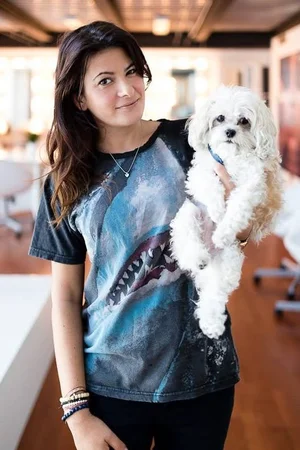

Photograph by Nikola Tamindzic.
Nikola Tamindzic
Before "influencer" was a word, he was the man with the camera at every party worth reading about the next morning.
Gawker's eye
In 2004, Nikola Tamindzic became Gawker's house photographer, and for the next few years, in the site's heyday, he was the definitive chronicler of New York's media and nightlife world: the book launches, the after-parties, the people who wrote about each other and then were photographed doing it.
His own site, Home of the Vain, collected it all, along with his portraits and fashion work, and became a place insiders checked. From there he moved more and more into fashion and portraiture, for clients from H&M and Nylon to New York magazine, The Guardian and The Sunday Times.
He says his path was simple: "I picked up a camera, played with it, and fell in love." The work is less simple. He learned from Guy Bourdin and Helmut Newton, and his pictures hold the same tension: glamorous and uneasy, funny and dark at once.
"What the brain is seeing late at night."
His party pictures came from long exposures, shaking the camera while the shutter was open, so the lights streak and the colours smear, which he told The New York Times was closer to "what the brain is seeing late at night." Via Kottke, 2008.
Three quick shots
You capture a lot of raw moments at night. What reactions do you get?
"They step the action up even higher."
People love having their photo taken in 99% of situations, so usually they step the action up even higher.
Most memorable shoot?
A shoot with Fever Ray. Forty-five seconds in total, and we came out with one of my favourite photos of all time.
Editor's note: the link to that portrait pointed to his old website, which no longer exists. See his current site for his portraits.
Favourite websites, blogs, publications?
I subscribe to so many via RSS, too many to mention. People who follow my Tumblr or my Twitter get the digest version of everything I keep an eye on.
Editor's note: RSS, Tumblr, Twitter. A perfect time capsule. Today you'll find him on Instagram.


Vanity, with a heart
A flower in the mouth and tears in the eyes. A body bent so far back it looks like it's falling. His portraits flatter and unsettle at the same time, which is why people stop on them.
Since we spoke
The party years built the eye; fashion and portraiture became the career. His fashion work has run internationally, including a 2015 cover for Harper's Bazaar Serbia.
His most personal project went the other way: F*cking New York, four years of photographs, mostly of nude women posing across the city's streets, which started as a summer project on the Lower East Side and was funded through Kickstarter in 2016 as a book of more than 200 images. His site also holds newer series, including portraits made during the COVID years.
"The story doesn't begin or end within the photograph, but seems to go on without you."
JiaJia Fei, then at the Guggenheim Museum, on his work
- 2004Becomes Gawker's house photographer
- 2008The New York Times profiles his blurred, late-night party pictures; Home of the Vain is a destination
- 2015Cover for Harper's Bazaar Serbia
- 2016F*cking New York photobook crowdfunded on Kickstarter
- 2020sPortrait series made during COVID
Selected clients, from his bio. We couldn't confirm his current Vogue work, so we haven't listed it.
Who is Nikola Tamindzic?
A New York portrait and fashion photographer who became Gawker's house photographer in 2004, documenting the city's media and nightlife scene. His clients have included H&M, Nylon, New York magazine, The Guardian and The Sunday Times.
What is Home of the Vain?
His website and blog of portrait, fashion and nightlife photography, which by 2008 had become a destination for New York's media and party insiders.
What is his style?
At night he used long exposures and moved the camera with the shutter open, so lights streak and colours blur: "what the brain is seeing late at night," as he told The New York Times. His fashion and portrait work draws on Guy Bourdin and Helmut Newton.
All photographs by Nikola Tamindzic. Original interview: Leila Antakly. Additional quotes from The New York Times (via Kottke, 2008) and JiaJia Fei. Revisited for Antakly Projects, 2026.