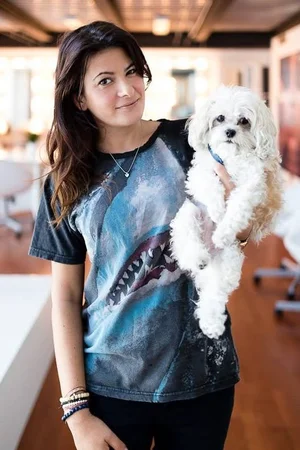
M.I.A.'s MAYA at sixteen
In 2010, M.I.A. made an album about who controls information. Sixteen years later, the album sounds like a prophecy, and its author has become one of the most argued-over stories it predicted.

A browser with a hundred tabs open
Long before "fake news" was a household phrase, Mathangi "Maya" Arulpragasam made an album against the machinery of media and data. Her third record, stylised /\/\ /\ Y /\ and known as MAYA, arrived in July 2010 with what she called a "digital ruckus".
She made it mostly at home in Los Angeles, where she'd been living for about eighteen months and felt "disconnected". She turned that into the record's subject. The theme, in her words, was "information politics": the combined power of news corporations and data giants like Google, who controls what counts as true, and why the next generation would need alternative sources.
The sound broke with the global dancehall and baile funk of her first two albums. With Blaqstarr and Rusko, plus Diplo and her brother Sugu, she welded her percussive style to grinding industrial electronics: metallic, clattering, deliberately too much. She called it "schizophrenic". Listen now and it sounds like a phone at 2 a.m., every alert going off at once.
Reviews were split; plenty of critics found it abrasive. Spin gave it 9 out of 10. Time has mostly been on its side. In an age of algorithmic feeds and information overload, tracks like "The Message" and "Story to Be Told" sound less like outliers and more like early warnings.
- Album
- /\/\ /\ Y /\ (MAYA), third studio album
- Released
- July 2010 · N.E.E.T. / XL / Interscope
- Made in
- Mostly her home in Los Angeles
- Producers
- Blaqstarr, Rusko, with Diplo and Sugu Arulpragasam
- Theme
- "Information politics"
- Key film
- "Born Free", dir. Romain Gavras
Born Free, and the outrage machine
Nothing defined the MAYA era like "Born Free". Directed by Romain Gavras, the nine-minute film shows a military unit hunting down and killing red-haired young men. Its graphic violence and nudity set off an immediate storm; YouTube took it down, then restored it behind an age restriction.
A fictional film caused more outrage than real executions online.
That was M.I.A.'s own point, and it made the controversy a live demonstration of the album's theme. A staged killing of an invented minority triggered bans and think pieces, while real footage of real killings, a click away online, drew a fraction of the attention. The film made her one of the most discussed artists online that summer, proving her argument about how viral information works, and who it serves.
Father, mother, and a war
Named after her father, who took the name Arular in the Tamil resistance movement. Conflict, set to hip-hop and dancehall: political messages carried on hooks you couldn't stop dancing to.
Named after her mother and her struggle to balance work and family. More South Asian and African sound, even a didgeridoo, and songs about immigration, poverty and violence. She summed it up as "shapes, colours, Africa, street, power, bitch, nu world, and brave".
A hit that became a movie-trailer soundtrack, and that most listeners missed was satire. She wrote it after a long wait at US immigration, aiming squarely at America's fear of immigrants.
"It's about people driving cabs all day and living in a shitty apartment and appearing really threatening to society. But not being so… I don't think immigrants are that threatening to society at all. They're just happy they've survived some war somewhere."
M.I.A. to Entertainment Weekly, 2008
That war was hers. Her family moved from London to Jaffna when she was six months old, and she lived through the early years of Sri Lanka's civil war until she was eleven. In 2009, as the government's final offensive against the Tamil Tigers killed civilians in huge numbers, she used her "Paper Planes" fame to speak out.
"I want my fans to know I'm not tryin' to be like Bono… I actually come from there, and the fact is that this is happening now."
M.I.A. to The Daily Beast, 2009
Context: in 2013 the Permanent Peoples' Tribunal, a non-governmental opinion tribunal sitting in Bremen, found the Sri Lankan state guilty of genocide against Tamils. It is not a court with legal authority; UN investigations have documented credible allegations of war crimes by both sides.
Then the story turned
In 2010, M.I.A. warned that whoever controls information controls the story, and urged people to find alternative sources. In the years since, she has moved a long way from where many of her early fans stood, and has herself become one of the most contested stories in pop. Here is what happened, as reported.
- 2016
Afropunk London drops her
After she asked, in an Evening Standard interview, whether Beyoncé or Kendrick Lamar would say "Muslim Lives Matter", Afropunk London announced she would no longer headline. She tweeted: "Sorry I'm not doin Afropunk. I've been told to stay in my lane." Around the same time she spoke publicly about years of US visa trouble, which she linked to her politics.
- 2020–22
Vaccines, faith, a new album
She drew wide criticism for anti-vaccine posts during the pandemic. In 2022 she released Mata and spoke publicly about becoming a Christian.
- 2024
Trump and RFK Jr.
On 23 August 2024 she posted on X: "Trump is going to ride America through the most challenging 4 years coming pulling out weed, and RFK will inherit America when God is ready to replant and rebuild it righteously."
- 2026
Cut from Kid Cudi's tour
At a 3 May show in Dallas on the Rebel Ragers tour, she told the crowd she'd "been cancelled for many things. I never thought I'd be cancelled for being a Republican voting American." Kid Cudi removed her, saying he'd been "flooded with messages from fans that were upset by her rants." She sued in federal court in California for about $2.8 million, alleging she was fired "to generate publicity for the Tour". The case was ongoing at the time of writing.
Asked on the New York Times' Popcast whether she's now a MAGA artist, she said: "That's not what's going on." She framed it as a matter of identity: she is a brown immigrant woman, and that isn't something anyone can take from her.
Shared by @celebrities4palestine.
The prophecy and the prophet
Opinion, not reportingIt's tempting to re-hear MAYA through everything that came after: to decide the album was right and its author went wrong, or that the album's distrust of institutions led straight to where she is now. Both are too neat.
What holds up is the question the record asked: who decides what's true, and who profits when we're overwhelmed? That question is more urgent in 2026 than it was in 2010. What's changed is that M.I.A. now looks for her answers in places many of her early listeners reject, and she is judged, boosted and cancelled by the very attention economy the album described.
You don't have to agree with her to see the symmetry. The album warned that the information machine would turn everyone into a story. Sixteen years later, it's turned her into one.
Listen to it again. Then decide who's telling the story.
What is MAYA about?
M.I.A. described the theme of her third album, released in July 2010, as "information politics": who controls news and data, and why people need alternative sources. It was produced mainly with Blaqstarr and Rusko, with Diplo and her brother Sugu, and recorded largely at her home in Los Angeles.
Why was "Born Free" controversial?
Romain Gavras's nine-minute film shows soldiers rounding up and killing red-haired young men. Its violence and nudity led YouTube to remove it, then age-restrict it. M.I.A. argued that a fictional film drew more outrage than real execution footage online.
Why was she removed from Kid Cudi's tour?
Kid Cudi dropped her after a 3 May 2026 show in Dallas, citing fan complaints about her "rants". She had said on stage she never thought she'd be cancelled for being a Republican-voting American. She sued in federal court for about $2.8 million, alleging she was fired for publicity.
Is "Paper Planes" about immigrants?
Yes. She told Entertainment Weekly in 2008 that she wrote it after a long wait at US immigration, as a satire of how immigrants are seen as threatening.
Hero photograph by Jaime Martinez. Original piece: Leila Antakly, 2010. Quotes from Entertainment Weekly (2008), The Daily Beast (2009), The Observer (2007), the Evening Standard and Rolling Stone (2016), Consequence (2026) and Complex (2026), credited in the text. Instagram posts embedded from their original accounts. Revisited for Antakly Projects, 2026.