PHOTOGRAPHER ROBERTO DE LA TORRE

Roberto de la TorreRituals, Magic and the Sacred Landscape
The Galician photographer documenting the ancient masking rituals of the Iberian Peninsula, where communities draw their limits between the sacred and the profane.
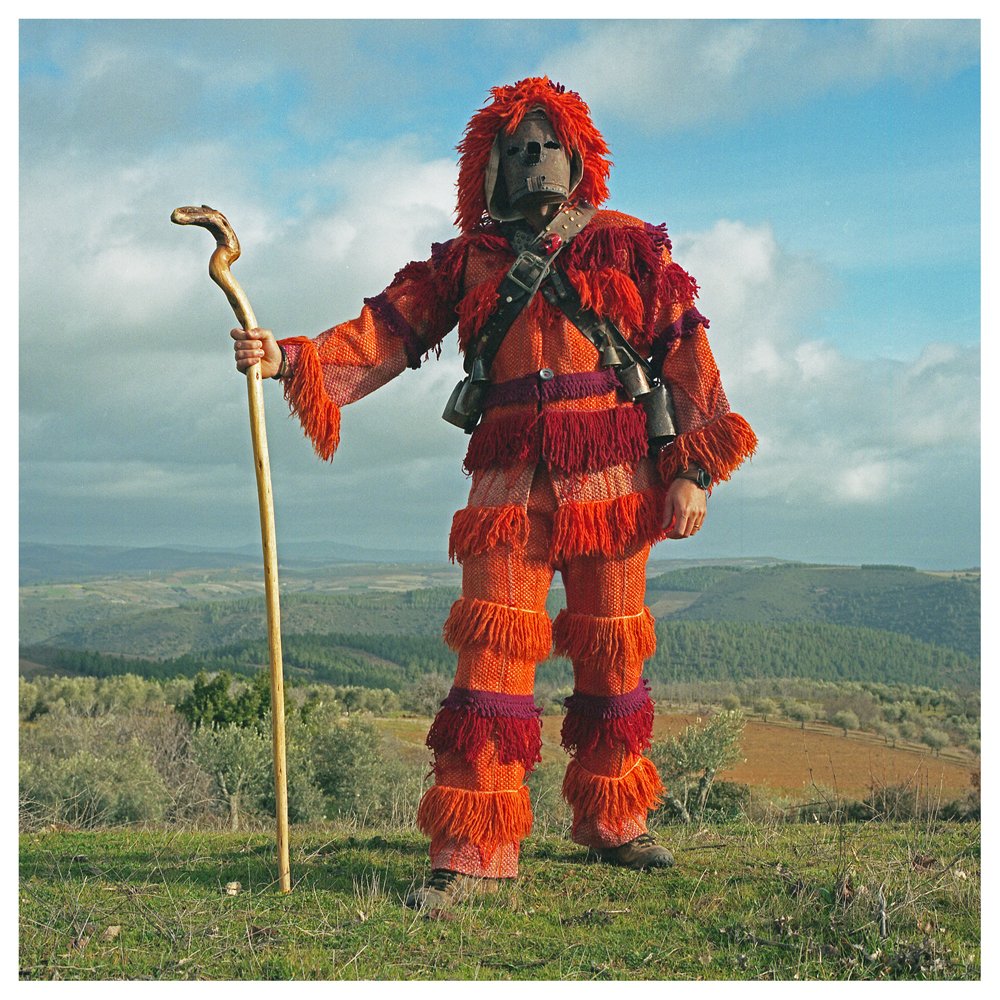
Communities, territories, and the identity of man are created by establishing limits: borders that define the internal versus the external, the known versus the unknown, us versus others, and the sacred versus the profane. In his work, Roberto de la Torre explores the concept of myth-landscape as an intersection between the imaginary divinities represented by men, their natural environment, and their sacred limits.
Through photography he constructs a cultural record that links the dominant sacred beings in each community with the sacred space that they delimit, in places where these traditions evolve in a genuinely singular way.
In Microcosmos, de la Torre presents a hierophanic landscape: places where the existence of the sacred becomes present, manifesting itself through the objects of our usual cosmos as something completely opposed to the profane world. Many of the masked figures he photographs go out in ritual celebrations in isolated places, once a year, very far from the big cities. He travels to be there.
The creative and technical process of the image itself is inspired by the paintings of religious icons, including Francisco de Zurbarán and Velazquez, painters of the Spanish Golden Age. The figures in his photographs carry the same weight, the same stillness, as altarpiece saints.

Tell us about your greatest inspirations and influences.
The thematic base of my work is ancestral beliefs and ancient deities. The creative and technical process of the image itself is inspired by the paintings of religious icons such as Francisco de Zurbarán or Velazquez, painters from the Spanish Golden Age.
Tell us about your creative process.
Many of the masked figures I portray in Microcosmos go out in ritual celebrations in isolated places very far from the big cities. There is little information on them, so I often travel through these regions and involve people from these towns as part of my research. Going to the sites to photograph the masked celebrations also means going on a certain date, because many of these rituals take place once a year.
What is spirituality for you?
Spirituality is the set of ways in which we connect and communicate with the sacred. The ancient and necessary attempt of human beings to communicate with the gods and the supernatural, and that which escapes human rational understanding.
You grew up near Vigo. How did that shape your interest in these traditions?
Vigo is a cosmopolitan and modern city, but close to rural areas where these masked rituals are still alive. They are more typical of villages and rural environments where people are still linked to land and agriculture. I spent my childhood outside Vigo, in one of these rural villages, where I could feel the importance of popular beliefs and traditional religion on the land and the natural environment.
Who do you consider to be an icon of our time?
It is difficult to choose only one icon of our time. Cultural diversity and the ease we have today, thanks to social networks, of reaching the whole world, have greatly dispersed our ideas of what an icon really is. I believe that true icons are found in our past cultures. In each country and each cultural field there are their own icons, based on archetypes that are inseparable from our way of thinking and understanding the world.
What does wellbeing mean to you?
For me, wellbeing is tranquillity, silence, and the absence of the need to be connected. The wind on my face by the sea, a good book, and the song of a bird in the morning give me more peace of mind than anything else.
"We have created needs that we do not have. In the simple things of life is happiness. They are there, but covered with absurd needs that do not let us see them."
Is there anything else you would like to share?
I encourage people to get to know the cultural base that defines us, to move away a little from the nihilism in which we live, where we forget the past and the future. Microcosmos speaks of that ancestral wisdom of the past of a region of the Iberian Peninsula, but it was common throughout Europe. In other parts of the world they were defined in other ways, but they are still there.
Centuries-old garments of the entroido tradition in the Viana do Bollo region of Galicia: towering headdresses of woven wool in vibrant patterns, worn in carnival celebrations that mark the turn of the seasons. The elaborate suits take months to make, the headdresses alone requiring hundreds of hours of hand-knotting. Read more
The straw-dressed figure of the Tafarrón festival asks for fertility in the coming year. The suit of layered rye straw forms vast wings when the arms are raised, creating a silhouette that is simultaneously bird, sheaf, and spirit. One of the most visually striking of all Iberian ritual costumes. Read more
Stay curious,