LaurenSilberman
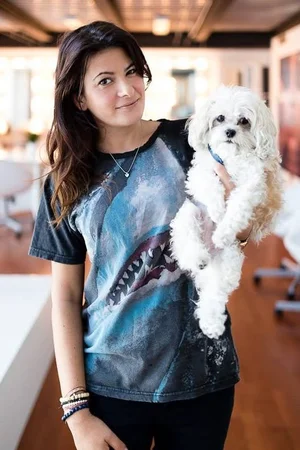
A Brooklyn photographer of afterparties, empty dance floors and the subcultures that build their own utopias. It is the after and the in-between that interests her most.

Who is Lauren Silberman?
Lauren Silberman (born 1976, Stamford, Connecticut) is a Brooklyn-based photographer and visual artist. She started out in the early 2000s photographing the warehouse parties of Brooklyn’s DIY scene, and has since documented a punk tall-bike club, drag queens at home, circus performers in the desert, nightclubs left empty in lockdown and, most recently, the workers who keep Las Vegas running. Her subject is the same throughout: the worlds people build for themselves, and what those worlds look like once the party is over.
- Based
- Brooklyn, New York · born 1976, Stamford, Connecticut
- Trained
- MFA, ICP–Bard Program in Advanced Photographic Studies (2008) · BA Art History, Barnard College
- Shown
- Brooklyn Museum · Museum of the City of New York · Mana Contemporary · Paul Robeson Gallery
- Featured
- The New York Times Magazine · Vogue Italia · Elle · PDN
- Residencies
- High Desert Test Sites (Joshua Tree) · ArtGarda (Sirmione) · Mana Contemporary · Camera Club of New York · LMCC Workspace
- Clients
- The New Yorker, Fortune, NYLON, Vice, Details, Bust, Adidas, Brooklyn Industries
- Online
- laurensilberman.com
In conversation with
Lauren Silberman
Tell us your greatest inspirations or influences.
Most recently, and in no particular order:
Now
- Rebecca Solnit, for her poetic sensibility
- Alain de Botton, for his brutal but empathetic realness
- Jonathan Richman, for his irreverence
- My art heroes: Wolfgang Tillmans, Alec Soth, Miranda July, Alessandra Sanguinetti, Ragnar Kjartansson
- The wild energy in New York as we emerge from the pandemic, and the profound resilience of everyone who remained here through it
Always
- Sophie Calle · Nan Goldin
- The films of Hal Hartley
- William Eggleston · Mike Kelley
- Giorgio de Chirico · Giorgio Morandi
- Dave Hickey · Ian Svenonius
- Alexander McQueen
- Punk rock
Tell us a bit about your creative process.
There’s a balance between trust, effort and patience: trusting that inspiration will arrive, effort to work with the inspiration when it does, and patience with myself to work through ideas and learn new skills to translate those ideas. My work comes from a very personal place. I often focus on something that I am obsessed with, or make work that is a reaction to a personal situation.
I made a performance video piece years ago called Idea Karma. It started with the silly notion of shooting a video of myself dancing in the street dressed as a unicorn. Though it seemed ridiculous, I felt the need to honour it. While shooting the video, the concept of idea karma materialised: it was about using every idea that I have and working with it, because if I didn’t, then I may never get another idea, and how am I going to make it as an artist without any ideas? The making of the video was idea karma in action.
The concept came from a very superstitious place but was actually very practical. Ideas are material to work with, even if they are sometimes not good or don’t materialise into something good; they are the launching pad for other concepts. So, ultimately, the creative process is doing the work: taking the idea and making the work. Sometimes the work comes first, and then the idea comes later. It doesn’t matter. Take advantage of and be open to the muse when it strikes, because you don’t know what it may lead to or when it will strike again! Idea karma!
Ultimately, I look for dualities in much of my work, and these can be inspired by anything that I come across in my daily life that resonates with me. I think the work is most interesting when there are two sides to it: happiness paired with sadness, beauty paired with the grotesque, or inside paired with outside. This is evident in the Karmic Fulfillment video as well as in the work I have done of abandoned party spaces, bars and clubs under lockdown during Covid, and drag queens photographed in various stages of transformation. With the drag queen work, I wasn’t interested in showing them the way that we are used to seeing them, but in seeing a more private and vulnerable side that inhabits a place in between gender and identity. That ambiguity is an example of a duality that I seek.
Things you are looking forward to this year?
Feeling levity and ease after a year of deep emotional loss.
How has this year changed your creativity?
This year forced me to work with different parameters, which I’m always working with in some way. I will admit my creativity felt very stifled for the first few months of lockdown, and I didn’t fight that because there were bigger things to worry about like, ya know, survival. Several months into it I realised that the pandemic wasn’t going to end anytime soon, and I was simultaneously feeling very empty after not having made much new work. I forced myself to dig a little deeper to see what I could make that felt like an appropriate response to the time. I was also going through a very traumatising breakup, so there was loss all around me, on a universal scale as well as a personal one.
Forcing myself to make this work was a very uncomfortable effort to free myself from the utter paralysis that was a result of my broken heart. I photographed what was available to me: emptiness. I took a cue from an image I had made in May 2020 of an empty nightclub that felt to me to be a symbol of the emptiness and loneliness caused by lockdown. I started photographing other bars and nightclubs that were closed during the pandemic. We were all denied the sense of spontaneity in everyday life that New York City usually provides, and bars and clubs are one type of place that provide this. Stacks of bar stools, empty dance floors and taped-off tables were all testaments to that surreal time that I wanted to capture. Making the photographs was an act of recovering from the very deep heartbreak that I was experiencing while also being a nod to it.
Having said that, I have come to understand that my work, first and foremost, is rooted in my emotions. I think there are artists that work in a more intellectual and critical context, and those that work with feeling. The work that is most successful, or at least speaks to me the most, inhabits both an emotional and a critical space. Sometimes I succeed with this in my own work and sometimes I don’t, but I keep trying.
“I photographed what was available to me: emptiness.”Lauren Silberman, on lockdown, 2020
Do you think the art world needs to change, and if so, how?
Absolutely. Am I interested in trying to change it? Not so much. I am more interested in staying true to the work that I believe in and that is distinctly mine. It’s very seductive to try to fit into the art world, but it can force artists to try to fit into something that doesn’t work for them, and that can be a very dangerous place! I think it’s important for each of us, as artists, to create our own art worlds and communities. Personally, this means going to my friends’ art openings, visiting their studios, and being an active member of a few small art groups. I have artist friends from grad school and past residencies, and we constantly support each other in the most tangible ways that we can. The “Art World” will always be there, and it will be ready for you when it is.
Find your own art world, and if you can’t find one that makes sense to you, make your own.
What does wellbeing mean to you?
For me, wellbeing is closely intertwined with mindfulness. On a practical level, I think this wellbeing comes through having a set of mental tools to use. I have spent the last several years working with a therapist who integrates somatic along with auric healing, which is a way of healing the body through physical touch that opens the chakras. It sounds very woo-ey, and it has been a long, slow road, but it has completely changed me for the better. Practising yoga and running are also activities that provide me space for mindfulness and where many of my ideas seem to materialise. It’s all about identifying whatever tools work for you to keep yourself grounded, and using them frequently.
I was gifted an amazing fable by one of my favourite yoga teachers once, about finding water.
This story has stayed with me for many years because it is a reminder to focus on what is important in my life and to not give up. I use my mindfulness practice to stay focused on what is important to me: my health, my relationships and my work. When I tune into that, there is an overall sense of peace, happiness and freedom in knowing what my priorities are and what my mission is.
Parties, clubs
and the people


Afterparty
Abandoned, makeshift party spaces in Brooklyn, photographed after the guests had left. The New York Times Magazine ran the work in 2013 as “Party Over.”
The Black Label Bike Club
The Brooklyn chapter of a punk bicycle collective known for its welded tall bikes, many of the images made at its annual street festival, Bike Kill.
Party Science
Her ongoing study of underground New York party culture, a scene she has watched shrink in the face of real-estate development and professionalised raves.
The Opposite of Salt is Water
Made in Amboy, an unincorporated town in the Mojave Desert, using the landscape as a set of symbols for the myth of the American dream. Shown at Calico Brooklyn.
The Lost Happy Hours
Brooklyn bars and clubs, including Good Room and Nowadays, standing empty in lockdown, printed at up to 78 inches tall. Shown in Anonymous Architectures at Mana Contemporary, 2022.
The Gamblers
Portraits of the performers, casino workers and built environment that sustain the fantasy of Las Vegas. Shortlisted for the Belfast Photo Festival 2026.
In her words
Through photography, I explore the intersection of community, identity, pop culture, and ritual, and how these forces create and sustain both personal and collective mythologies. I am interested in the ways people create their own utopias where belonging can be claimed and performed.
A search for beauty within disorder runs throughout my practice. I photograph the remnants of raucous parties, portraits of life in unexpected settings, and people and objects out of context, allowing notions of humor, ambiguity, melancholia or quiet surrealism to surface. My images suggest that myth is not distant or historical, but created and embedded in daily life, where the ordinary continually slips into the extraordinary.
Excerpted from Lauren Silberman’s artist statement
After the party
Most photographers of nightlife want the peak: the crowd, the sweat, the flash. Lauren Silberman keeps arriving afterwards. Her afterparty rooms, with their tinsel curtains and sinks full of cans, are portraits of people who are no longer in the frame. You read the night from what it left behind.
That is why The Lost Happy Hours feels like the natural centre of her work rather than a pandemic detour. In 2020 the whole city became an afterparty. She was heartbroken, the clubs were shut, and she photographed the only thing available, which was absence. The dance floor at Good Room, empty under its disco ball, is the same picture she had been making for fifteen years, except that this time nobody knew when the party would start again.
Her advice to other artists, to build your own art world rather than wait to be let into someone else’s, is the same idea from the other side. The bike club, the warehouse scene, the showgirls in Las Vegas: everything she photographs is a world someone made for themselves.
Timeline
- 1976
Born in Stamford, Connecticut.
- Early 2000s
Begins photographing Brooklyn’s DIY warehouse party scene as a participant.
- 2006
Starts Afterparty and begins photographing the Black Label Bike Club.
- 2008
MFA, ICP–Bard Program in Advanced Photographic Studies. LMCC Workspace residency (2008–09).
- 2012
Residency, Camera Club of New York.
- 2013
Afterparty published by The New York Times Magazine as “Party Over.”
- 2018
Gold Dust in Vogue Italia. The Opposite of Salt is Water opens at Calico Brooklyn.
- 2020
Photographs closed Brooklyn bars and clubs during lockdown: The Lost Happy Hours.
- 2021
This interview first published, 2 June.
- 2022
Anonymous Architectures, with Alexa Hoyer, Mana Contemporary, presented by the Monira Foundation (May – August).
- 2026
The Gamblers, her Las Vegas project, shortlisted for the Belfast Photo Festival.
Frequently asked
Who is Lauren Silberman?
A Brooklyn-based photographer and visual artist, born in 1976, who photographs subcultures and the spaces they leave behind.
What is The Lost Happy Hours?
Her 2020 series of Brooklyn bars and nightclubs left empty during lockdown, including Good Room and Nowadays, shown at Mana Contemporary in 2022.
What is Afterparty?
Photographs of abandoned, makeshift party spaces in Brooklyn made between 2006 and 2013, published by The New York Times Magazine in 2013.
What is “idea karma”?
Her rule of using every idea she has, however silly, because each one leads to the next. It began with a video of herself dancing in the street dressed as a unicorn.
Links
Sources
- Lauren Silberman, About / CV.
- Humble Arts Foundation, Lauren Silberman Photographs Afterparties, Punk Rock Bike Clubs and the Mystery of the American Dream (2018).
- Whitehot Magazine, Anonymous Architectures at Mana Contemporary (2022).
- The Monira Foundation, Anonymous Architectures press release (2022).
- Musée Magazine, Lauren Silberman: Party Scientist (2018).
- The New York Times Magazine, “Party Over” (2013).
Antakly, Leila. “Lauren Silberman: After Parties, Empty Clubs and Subcultures.” Antakly Projects, 2 June 2021, updated 8 November 2026. https://www.ninunina.com/interviews/2021/6/2/visual-artist-lauren-silberman
More from the archive
Curious about their work, not the moment.
Leila Antakly founded Antakly Projects in New York in 2003, as Ninu Nina. For more than twenty years it has published conversations with artists, musicians, photographers, designers and thinkers across art, music, fashion, film and contemporary culture.
Interviews are chosen through curiosity and research, not celebrity, trend or algorithm, with particular attention to artists who deserve a deeper conversation than the usual press cycle allows. The archive asks how people think, what shapes their work and where their ideas sit in a wider cultural conversation, not simply what they are promoting.