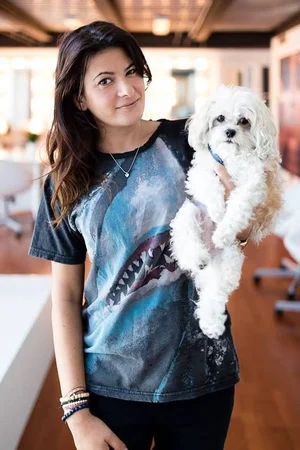
Sabine G: The Jewelry Designer Destined for Icon Status
Sabine Getty
The art of reinvention. From a jewellery atelier to fashion folklore, by way of Beirut.
First written in 2012 · Revisited now

I first met Sabine many years ago, before the magazine covers, and before the Schiaparelli wedding. If memory serves me correctly, it was through mutual friends in a fun summer in Beirut, at Skybar or a house party she hosted.
Years have passed and, like many people, I began seeing Sabine not in person but in magazines. First as a jewellery designer. Then as a fashion muse. Then as one of the most recognisable style figures of her generation. What has always fascinated me is how naturally each chapter seemed to evolve from the one before it.
Part One
Sabine Ghanem, jewellerBeirut · 2012
When I first wrote about her, she was Sabine Ghanem, and she had only just begun. Born to the Lebanese financier Charbel Ghanem and the Egyptian interior decorator Karine Ratl, she grew up between Geneva, Beirut and the South of France, three very different worlds that would later become central to her creative identity. She has often spoken about the contrast between the orderly precision of Switzerland and the beautiful chaos of Lebanon.
Before jewellery, she dreamed of a different kind of stage. She studied theatre and once imagined a future inspired by Maria Callas, whose larger-than-life presence had captivated her. Looking back, it is easy to see that the theatrical instinct never disappeared. It simply found another outlet. Jewellery became her stage.
After studying at the Gemological Institute of America in New York, she found a passion that merged technical knowledge with artistic expression. The science of gemstones gave her a foundation, but it was the drawing and the designing that lit her up. In 2012 she launched her first collection, Relic. The inspiration arrived unexpectedly. Visiting her mother's home in Beirut, she came across an image of a twelfth-century medieval reliquary in a book on decorative arts, and, captivated by the carvings and symbolism, she began to sketch.
Those sketches became a collection that set itself apart from the minimalism then dominating jewellery. Relic felt ancient and modern at once. Diamond-studded motifs echoed Gothic architecture. Delicate gold structures recalled cathedral buttresses. Headpieces became necklaces, and earrings looked like artefacts unearthed from a forgotten royal collection. What made it special was not only the craftsmanship but the emotional quality: the pieces felt as though they already carried history, like heirlooms passed through generations, even when they were entirely new. Her debut quickly drew the attention of Bergdorf Goodman, Browns and Maxfield, and placed a young designer firmly on the international map.
I moved from the manicured order of Geneva to the wild, intoxicating beauty of Beirut.Sabine Getty
One of the reasons her work felt so distinctive is that she was never especially interested in the trend of the moment. When minimalism ruled, she looked backwards: to medieval reliquaries, to Gothic architecture, to Renaissance symbolism, to Art Deco geometry, to the colour and graphic energy of Sonia Delaunay and the Memphis movement, to forgotten decorative arts that other designers overlooked. Rather than chasing the contemporary, she made pieces that felt timeless. Delicate yet architectural. Ornate yet wearable. Historical yet entirely relevant. They became instantly recognisable because they carried her point of view. Not simply a style, but a world.
Part Two
Sabine Getty, and everything sinceThen to now
While the jewellery found its audience, another story was unfolding alongside it. Sabine herself was becoming a fashion phenomenon. Long before personal branding became a cultural obsession, she understood the power of visual storytelling, intuitively. Fashion was never simply about clothes. It was about transformation. One season she was a Renaissance heroine wrapped in dramatic silhouettes and jewels. Another she embraced the playful glamour of the 1980s, or surrealist Schiaparelli, bold colour, sculptural accessories, an unapologetic maximalism. She approached fashion the way an artist approaches a canvas. Nothing felt off limits. Nothing felt overly precious. In an industry that rewards conformity, she made individuality aspirational.
The women drawn to her work were connected not by age or aesthetic but by confidence. Her jewellery has been worn by Rihanna, Celine Dion, Kaia Gerber and countless international tastemakers, because her pieces are not designed to disappear. They are conversation starters, objects that carry narrative. In an era of disposable luxury, she offered something else: permanence, and the idea that jewellery could once again become an heirloom, cherished and passed down.
Then came the wedding that would cement her place in fashion history. When she married Joseph Getty, son of Mark Getty and great-grandson of the oil magnate J. Paul Getty, the celebration in Rome became one of the most talked-about fashion moments of the decade. Walking through an extraordinary sea of flowers, she wore a custom Schiaparelli couture creation unlike anything seen in modern bridal fashion: a figure-hugging duchesse silk gown embroidered with monumental golden suns, paired with an endless hooded cape shimmering with hundreds of thousands of hand-sewn sequins. For the after-party she changed into another Schiaparelli masterpiece, inspired by Cher's legendary Bob Mackie look from the 1970s. Editors and designers discussed it for weeks. What made it resonate was that it felt authentically hers. No one else could have worn it in quite the same way.

And the evolution keeps going. In 2026 she walked the runway for Gucci, the muse stepping fully into the frame. Historically, women in fashion have been filed as either creators or muses. Sabine has quietly refused the distinction. She designs and she inspires. She wears and she builds. And, increasingly, she speaks.

In her own feed
Part Three
A woman with roots and a voice
Over the last several years, Sabine has used her platform to speak about the things that matter to her most: Lebanon, Palestine, human rights, and cultural identity. She has done so at a moment when many public figures choose caution and neutrality.
"I've advocated for Palestinian rights for years, focusing on diplomacy and human rights," she told Vogue Arabia. "I'm not just a model or a muse. I'm a woman with roots and a voice." For Sabine, identity has never been something to hide or soften. "My soul is Lebanese," she has said, and the line feels especially meaningful seen across the whole of her work: the contrasts of Beirut and Geneva, the meeting of East and West, the coexistence of beauty and resilience. The same woman who once found inspiration in a medieval relic is still searching for meaning beneath the surface.
Most recently, she has stepped behind the camera. Sabine serves as an executive producer on the acclaimed film The Voice of Hind Rajab, directed by Kaouther Ben Hania, which reconstructs the real story of a five-year-old Palestinian girl making desperate phone calls for rescue from a car under fire in Gaza, where she and her family were deliberately killed and the car was left riddled with hundreds of bullets. The film premiered to extraordinary acclaim, took the Grand Jury Prize at Venice, and went on to an Academy Award nomination for Best International Feature, forcing the world to sit with the sound of a child asking to be saved, and to confront the ongoing genocide. She backed it alongside a remarkable group of film-makers, among them Joaquin Phoenix, Rooney Mara, Jonathan Glazer and Alfonso Cuaron. For a woman so often photographed for what she wears, it is the clearest expression yet of what she meant by roots, and a voice.
Beirut, a creative language
Beirut is more than a hometown. It is a creative language. She has often spoken about arriving from the manicured order of Geneva and discovering a city where beauty and chaos existed side by side. In Beirut, a grand Ottoman mansion might stand next to a building still marked by war. Elegance is never separated from resilience. History is never far from the present. It is a city that teaches you to find beauty in contrasts, and those contrasts have become central to Sabine's creative identity. Whether in her jewellery, her interiors, or her personal style, there is always a dialogue between old and new, refinement and spontaneity, fantasy and reality.
Perhaps this is why so many Lebanese women have become style icons in their own right. Fashion in Beirut has never been simply about trends or labels. It is about self-expression, individuality, and a certain fearless glamour that refuses to apologise for itself. Lebanese women have long understood how to mix couture with sentiment, heirlooms with contemporary pieces, and confidence with femininity. Sabine embodies that tradition while giving it her own voice. Her aesthetic may draw from medieval reliquaries, Art Deco architecture, Memphis design, or Schiaparelli surrealism, but beneath it all is a distinctly Lebanese sensibility: the belief that beauty is something to be celebrated, even in the most challenging circumstances.
Beirut has a way of teaching its inhabitants that contradictions can coexist. Grandeur and decay. Joy and sorrow. Tradition and reinvention. It is a place where people dress beautifully for dinner even when the world feels uncertain, where creativity flourishes despite instability, and where resilience is often expressed through beauty itself. It is not difficult to see how those lessons found their way into Sabine's universe. Her jewellery often feels like a relic from another era, yet entirely contemporary. Her style is rooted in history, yet constantly evolving. Like Beirut, it refuses to be defined by a single narrative.
Lebanese women occupy a unique place in the global fashion imagination because they approach style as an extension of identity rather than a seasonal exercise. There is an innate understanding that fashion can be playful, glamorous, intellectual, and deeply personal all at once. Sabine belongs to a lineage of women who have used style not as decoration, but as a form of storytelling. What makes her particularly compelling is that she has translated that sensibility into an international language, creating a world that feels distinctly her own while remaining deeply connected to the culture and city that helped shape her.
Paris may have taught the world fashion, but Beirut taught many women how to wear it. Not as consumers of luxury, but as curators of beauty, memory, resilience, and identity. That feels very close to what Sabine represents.
Coda
The art of reinvention
Designer·Muse·Mother·Producer·Activist·Icon
Few people manage to inhabit so many roles at once. Fewer still keep evolving while they do it. Perhaps that is the point of Sabine. Her story is not really about jewellery, or fashion, or a wedding, or even a film. It is about reinvention. About embracing contradictions. About finding beauty in history while staying firmly in the present. In a culture that constantly demands definition, she has remained wonderfully difficult to define, and that may be exactly what makes her so compelling.
Reinvention, in the end, is not about becoming someone else. It is about discovering more of who you already are. And it is about understanding that style, at its most powerful, is not about what you wear. It is about who you become.