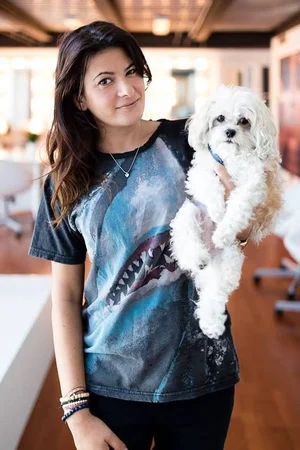
Contemporary African art is not a recent phenomenon but the result of decades of artistic, political, and cultural innovation. This first installment explores how music, visual art, and local creative ecosystems across cities including Lagos, Accra, Dakar, Cape Town, and Abidjan laid the foundation for today's global recognition. Through a personal perspective, Leila Antakly examines why Africa's contemporary art scene represents recognition rather than emergence.
New Centres
of Gravity:
Africa
Art, Culture & Creative Movements Across the Continent
From Accra, Cape Town, Dakar, Lagos, and Abidjan: a story that did not begin with the biennales and will not end with them.
"What we are witnessing now is not an emergence. It is a recognition, and those are fundamentally different things."
The first time I seriously encountered contemporary African culture was not in a museum or gallery. It was through music. Long before I knew the names of artists or biennales, there were albums being passed around by my friends at school. Fela Kuti was one of those discoveries. His music felt unlike anything else I was listening to at the time: politically fearless, rhythmically hypnotic, and deeply rooted in a place I knew very little about. Years later, I would learn that Fela's influence extended far beyond music. Like many of Africa's great artists, he was creating work that challenged power, questioned inherited narratives, and insisted on defining itself on its own terms.
It was much later, living in New York and spending time with artists, collectors, and people working within the art world, that I began hearing similar conversations taking place around contemporary African art. They spoke about institutions creating their own ecosystems, and a cultural infrastructure that had existed long before the international market decided to pay attention.
The first mistake people make when discussing African contemporary art is treating it as a trend. Trends arrive suddenly. This story took decades. It was built by curators who fought for institutional recognition long before the biennales arrived, gallery owners who invested in artists when there was no international market to speak of, and artists who continued making work regardless of whether anyone outside the continent was paying attention. What we are witnessing now is not an emergence. It is a recognition, and those are fundamentally different things.
A new centre of gravity is emerging in contemporary African art. It is moving away from being viewed through the lens of Paris, London, and New York and relocating to Accra, Cape Town, Dakar, Lagos, and Abidjan. This is one of the most consequential developments in the global art world over the past decade, not because it represents a new discovery, but because it represents the end of a very old dependency.
Before African contemporary art became a fixture at biennales, museums, and auction houses, African culture had already entered the global imagination through music, photography, fashion, magazines, and film. In many ways, these disciplines prepared international audiences to see African artists differently long before the art market caught up.
Music was arguably the first global ambassador. Fela Kuti, Miriam Makeba, Youssou N'Dour, and Salif Keita were already challenging Western perceptions of Africa decades before contemporary art institutions began paying attention. Their work presented Africa as modern, political, urban, experimental, and globally connected. Fela, in particular, demonstrated that an African artist could shape international conversations rather than simply participate in them.

Photography followed a similar path. Long before museums mounted major exhibitions of African contemporary art, photographers such as Seydou Keïta, Malick Sidbé, and Samuel Fosso were producing images that directly contradicted the dominant Western visual narrative of Africa. Their photographs showed stylish youth culture, nightlife, self-fashioning, aspiration, and individuality: societies that were dynamic and contemporary rather than frozen in the anthropological stereotypes that Western media preferred.
Seydou Keïta worked in Bamako, Mali, running a portrait studio from 1948 until 1962, when the newly independent Malian government appointed him official state photographer. His subjects dressed carefully, posed deliberately, and presented themselves to his lens on their own terms. The resulting archive is one of the great bodies of portrait photography of the twentieth century, and it was largely unknown outside Mali until the 1990s. The work was not waiting to be discovered. It was waiting for the world to build the capacity to receive it.
Fashion magazines and independent media played an equally important role. Publications such as NKA: Journal of Contemporary African Art, Chimurenga, and later platforms like Afrikadaa helped create critical discourse around African artists outside traditional Western gatekeeping structures. Fashion photography emerging from Lagos, Johannesburg, Nairobi, and Dakar began appearing in international publications, exposing audiences to visual languages that merged local identities with global aesthetics.
"A record could cross borders. A photograph could appear in a magazine. These forms reached audiences long before major museums, collectors, and auction houses developed a serious interest in African contemporary art."
Antakly ProjectsPerhaps most importantly, music and photography travelled more easily than contemporary art. A record could cross borders. A photograph could appear in a magazine. A fashion editorial could circulate internationally. These forms reached audiences long before major museums and auction houses developed a serious interest in African contemporary art. By the time Western institutions began organising large surveys in the 1990s and 2000s, the cultural groundwork had already been laid. The world had been dancing to African music, consuming African imagery, and engaging with African cultural production for decades. The art world often likes to frame this history as a discovery. In reality, artists, musicians, photographers, and writers had already done the work of shifting perception. Institutions arrived later.
That is why the rise of African contemporary art is better understood not as an emergence, but as the recognition of a cultural influence that had been shaping global conversations all along.
The essay continues: the curators who changed the terms of the conversation, the galleries that invested before the market arrived, and the artists building the infrastructure that does not require Western validation to function.
Part Two follows, stay tunedThe People Who Built
the Infrastructure
The rise of African contemporary art did not begin in museums. It began in recording studios, darkrooms, magazines, and independent cultural spaces, long before a market existed. What it needed next was people willing to build the rooms where the rest of the world could finally see it.
Any honest account of this shift has to begin with Okwui Enwezor. His 2002 edition of Documenta in Kassel was not simply an important exhibition. It was a structural argument. By reframing the entire premise of the world's most prestigious contemporary art survey around postcolonial histories, global geography, and non-Western perspectives, Enwezor did not introduce African art to the international conversation. He changed the terms of the conversation itself. Almost everyone working in this field today is, in some way, working in the room he built.
Koyo Kouoh took that argument and gave it a permanent address. As Executive Director and Chief Curator of the Zeitz Museum of Contemporary Art Africa in Cape Town, she helped establish one of the continent's most important cultural platforms. Zeitz MOCAA mattered not simply because it was large or ambitious, but because it existed on African terms. The home of a Swiss art patron's collection, yes, but a building embedded in Cape Town's working harbour, committed to African and African diasporic work, operating with an African curatorial vision rather than a borrowed one.
Koyo Kouoh died in 2025, shortly before she was due to curate the Venice Biennale, the first African woman appointed to do so. Her absence is felt across every institution and biennale she shaped. The infrastructure she built continues to hold.
Bisi Silva, founder of the Centre for Contemporary Art Lagos, built a different kind of infrastructure: research, residencies, public programming, and the slow accumulation of critical discourse that any serious art scene requires. She was not interested in the spectacle of a single exhibition. She was interested in the conditions that make exhibitions possible. The institutions she helped build outlasted the scepticism of those who doubted Lagos could sustain them, and they outlasted her own untimely death in 2019.

The institutional story cannot be separated from the commercial one. The galleries that invested early did not do so because a market existed. They did so because the work demanded it.
Goodman Gallery, founded in Johannesburg in 1966, is one of the longest-running African participants at Art Basel. Its history spans the apartheid era, the transition, and the decades since, representing artists including William Kentridge and Zanele Muholi across that entire arc. To run a gallery of conscience through those years was itself a position, not just a business.
Stevenson is respected by curators and museum directors in a way that few commercial galleries anywhere in the world have earned. Its programme includes Frida Orupabo, born in Norway to Nigerian parents, whose digital and physical collages explore race, gender, violence, and identity with an unsparing intelligence. Her first institutional solo exhibition in Portugal opens at the Museum of Contemporary Art in Lisbon in June 2026.
Gallery 1957, opened in Accra in 2016, became a major platform for West African artists and the diaspora within a few years of its founding. Its name references Ghana's independence year, a deliberate signal about what the gallery considers its own history and responsibility.
Cécile Fakhoury, operating across Abidjan, Dakar, and Paris, represents artists including Adji Dieye and Ouattara Watts. Dieye's practice examines how images of self-determination materialise in the public sphere of formerly colonised regions, working with archival materials, architecture, and advertising to interrogate the construction of national identity. Ouattara Watts, born in Korhogo in Côte d'Ivoire and living in New York for nearly forty years, paints what he describes as the cosmos: vibrant, symbol-dense canvases that merge found objects and raw materials with a spiritual logic that moves across geography and nationality at once. He has shown at Documenta, the Whitney Biennial, and the Venice Biennale.
Tiwani Contemporary, operating between Nigeria and the United Kingdom, has become particularly influential in introducing Nigerian artists to European collectors and institutions. WHATIFTHEWORLD, based in Cape Town, has built a reputation for championing younger experimental artists and helping launch careers that later enter major international collections.
"Southern Guild's refusal of easy categorisation is increasingly where the most interesting conversations in African contemporary art are happening."
Antakly ProjectsSouthern Guild deserves a category of its own, which is precisely the point. It operates at the intersection of design and contemporary art, representing makers whose work cannot easily be placed in either. That refusal to be sorted into a tidy box is not a marketing position. It is a reflection of how artists on the continent are actually working, across forms, traditions, and disciplines that the Western art market has long preferred to keep separate.
The essay concludes with the artists themselves: the makers building work right now, from Lagos studios to Harare workshops, and the long history of African photography that the world is only beginning to understand.
Part Three will follow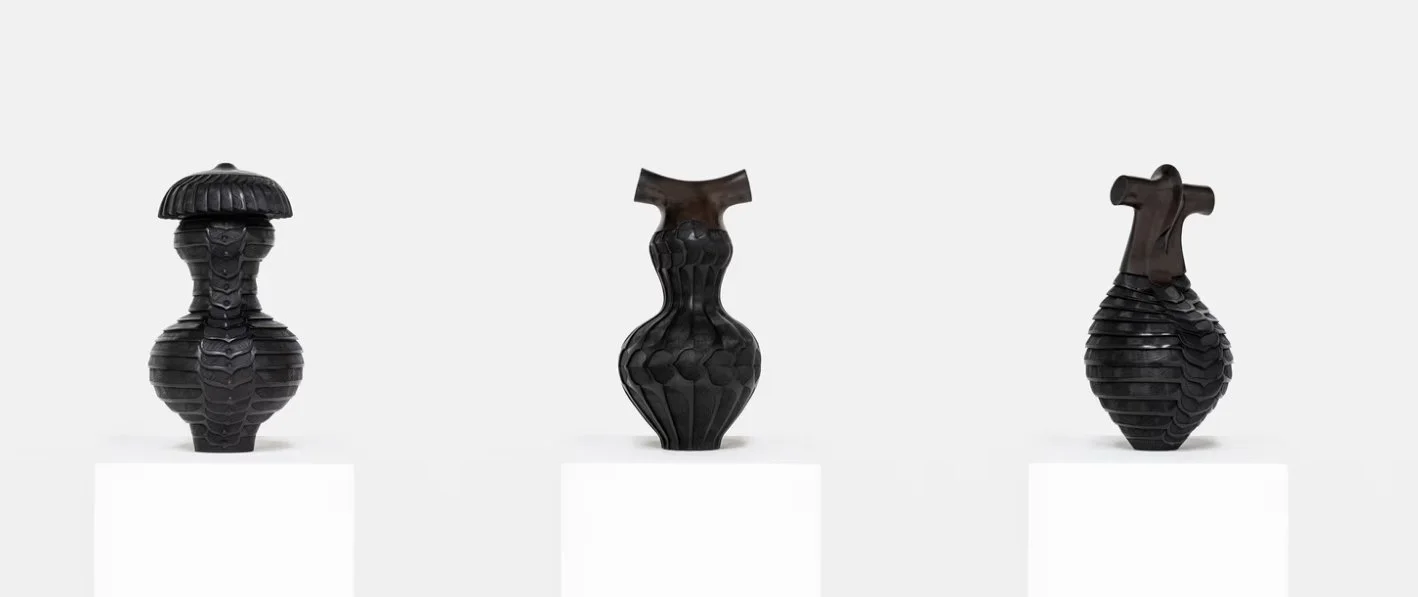
Madoda Fani courtesy of Southern Guild