ARTIST CARLOS AMORALES
Carlos
Amorales
b. 1970, Mexico City · Rijksakademie & Gerrit Rietveld, Amsterdam · Venice Biennale, 2017
He works at the limit between image and sign, on the impossibility and the possibility of communicating through what is not yet codified: sounds, gestures, and symbols.
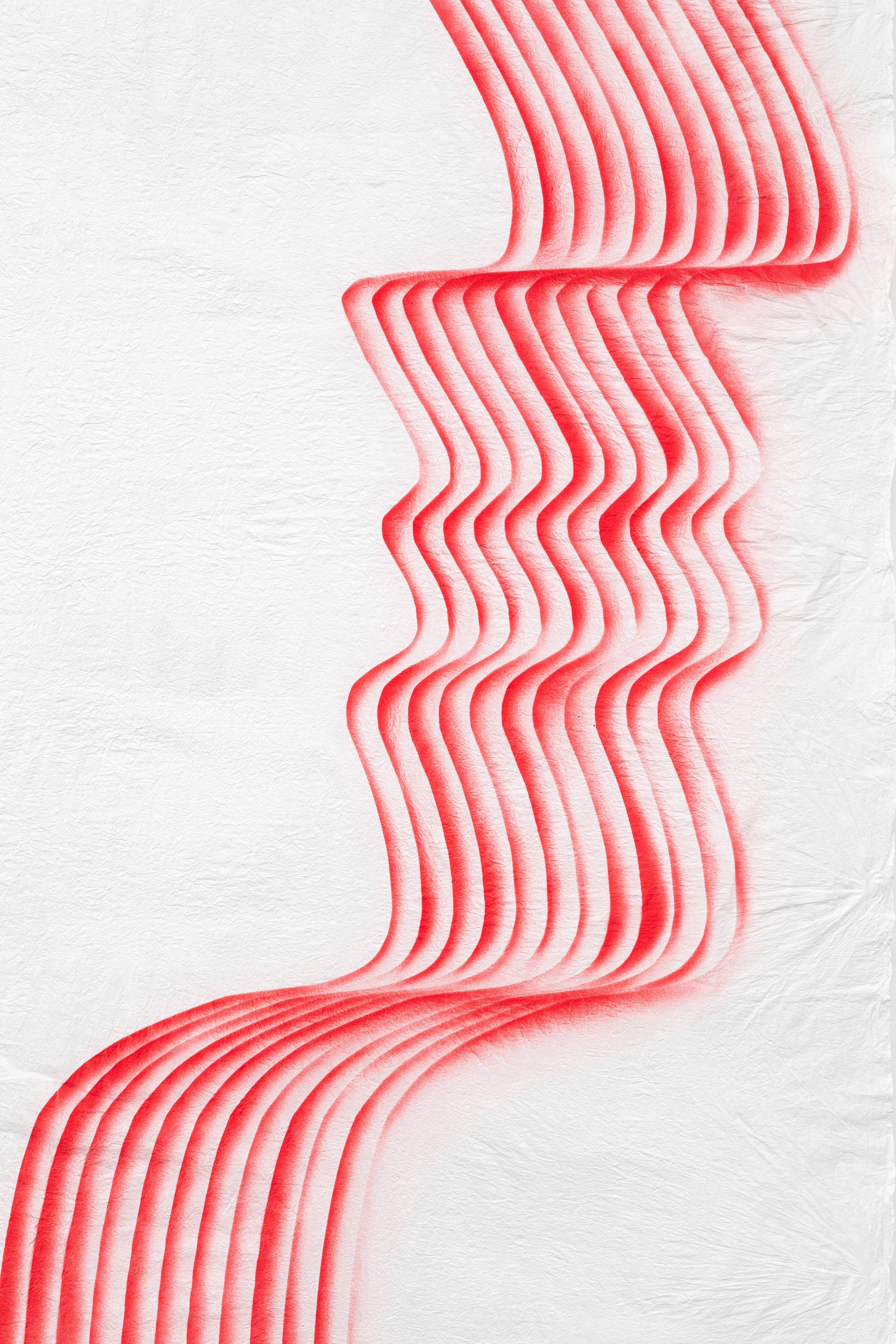
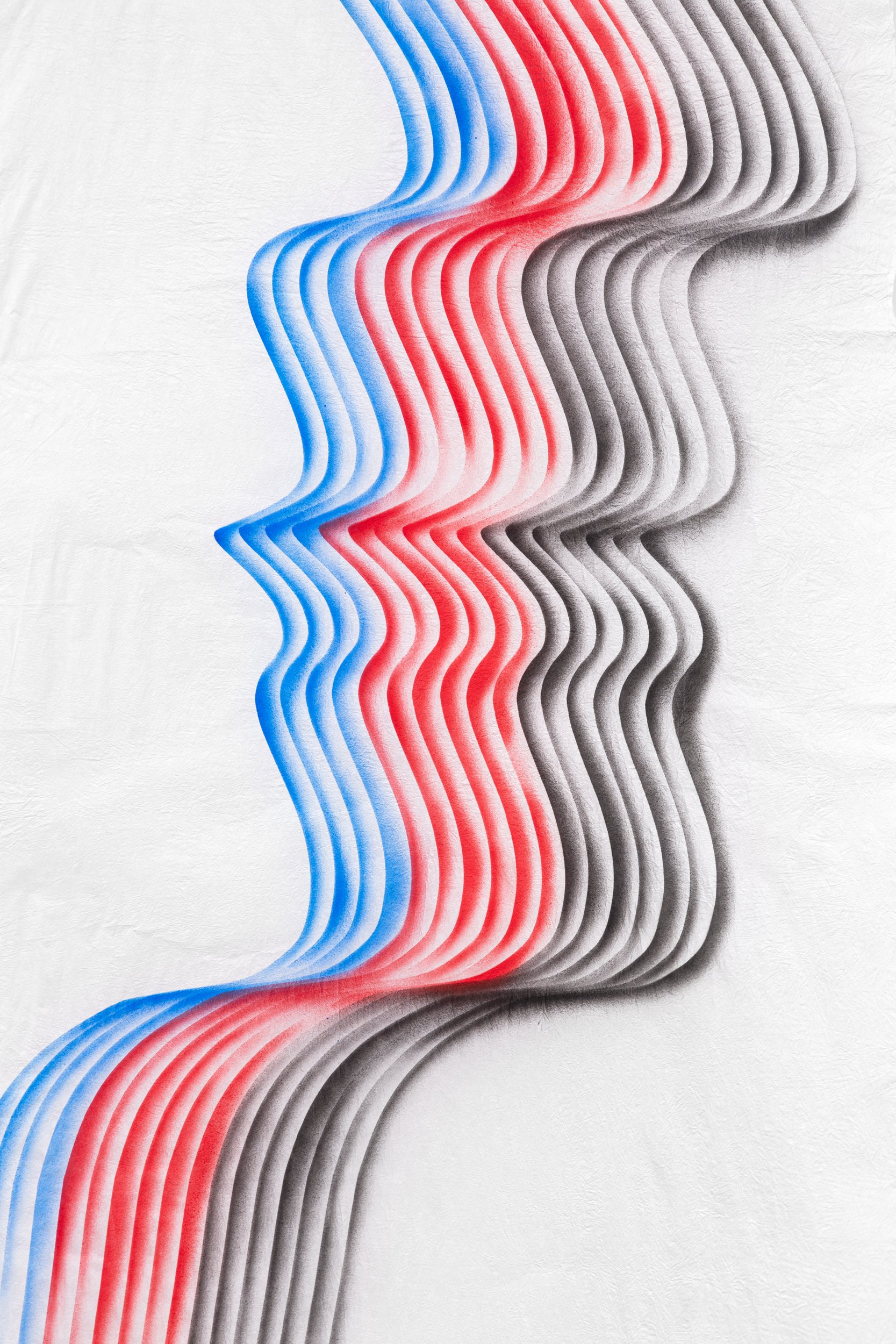
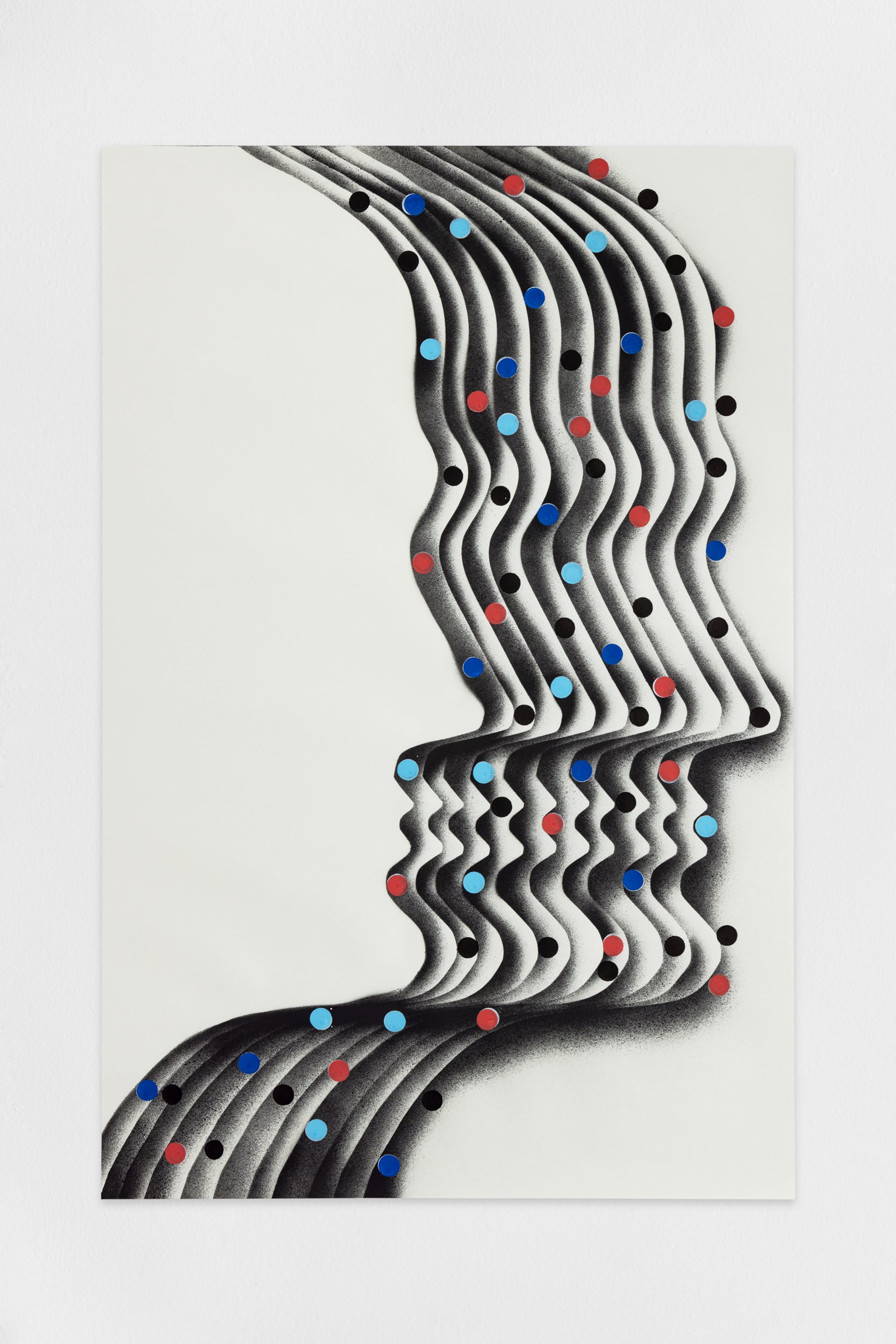
In his artistic research, Carlos Amorales is interested mainly in language, and in the impossibility and possibility of communicating through means that are unrecognizable or not codified: sounds, gestures and symbols. He experiments at the limits between image and sign, across an array of platforms: animation, video, film, drawing, installation, performance and sound.
Born in Mexico City in 1970, he studied in Amsterdam at the Gerrit Rietveld Academie and the Rijksakademie van beeldende kunsten. His group exhibitions include Under the Same Sun at the Guggenheim (New York, 2014) and Mexico City at MoMA PS1 (2002), and he represented Mexico at the 57th Biennale di Venezia with Life in the Folds in 2017. He lives and works in Mexico City.
A serpent that sang the underworld into being.
Words of Mouth and Hands, his first solo exhibition in New York at kurimanzutto, brought together a video installation, a set of original music scores, and works on paper. Their point of departure was a creation myth the artist imagined, in which a serpent created the underworld by burrowing through the earth with its voice. Together, the works follow the transformation of the written word into choral music, and the subsequent translation of that music into graphic symbols.
His six-channel video installation evokes the sublime through chants. It portrays the musician, composer and performer Sarmen Almond singing two poems and the myth of the serpent, while, as a counterpoint, the percussionist Diego Espinosa performs a series of dancefloor rhythms with his hands and body. The work continues Amorales’s transdisciplinary inquiry into contemporary art and cultural practice, from wrestling to the music industry, fashion, literature and cinema, for their potential to manifest the existential fragmentation of contemporary life.

“A serpent created the underworld by burrowing through the earth with its voice.”
Joan Jonas, and the question of video itself.
“Through the years I have been interested in the work of many artists, writers and musicians, but one work that was a very important inspiration was seeing Joan Jonas’s Volcano Saga at the Stedelijk Museum in Amsterdam, when I was studying there in the nineties. She made the video using chroma key technology, which was new then, and which allowed her to combine different layers of video to tell a folk tale. I thought there was something very video-art-like in it, different to cinema or TV. It made me question what is particular to video art, or what makes it particular.”
The same intimate moment of creation.
“I like to use many mediums, but I think what is central is drawing and writing. It is from the combination of both that ideas develop and become installations, performances or videos. I often think that drawing and writing are aspects of the same basic moment of creation, which is very intimate.”
“Drawing and writing are aspects of the same basic moment of creation.”
From a visual hunch to the essential gesture.
“It starts with drawing and writing, the most intimate moments of creating something, the foundation layer. They allow intuitive ideas to appear. Once I choose what I think is the interesting way to go, I start socializing the idea and searching for collaborators, often artists from other disciplines: musicians, writers, actors. I think a work is finished once one has explored and experimented with an idea so much that it becomes reduced to what is essential. Then it becomes an artistic gesture, and finally a finished work.”
“I often work in an intuitive manner. I do not have a clear idea to start with, but something more like a hunch. It is a visual hunch: it is clearly in my mind in a general way, I see it, but I cannot grasp it, until it is made.”
Making fantasy look credible.
“From what I have seen so far, most of the AI visual effort is similar to the way visual effects have been developed for superhero films: it is about making fantastic things look realistic, so most text-to-image programs tend to make fantasy look credible. In this sense, and in relation to what visual artists have done throughout history, I find the approach is becoming more and more limited.”
“These tools have been designed by technicians with a very general idea of art history, so it seems we are now transiting through a surrealist phase and tending towards hyperrealism. But these digital tools are amazing, and the more versions of text-to-image apps are created, and the more artists use them, the better the images will become.”
“It is clearly in my mind, but I cannot grasp it, until it is made.”
Words of Mouth and Hands was shown at kurimanzutto, June 23 to July 28, 2023. Featuring Sarmen Almond and Diego Espinosa.
Antakly Projects, originally Ninu Nina, has been in conversation with the most inspiring voices in art, photography, design and culture since 2003. Interview by Leila Antakly. Carlos Amorales listens for the language beneath language, and draws what it sounds like.
All works © Carlos Amorales. Installation view courtesy kurimanzutto. Thank you to Carlos for the conversation.
Explore the full Antakly archive →
And for the personal rants on life, opinions you didn’t ask for, and the occasional existential spiral: follow me on Substack. Follow us at @antakly.projects on Instagram.
The word, the voice, the mark. ✦