KATIE HECTOR
Painting in Reverse
Katie Hector on portraits made with dye and bleach instead of paint, and why images are dangerous things.

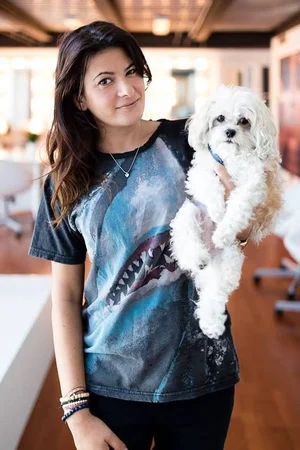
Katie Hector · courtesy of the artist
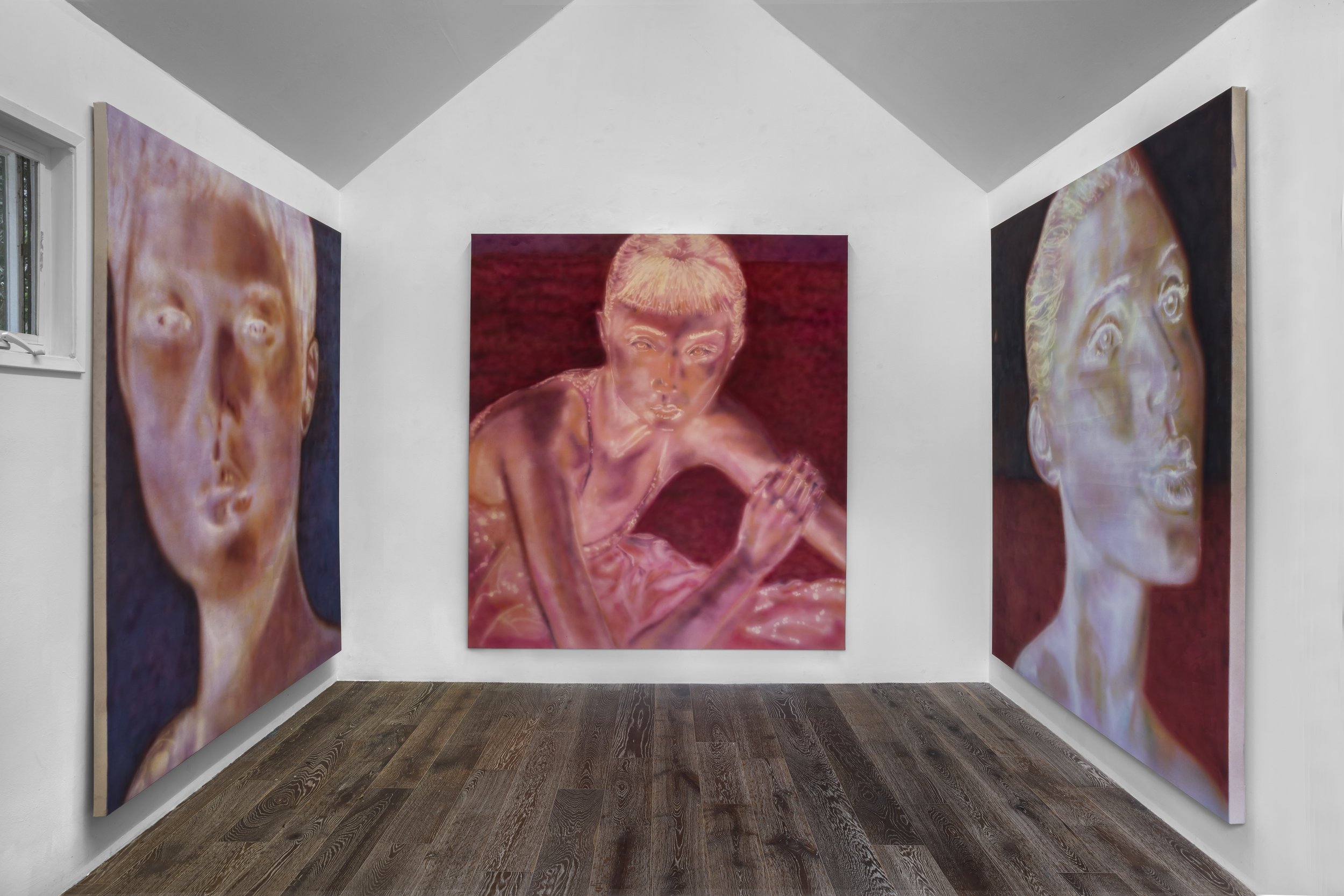
Katie Hector doesn't paint the way most painters paint. Her studio practice runs on dye and bleach instead of pigment, pushed through an airbrush to build tone, highlight, and shadow in reverse, subtracting light rather than adding it. The portraits that come out of that process read as symbols as much as likenesses: loss, intimacy, longing, rendered in a technique that forced her to retrain how she thinks about image-making altogether.
She works from found and photo-based reference images, pulled apart and recontextualized through gesture and scale, a practice shaped as much by Susan Sontag's Regarding the Pain of Others as by any painter. Based in Los Angeles since the pandemic, Hector is an artist, curator, and writer whose work sits somewhere between portraiture and warning: images, she says, are tricky, dangerous things.
"I grew up in a New Jersey suburb and spent much time shuttling between pastoral farms and industrial warehouse spaces. As a kid I spent as much time as I could in the woods, day dreaming, and drawing. I went to school for painting at Rutgers and after graduation moved north to NYC. I moved out to LA during the pandemic and it's looking like I'll be here for a while."
An artist, curator, and writer based in Los Angeles. Her studio practice layers dye and bleach to build portraits that symbolize human emotion: loss, intimacy, and longing. She studied painting at Rutgers University before moving to New York and later Los Angeles.
My grandmother. She immigrated to the US with three young children in her early 20s. She was very entrepreneurial and managed to run a farm, tend to animals, sell goods, and home cooking while raising six kids. She also took in friends, family, and visitors if they needed a place to stay.
As far as art goes, I'm inspired by a deep well of artists past and present. Brancusi, I love Man Ray. I love Katerina Grosse, Joyce Pensato, Alex Katz, Ken Price, Katherine Bernhardt, Rothko, Wendy White, Susan Frecon...
I typically use photo-based reference images as a point of departure for my work. I like collecting found images and recontextualizing them through gesture and scale. I'm definitely interested in the seminality of images, the quantity of images we encounter and process on a daily basis, and what that means for our psyche. Images are really tricky, dangerous things. I constantly think about many of the points raised in Susan Sontag's book Regarding the Pain of Others when making work.
"Images are really tricky, dangerous things."
Katie HectorMy painting process is a bit funky. I don't actually use paint, I use dye and bleach through an airbrush to achieve all the tonal modeling, highlights, and shadows. My process forces me to paint in a reductive way, which is a bit unusual, and it took a while to retrain my brain to think that way.
These days if I'm not physically making work, I'm definitely always thinking about it, so in that sense it kind of feels like a continuum of making. I typically like to stretch and prime my canvases, it gets my mind ready and focused.
I like to start painting in the morning and follow up with one to two more sessions throughout the day. I rely on daylight to paint, so that typically dictates how long or how much work I can get done in a day.

I think the art world only attracts crazies, romantics, joy-seekers, risk-takers, and maybe a level-headed accountant or two. It's an industry run by people, and those people are always changing, so in the macro sense, yes, the industry will always change.
I have a few shows in LA and one in Italy this fall. Some more shows lining up abroad in 2023, which is exciting. I'll be sure to share more on those soon.
I'm 30 now, so I have to take a little better care of myself than I used to. I go to the gym, run, and exercise regularly to curb feelings of anxiety. I take vitamins, not sure if they work but it can't hurt. I try to eat right and hug all my pets multiple times throughout the day. I appreciate the little things, and I paint. This cocktail of activities keeps me sane, happy, and healthy.
Leila Antakly is an independent cultural interviewer, editor, and founder of Antakly Projects, the platform she launched in New York in 2003 as Ninu Nina. For more than two decades, she has interviewed artists, musicians, photographers, designers, and creative thinkers across art, music, fashion, photography, film, and contemporary culture.
Her interviews are driven by curiosity, research, and direct conversation rather than celebrity, trend, or algorithm. Antakly looks for the people, ideas, and creative practices shaping culture, with particular attention to artists who deserve a deeper conversation beyond the usual press cycle.