FILM MAKER JESSICA ARZATE
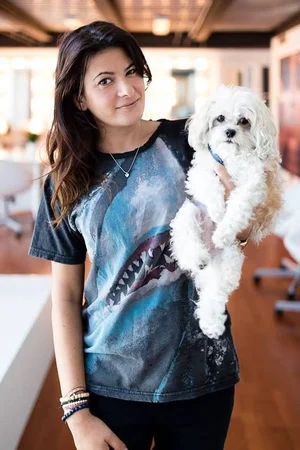
Jessica Arzate
Born in Mexico City. Left home at nineteen. Became a nanny in the US to pay for film studies in Spain. Fifteen years later, still behind the lens and the fire is stronger than ever.

I honestly didn't know you could make a living by telling stories. That moment lit a fire in me. Fifteen years later, that spark has not gone away. If anything, it has grown stronger.
She left Mexico City at nineteen with a vague idea of becoming a filmmaker and a very specific need to figure out how to pay for it. The answer, for a while, was nannying in the United States. The destination was film school in Spain. The budget in Madrid was tight enough to expand her survival tools and permanently shape the way she sees the world.
The origin story is worth telling in her own words. In high school, she made a short film with her brother and cousins and submitted it to a Latin American film festival. It won an award. One of the jury members, a cinematographer, took the time to compliment the camera work. Looking back, she thinks part of it was him encouraging a young girl who felt a little lost. The other part was how cool and mysterious his job sounded. She did not know then that you could make a living by telling stories. That moment lit something. Fifteen years later it has not gone out.
She is currently working on a series of short films related to preventing violence against women a subject that is a major issue in Mexico and globally. The work is made from a position of genuine commitment: she collaborates only on projects where she knows she can contribute her voice, her opinion and her empathy.
"There is an unspoken language that requires our attention to be understood, and this can give us endless creativity."
Jessica Arzate
What are your greatest inspirations or influences?
There are so many. But I think human behaviour and nature itself keep surprising me the most. I feel very attracted to how we relate to each other and the world we share, and also how the world relates to us. There is an unspoken language that requires our attention to be understood, and this can give us endless creativity. I am also in awe of storytellers in all forms. Composers like Hans Zimmer, who can evoke such powerful emotions with just a few notes. Photographers like Gordon Parks, who could capture the story of a whole nation and era in a single frame. That kind of storytelling power, across mediums, really inspires me.
Tell us about your creative process.
My creative process is born from what I read, what I see, and what I hear. That is why I believe that research, curiosity, and being present to what happens in our community is important. I am currently working on a series of short films related to preventing violence against women, which is a big topic in Mexico and the world. I try to collaborate in projects in which I know that I can contribute with my voice, my opinion and my empathy.
Who do you consider to be an icon of our time?
Young girls. I am so impressed by the strength and determination with which they express new visions of the world.
Do you think the art world needs to change, and if so how?
I definitely think there is room for change and I see potential in creating opportunities through education. I think it would be very enriching to include art as a practice and subject in educational programmes at all levels. Understanding the importance of its existence can open up horizons about the world and the way we inhabit it. This would make our relation to art a more approachable one.
What does wellbeing mean to you?
Nowadays, I believe that wellbeing is in the coherence between our desires and our actions.
Antakly Projects has been in conversation with artists and creatives from around the world since 2003. Explore the full archive at ninunina.com. Follow us on @antakly.projects ✦ Stay curious.