ARTIST AND SCULPTOR NATHANAEL LE BERRE

Nathanaël Le Berre: The Invisible Made Metal | Antakly Projects
Nathanaël Le Berre, cabinet, brasswork
Nathanaël Le Berre, wall sculpture, brass and enamel
Antakly Projects  ·  Metalwork  ·  Paris  ·  Aubervilliers

Nathanaël Le Berre

The Invisible Made Metal

Sculptor, metalsmith, and maker of exceptional furniture, lighting, and objects in Aubervilliers. His pieces reveal the invisible. Liliane Bettencourt Prize 2014. Tokyo National Museum 2017. Beijing National Museum of China 2019.

Paris  ·  Aubervilliers Brasswork  ·  Patina  ·  Enamel Sculpture  ·  Furniture  ·  Lighting
Leila came across a metallic piece at a friend's house in Mallorca and had to inquire. This interview exists because of that single encounter. It makes her want to understand his personality and background in order to understand his designs and process.

Nathanaël Le Berre grew up in a small village in Burgundy, in a large house a little isolated from the world, spending his time imagining objects and making them. He was initiated into beauty by his grandfather, an architect of historical monuments, calligrapher, and specialist in the sacred painting of icons. He studied stained glass at the National School of Applied Arts and Crafts in Paris in 1998, then chose to devote himself to metalwork, encountering the ancient technique of brasswork and being immediately fascinated.

He completed his apprenticeship in the studio of sculptor Hervé Wahlen. In 2004 he set up his own workshop, acquiring the steel hammers and boxwood mallets that had belonged to Gabriel René Lacroix, the virtuoso copper maker of the 1920s. He set out, as he puts it, on the solitary path of creation.

Today his pieces are sought by private collectors, renowned interior architects, and luxury heritage brands. The finished work is marked by a quiet intensity, poised between tension and fluidity, weight and lift. Surfaces are polished, burnished, or patinated to enhance their tactile richness. Many of his forms carry sacred or symbolic resonance, reflecting his early exposure to religious art and iconography.

2014

Liliane Bettencourt Prize for the Intelligence of the Hand, Exceptional Talents category. The most prestigious award in France in the field of fine crafts. This prize led to his selection as one of fifteen French craftsmen exhibited in Japan within the Wonder Lab exhibition at the Tokyo National Museum in September 2017. In 2019 the exhibition moved to the National Museum of China in Beijing.

"The feeling of the sacred and the mystical, which permeated my childhood, reappears in my pieces which, tinged with a spiritual dimension, reveal the invisible."
Nathanaël Le Berre
The conversation
01

Tell us about this long winding road that has brought you to where you are today.

I grew up in a small village in Burgundy, in a large house a little isolated from the world. To overcome boredom, I spent my time imagining all kinds of objects, and my greatest joy was to make them. I was brought up in contact with the arts, initiated into beauty by my grandfather, an architect of historical monuments, calligrapher, and specialist in the sacred painting of icons.

After studying stained glass in 1998 at the National School of Applied Arts and Crafts in Paris, I chose to devote myself to metalwork. I came across the ancient technique of brasswork and was immediately fascinated. I did my apprenticeship in the studio of sculptor Hervé Wahlen, and in 2004 I set up my own workshop. I acquired the tools, steel hammers and boxwood mallets, which had belonged to Gabriel René Lacroix, the virtuoso copper maker of the 1920s, and set out on the solitary path of creation.

The feeling of the sacred and the mystical, which permeated my childhood, reappears in my pieces which, tinged with a spiritual dimension, reveal the invisible. Currently I live in Paris and my workshop is in Aubervilliers.

02

Your greatest inspirations and influences?

I wanted to explore sculpture and look for forms by discovering the work of Tony Cragg, in particular his series called Early Forms. This notion of primary forms fascinates me because I find it at the origin of a work of matter, of creation.

I am also very impressed by the work of Simon Hantaï, whose artistic evolution is very inspiring. His journey from his first compositions whose painted forms remind me of my early research, to his scriptural period, the folded, crumpled and painted canvases then unfolded: these are works that I think about regularly.

I also started my first brasswork with the work of the goldsmith Goudji in mind, as an example of the technical possibilities offered by this material associated with a universe of strong personality.

Today I look more specifically at the work of André Dubreuil. It pushes me to get out of my comfort zone and to engage in new plastic research: engraving, ornaments, patinas, and enamels.

03

Tell us about your creative process. What work are you most proud of?

To start, I need a subject, a theme, a desire. In general the starting point is a detail in a painting, or a form of an old object, a painted work or sculpture that marked me: all those things that my eye perceived and recorded, sometimes without me knowing it, during my visits to exhibitions, ancient monuments, or travels.

Then comes the phase of drawings or studies in volume: clay, cellular concrete, or 3D software. Everything is good to gradually identify my first intuition. This is the phase I prefer: I explore, there are often aborted attempts, sometimes I push the study very far until I say to myself "here it is" and then no, I am back at zero because there is still some dissatisfaction.

"I am quite proud to produce pieces which, without my know-how, would have remained at the stage of an impossible project, an inaccessible dream. They are representative of what we can do with a sheet of metal when we push the technique very far."

04

How has this year changed your creativity or how you see the art industry evolving?

As I had fewer orders and exhibition prospects, I was able to devote myself more to the study of techniques I did not have time to study in depth: working with enamels, engravings, forging brass, materials and ornaments on brass. This research will be implemented to develop my style towards more storytelling.

Being more creative, getting out of my comfort zone, watching and incorporating new techniques: this is how I struggle on a daily basis not to get carried away by the gloomy environment and the lack of prospects linked to this past year.

05

How do you balance your time between creating furniture, sculptures, and lamps?

I do not have a pre-established development strategy. Each piece is finished before starting a new one. I do not work on several pieces at the same time, because I need to see the result of my very last creation, which is generally the fruit of my very last explorations, to want to create the following one.

I would like to devote more time to the creation of lighting. I gave up sculpture a bit because I use it for furniture, which satisfies me. But I would like to come back to it, in a less abstract form, because recently I read that Francis Bacon thought that abstraction in painting leads to a dead end, and this is what I felt in my research of sculptures.

"My best pieces are those that evoke the human body, its presence. I wish to continue in this direction, and the technique of brasswork lends itself marvelously."

"My best pieces are those that evoke the human body, its presence."
Nathanaël Le Berre

Stay curious,

Leila Antakly

Photography by Eric Chenal / HEART & Crafts.

Leila Antakly

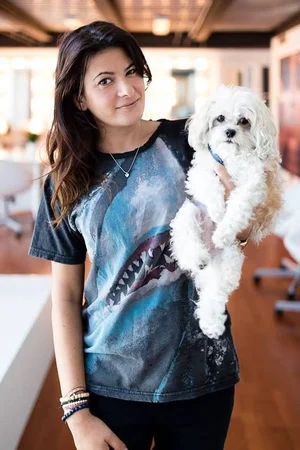
Leila Antakly is the founder and editor of Antakly Projects, the independent cultural platform she launched in New York in 2003 as Ninu Nina. Syrian and Colombian, she began her career at Vogue Italia and has spent more than twenty years in conversation with artists, musicians, designers, photographers, and inspiring thinkers around the world.

https://www.ninunina.com/
Previous
Previous

ARTIST MARINA BENITO

Next
Next

ISMAIL ZAIDY USES PHOTOGRAPHY TO EXPLORE NOTIONS OF SPACE AND FAMILY