NATE QI MUSIC
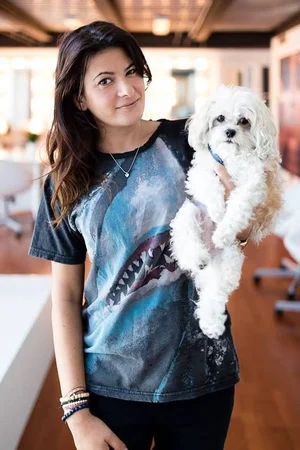
Nate Qi
A vulnerable baritone shimmering through analog soundscapes. Jakarta-born, Brooklyn-based, classically trained, and devoted to the idea that two opposing things can both be true at once.

Some artists perform feeling. Nate Qi fishes for it. He calls himself a fisherman of human emotions, which may be the most honest job description a songwriter has ever handed me. Born in Jakarta, trained as a classical pianist, now in Brooklyn, he makes the kind of tender, analog pop that sounds simple and is anything but. We spoke in 2020, when the world had gone quiet, about duality, about leaving a mother in the motherland, and about writing a song while crying on a subway car.
The Fisherman
Despite a conservatory training that would let him write from theory, Nate describes the songwriting itself as magical and intuitive. His sound blends MIDI synths with acoustic instruments, that warm baritone moving through them like weather. The debut happens to sound like pop, he says, because that is simply where he was at the time. The label matters less than the intention behind it. He sees the role plainly: a poet, a storyteller, someone casting for the feelings the rest of us keep underwater.
Duality
The organizing theme of his work is duality. Masculine and feminine, yin and yang, shadow and light. He is drawn to the tension between opposing forces, because tension is the spark that lights the work. Lately, he says, his muse has been teaching him to stop trying to resolve those opposites and to let both exist at once. His early loves run from Karen Carpenter and Chopin to Lykke Li, Bon Iver, and Kathleen Edwards, and these days he leans toward the ambient, Grouper, Ichiko Aoba, music that holds space rather than fills it.
Your humanity is your technology. Your unique individuality is how you nourish the collective.Nate Qi
First Love
He wrote First Love crying on a subway car, on a day when everything had gone wrong. He had given up on music to start a new degree, and felt he was failing at that too. He thought about the mother he had left in the motherland to chase a muse that now seemed to have left him. In the video, made with director Bao Ngo and a small superstar team, a disembodied mannequin hand stands in for severed belonging, the kind a queer immigrant artist can feel toward his own culture and family. Inspired by surrealist art and Wong Kar Wai, the final scene stages a ritual he believes we all owe ourselves: leaving the womb, the comfort zone, so we can dance freely into the night.
I see my art as a mirror. What the audience sees in my music are simply their own hopes and wishes.Nate Qi
In Conversation
Your greatest inspirations or influences?
The idea of duality is a major theme in my work. The masculine and the feminine. Yin and yang. Shadow and light. Duality carries inherent tension. In turn, tension creates the spark which fuels the creative process. Recently, my muse has been teaching me new ways to consider dualities. Rather than trying to reconcile two opposing forces, I am learning to hold space for both to exist at the same time. Your humanity is your technology. Your unique individuality is how you nourish the collective. While writing my debut album, I would say my top three artists were Lykke Li, Bon Iver, and Kathleen Edwards. As a child, Karen Carpenter and Frederic Chopin really influenced me. Currently, I am listening to a lot of ambient music like Grouper and Ministry of Interior Spaces. I also love Ichiko Aoba, who writes whimsical folk tunes in Japanese.
Tell us about the creation of this music video.
I wrote First Love while crying on a subway car. Everything went wrong that day. I was starting a new degree after giving up on music and I felt like I was failing miserably. I thought about how I left my mom in the motherland to pursue my muse. And now, my muse has left me. It felt like a cycle of regret, betrayal, and heartbreak. In the video, Bao Ngo, the director, and I chose a disembodied mannequin hand to symbolize isolation and severed belonging. The hand represents nurture, care, and labor. We were inspired by surrealist art and Wong Kar Wai films. As a queer immigrant artist, I always feel like an outsider to my own culture and family. The final scene in the video represents a ritual we must all go through: releasing ourselves from the womb, the comfort zone, so we can dance freely into the night. We had a small superstar team on set. Matilda Sakamoto choreographed the movements, Steve Brickman operated the camera, and Christina Lan edited the video. Steve and Christina are both incredible musicians in their own right, and I think that shines through on the final cut.
Challenges of the industry?
It is really hard to establish sustainability in the music industry, both financial and emotional. There is an endless array of streaming platforms for artists to share our work, and a vast ocean of articles on how to run your social platform, how to market your music. However, it is crucial to remember that not all strategies are good for us and our own individual vessels. As an independent, unsigned artist, my time, energy, and resources are limited. I had to learn the hard way that it is OK to not appeal to everyone. I am learning to trust that my unique vision will constellate the right listeners and collaborators. I see my art as a mirror. What the audience sees in my music and in me are simply their own hopes and wishes. When people support me or resonate with my work, I believe that, in some ways, I am assisting their journey to come home to themselves.
How do you feel about the current situation, and how do you think this pandemic will affect creatives moving forward?
On the one hand, I am tired, concerned, and confused. I think we all feel that way. I also feel a deep melancholy. The pre-pandemic ways of seeing and interacting with the world are now gone. Our world is not the same, because we no longer view it through the same lens. On the other hand, we are presented with an opportunity to revisit how we function. This huge reset has gifted us the time and space to reconnect with essential parts of ourselves, to resurrect old passions and hobbies. During lockdown, my inner artist child crawled out of hiding. I found myself doodling and writing again. This moment is a powerful invitation to deprogram ourselves from harmful mindsets around our worth and our creativity. I share my thoughts here. Many of us are taught to believe that creativity is about proving our worth, that we have to assert our significance to survive. The message from dominant culture is to crush the competition, or be number one. That is a very violent, unsustainable approach to creativity. I hope we will stop seeing each other as competitors and learn to embrace each other as a community that transcends medium and genre.
Favorite websites, social media handles, anything you want to share?
I like reading The Creative Independent and listening to the podcast On Being. My latest obsession is looking at mushroom photography on Instagram. @seventytwomushrooms and @fungifinderpdx are good places to start. I highly recommend that everybody start taking voice lessons. We internalize a lot of fear around our voices, both metaphorical and physical. A good place to start is my voice teacher, Jamie Leonhart, whose method is gentle, kind, but powerfully effective. Finally, I love the language of astrology and tarot. Britten LaRue makes beautiful workbooks that work as gentle introductions. For tarot readers, Liz Worth and Zaneta Sykes are both incredible. And if you worry about tarot being evil, look up The Lioness Oracle deck. It is so breathtakingly beautiful that it feels angelic to me.
nateqimusic.com · Listen on Spotify
About Antakly Projects
Antakly Projects has been in conversation with artists and creatives from around the world since 2003.
Explore the full archive →And for the personal rants, opinions you didn't ask for, and the occasional existential spiral: follow me on Substack
Follow us on @antakly.projects (instagram) ✦ Stay curious.