CAMBODIAN PSYCH ROCK MUSIC
Ghosts in the Groove

This post has been sitting in my notebooks for years. Recently, after falling down a rabbit hole watching Digginthru's documentaries on Japan's underground music culture and We Intend To Cause Havoc about Zamrock in Zambia, I started thinking again about Phnom Penh. About dusty markets, bootleg DVDs, old cassette tapes, and one tiny hidden shop that completely changed the way I thought about Cambodian music history.
Back when I was living in Cambodia, I used to volunteer near Toul Tom Poung Market, better known to most travelers as the Russian Market. Like everyone else, I'd wander through the maze of souvenir stalls selling Angkor Wat T-shirts, fake antiques, incense, and motorbike parts. But somewhere buried inside that chaos was a place called The Vintage Shop. You could easily miss it. Tiny space. Narrow walls. Packed floor to ceiling with fragments of Cambodia's cultural memory. For me, it felt like discovering buried treasure.
I remember picking up T-shirts from the Klap Ya Handz rap collective, memorabilia from the Phnom Penh Vespa Club, posters from CamboFest, old film artwork, vinyl from The Cambodian Space Project, and stacks of remastered recordings from Cambodia's lost rock-and-roll era. That was where I first really began digging deeper into artists like Sinn Sisamouth.
 The Vintage Shop · Russian Market · Phnom Penh
Grand opening March 2011 · Kon Khmer Koun Khmer
The Vintage Shop · Russian Market · Phnom Penh
Grand opening March 2011 · Kon Khmer Koun Khmer
Often called the "Khmer Nat King Cole," Sinn Sisamouth helped create an entirely new musical language in Cambodia during the 1960s and early 1970s. He blended traditional Khmer melodies with Western rock, surf guitar, Latin rhythms, French pop, psychedelia, and soul music drifting into Southeast Asia through radio broadcasts and imported records. Instead of resisting outside influence, Cambodian musicians transformed it into something unmistakably their own.
The result was hypnotic. Fuzz guitars. Ghostly vocals. Tropical psychedelia. Surf rock filtered through Khmer scales and melodies. Music that sounded simultaneously elegant, romantic, futuristic, and haunted.
 Sinn Sisamouth · Ros Sereysothea
Cambodia's golden era · 1960s to 1975
Sinn Sisamouth · Ros Sereysothea
Cambodia's golden era · 1960s to 1975
When the Khmer Rouge seized power in 1975, artists, musicians, intellectuals, and creatives became targets. Many of Cambodia's greatest musicians, including Sinn Sisamouth, Ros Sereysothea, Pan Ron, and Houy Meas, were murdered during the genocide. Records were destroyed. Archives disappeared. Entire histories vanished almost overnight. Which somehow makes the surviving music feel even more powerful now.
One album I became completely obsessed with was Drakkar 74, often described as one of the defining records of Cambodian psych rock. The cover alone stopped me in my tracks the first time I saw it. Musically, you can hear traces of Santana, Led Zeppelin, Deep Purple, and hard psychedelic rock, but the band wasn't simply copying Western music. They were writing original compositions and building something entirely new from those influences. There's a rawness to it that still feels modern.
According to various accounts, founder Touch Tana survived the Khmer Rouge years and later worked in environmental and fisheries-related fields. That detail stayed with me for some reason. One moment you're helping define the sound of a generation; the next you're simply trying to survive history. That tension, between beauty and catastrophe, seems embedded in Cambodian music itself.
"That tension, between beauty and catastrophe, seems embedded in Cambodian music itself."
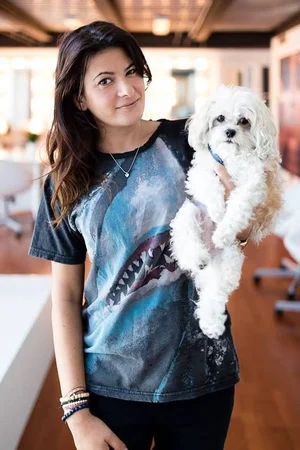
Leila AntaklyOver the last two decades, Cambodia's musical legacy has slowly resurfaced through collectors, archivists, filmmakers, DJs, and contemporary bands inspired by that era. One of the most important revivalist projects has been The Cambodian Space Project, founded by Australian musician Julien Poulson and singer Srey Thy. Since 2009, they've helped reintroduce Cambodia's lost rock classics to international audiences while blending them with garage rock, soul, funk, and psychedelic experimentation. The sound feels both archival and alive.
Srey Thy's voice in particular carries that same emotional intensity found in the original recordings of Ros Sereysothea, haunting, playful, seductive, wounded. The Cambodian Space Project understood something essential: this music was never meant to live in museums. It was meant to move people.
That same spirit also exists in bands like Dengue Fever, the Los Angeles-based Khmer psych-rock group that built a cult following by fusing Cambodian pop influences with surf rock, garage, and psychedelic sounds. For younger listeners outside Southeast Asia, Dengue Fever became an unexpected gateway into Cambodia's forgotten sonic universe.
What moves me most about Cambodian psych rock is how cinematic it feels. Even the grain of the recordings carries atmosphere. You can hear optimism colliding with uncertainty. Youth culture blooming against political instability. Western influence blending with something ancient and deeply local. There's glamour in it, but also melancholy. Freedom mixed with fragility.
A sound born during a moment when Cambodia briefly felt cosmopolitan, creative, modern, and globally connected before unimaginable violence shattered that trajectory. And yet somehow the music survived. Not completely. Not cleanly. But enough survived. Enough for someone wandering through a hidden record shop in Phnom Penh years later to feel the electricity of it all over again.
That's the thing about culture. Even after attempts to erase it, traces remain.
Sometimes in vinyl. Sometimes in memory. Sometimes in a distorted fuzz guitar echoing across decades.