
They Shaped Us First
On the characters who arrive early and never quite leave. Candy, Tintin, Mafalda, Inspector Gadget, the Smurfs, Asterix, Fido Dido and what they were actually teaching us.
There's a certain magic that lives in the memories of our childhoods. Not just entertainment these characters were our first teachers in empathy, rebellion, imagination, and the enduring appeal of the underdog.
Before algorithms curated what we watched and streaming platforms offered infinite choice, the television schedule was fate. And what fate delivered, for a generation of children across Europe, Latin America, Japan, and beyond, shaped something lasting.
These were not just cartoons. They were first encounters with resilience, rebellion, bureaucratic absurdity, community, and the idea that the small and the clever could outwit the large and the powerful. Candy Candy taught us to keep going. Mafalda taught us to keep asking. Tintin taught us to keep moving. Asterix taught us that a village of stubborn idealists can hold out indefinitely against an empire. Inspector Gadget taught us that competence is overrated what matters is having good people around you.

Long before anyone spoke of emotional intelligence or resilience as things to be cultivated, Candy White Ardley was demonstrating both in real time. The Japanese shojo manga that launched in 1975 became a global phenomenon particularly across Europe, Latin America, and Asia not because it was cheerful, but because it wasn't afraid to be devastating. Candy lost people she loved. She was an orphan who kept smiling not because the world was kind, but because she chose not to let it make her otherwise.
That distinction mattered. Candy's optimism was earned, not given. She is a foundational pillar of global pop culture, a standard-bearer for shojo storytelling, and the character who defined the childhoods of millions before any of us knew what manga was.


Hergé was born Georges Remi in Brussels in 1907. His pen name came from the French pronunciation of his initials reversed: R.G., read aloud. His first Tintin strip appeared in 1929 in a Catholic newspaper's children's supplement, and his early drawings were rudimentary but Tintin's trademark quiff was already there, fully formed. As was, eventually, the clear line style that would redefine what comics could be.
If he hadn't been a strip cartoonist, Hergé could have been a Pop Artist. Each frame is an artwork in its own right composition, colour, clarity. He invented a fusion of art and literature in which the subtle interplay between characters showed that comic books can do everything novels can do, and more. Today's innumerable graphic novels pay testament to that influence.
"Comic strips will find their own Balzac, an author who is gifted with both artistic and literary abilities." He was far too modest to presume the Balzac of the comic strip might be him.
Hergé

Mafalda is six years old and she has absolutely no patience for the state of the world. Created by the Argentine cartoonist Quino and first published in 1964, she became a global symbol of progressive youth, anti-authoritarianism, and the refusal to accept that things have to be the way they are simply because they always have been.
Her panels appear on protest signs worldwide. She was honored at the United Nations though, as Leila would note, the UN has turned out to be a fairly useless institution, so perhaps the truest honor is that she has outlasted the credibility of the institutions she always suspected. The world she grew up asking questions about is still failing to answer them. Mafalda would not be surprised.
Her group of friends Miguelito, Felipe, Susanita, Manolito, Libertad embodies the clashing philosophical, economic, and social ideologies of the 20th and 21st centuries played out in a Buenos Aires neighbourhood. Each one a different answer to the question of how to live in an imperfect world.

Long before the era of smartphones, the 1983 cartoon featured concepts that are now simply part of everyday life. Gadget's Gadgetphone anticipated FaceTime. His video-screen watches arrived thirty years before the Apple Watch. His computerized Gadget Book foreshadowed the tablet. The show was accidentally prophetic in ways its creators could not have imagined.
But the real genius of Inspector Gadget was not its technology it was its subversion. The nominal hero is entirely incompetent. The actual work is done by a ten-year-old girl and her dog, working quietly in the background. Penny and Brain save the world every episode while Gadget takes the credit. Go-Go Gadget, indeed.

From a Belgian comic strip by Peyo in 1958 to a Hanna-Barbera animated series that ran from 1981 to 1989, the Smurfs painted the world a delightful shade of blue. Tiny azure creatures in mushroom houses, led by the ancient and wise Papa Smurf, perpetually outwitting the magnificently useless wizard Gargamel and his scheming cat Azrael.
Beneath the surface and the Smurfs are part of the same Franco-Belgian bande dessinee tradition as Tintin and Asterix was a quietly radical vision of community: cooperation, shared purpose, each member contributing their unique talent to the collective. Whether Peyo intended a utopian fable or simply enjoyed drawing small blue people, the result was a village that functioned on principles most of the real world still struggles with.

One small village in Gaul resists. It has always resisted. The Roman Empire, in all its overwhelming imperial power, cannot take it. This is the premise of Asterix, co-created by René Goscinny and Albert Uderzo in 1959, and it has not aged a single day because the situation it describes the small, stubborn, independent-minded community holding out against a vast and complacent hegemony is a permanent feature of human history.
What makes Asterix genuinely great, rather than merely beloved, is the layers. The puns in the names Asterix, Obelix, Dogmatix, Impedimenta, Unhygenix reveal themselves slowly across childhood and adulthood. The wordplay, the historical in-jokes, the caricatures of different European national characters, the satirical jabs at contemporary politics. Children love the wild boar banquets and the hitting. Adults love everything else. Part of the Franco-Belgian bande dessinee tradition alongside Tintin and the Smurfs, it belongs to a lineage of European comics that understood long before graphic novels were taken seriously that sequential art could carry genuine literary weight.
Children love the wild boar banquets and the hitting. Adults love everything else.
On Asterix
Fido is for Fido. Fido is against no one.
Where Mafalda carries the weight of the world, Fido Dido's chilling. He is the early 90s counterculture distilled: absolute apathy as philosophical position. While Mafalda expects and demands answers, Fido simply can't be bothered to ask the questions. The contrast is night and day. Some of us were Mafalda. Some of us were Fido. Most of us are both.
What these characters share across continents, across decades, across the enormous cultural distances between Japanese shojo manga, Argentine satirical comics, Belgian adventure strips, and French village satire is that they trusted their audience. They did not condescend. Candy's grief was real. Mafalda's frustration was legitimate. Tintin's world was genuinely dangerous. Asterix's empire was genuinely powerful. The children reading and watching understood, somewhere beneath the Saturday morning enjoyment, that they were being taken seriously.
That is why they stay. Not nostalgia for nostalgia's sake. But the recognition, on returning to them as adults, that they got something right that a great deal of current entertainment still gets wrong.
Antakly Projects has been in conversation with artists and creatives from around the world since 2003. Explore the full archive at ninunina.com. Follow us on @antakly.projects ✦ Stay curious.
Stay curious,
Leila Antakly



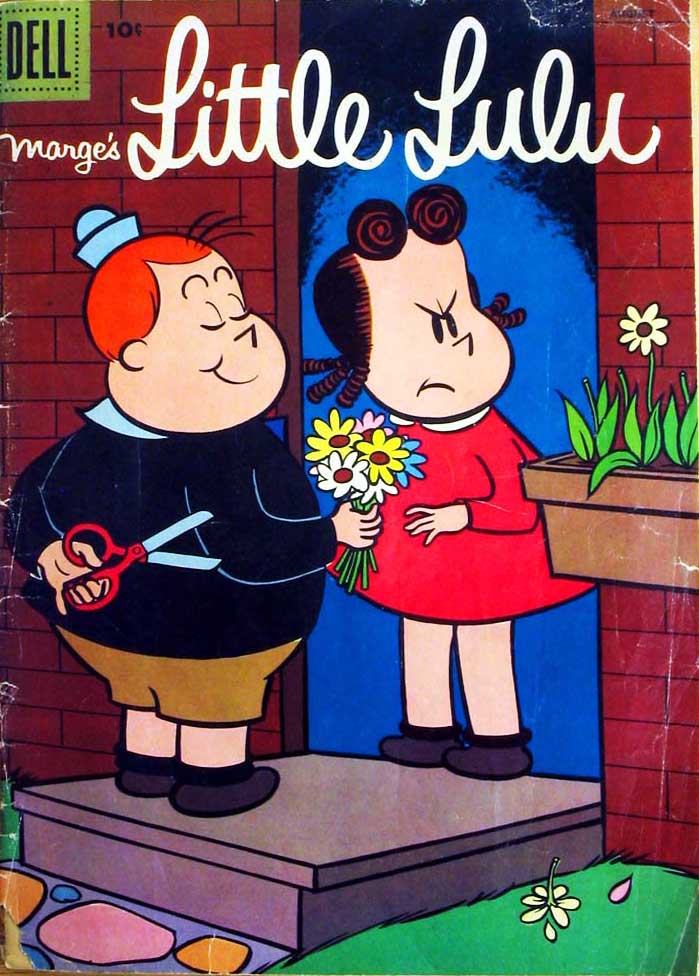
Mafalda and Little Lulu

Ulysses 31 a Franco-Japanese Anime tv series from 1981