
The Man Who Turned Pop Culture into Modern Theatre
and the Emotional
Theatre of Pop Culture

Mondino understood that image-making was no longer about documenting reality. It was about creating emotional worlds people wanted to enter. That is why his work matters.
There are photographers who document culture, and then there are image-makers who fundamentally reshape the way culture sees itself. Jean-Baptiste Mondino belongs firmly in the latter category. For decades, his work has existed at the intersection of music, fashion, performance, and myth-making. His images did not simply accompany pop culture. They helped define its emotional atmosphere.
Long before visual branding became an obsession, before artists existed inside endlessly curated digital identities, Mondino understood that image-making was really about constructing emotional worlds people wanted to enter. And unlike many glossy image-makers who emerged from fashion photography, Mondino always brought something instinctive and deeply musical into his work. That distinction matters.
Before photography, before directing music videos, Mondino's first passion was music itself. He worked as a DJ and composer, immersed in rhythm and sound before ever stepping behind a camera. You can feel that musicality throughout all of his work. Even his still photography possesses movement. Desire. Tension. Fun. Sexy.
"Even his still photography possesses movement. Desire. Tension. Humor. Sex."
Leila Antakly
Emerging from France and later immersing himself in London's cultural scene in the 1970s, Mondino arrived at a moment when music, nightlife, fashion, and visual experimentation were colliding in entirely new ways. Pop culture itself was becoming performance art. He instinctively understood that shift. Throughout the 80s and 1990s, he radically altered the visual language of music photography, editorials, and music videos by injecting sensuality and cinematic atmosphere into everything he did.
What made Mondino different was that his imagery never felt decorative. Even at its most polished, there was always something psychologically charged beneath the surface. His photographs and videos often carried a strange tension between intimacy and performance, beauty and absurdity. His subjects appeared hyper-visible yet emotionally distant, seductive yet approachable. He bypassed traditional celebrity portraiture entirely and instead created archetypes,emotional projections.
 Neneh Cherry · Raw Like Sushi · 1989
Photography © Jean-Baptiste Mondino
Neneh Cherry · Raw Like Sushi · 1989
Photography © Jean-Baptiste Mondino
For me, the work that remains most iconic is deeply specific: the Manchild video, the cover of Raw Like Sushi, and Madonna's Justify My Love. Those three projects represent Mondino at his most emotionally and culturally influential.
One of the defining visual statements of late 80s culture because it captured a completely new kind of femininity emerging at the time. Neneh Cherry appeared powerful, intellectual yet streetwise, stylish without looking staged. Before streetwear became commercialised and endlessly recycled by fashion houses, this look actually felt rooted in real culture, in multicultural London street energy, in lived style. The collaboration between Neneh Cherry, stylist Ray Petri, and Mondino crystallised an entire aesthetic movement. Mondino understood something many photographers still struggle with: how to photograph women without flattening them into fantasy objects. His female subjects possess complexity.
A further demonstration of Mondino's understanding of atmosphere. Watching it now, its restraint still feels new. The hypnotic pacing, the swaying camera movement, the surreal emptiness of the environment. Rather than relying on frantic MTV-era editing, Mondino allowed mood itself to become the narrative. That emotional ambiguity became one of his greatest strengths as an image-maker.
Few music videos permanently alter mainstream visual culture. This one did. The controversy surrounding the video was never simply about sexuality. Pop culture had already embraced provocative imagery. What unsettled audiences was the psychological intimacy of it all. The voyeurism. The erotic ambiguity. The sense that viewers were entering a dream-state rather than watching a commercial music product. Mondino later described locking the entire cast and crew inside a hotel for days during production with almost no traditional structure. No rigid concept. No fixed rules. That looseness, that collapsing of performance into reality, is precisely why the video still feels alive decades later. It breathes. And in many ways, it helped define the emotional language of modern luxury imagery: hotel alienation, nocturnal glamour,emotional distance, decadent exhaustion.
 Prince · Lovesexy · 1988
Photography © Jean-Baptiste Mondino
Prince · Lovesexy · 1988
Photography © Jean-Baptiste Mondino
 Bjork · 2005
Photography © Jean-Baptiste Mondino
Bjork · 2005
Photography © Jean-Baptiste Mondino
His iconic portrait of Prince for Lovesexy, controversial at the time for its eroticism and vulnerability, perfectly demonstrates this instinct. The image transcended promotional photography entirely. It became mythological. Sensual. Spiritual. Provocative. The kind of image that permanently embeds itself into collective visual memory. Mondino's subjects rarely appear as celebrities in the traditional sense. They become cinematic projections, emotional avatars existing somewhere between fantasy and reality.

His campaigns for Dior, Chanel, Calvin Klein, Jean Paul Gaultier, Gucci, Yves Saint Laurent, Louis Vuitton, Nike, and others helped redefine the relationship between advertising and art direction. But even within luxury fashion, Mondino resisted perfectionism. His imagery retained spontaneity and humor.
There is often something tactile in his work. He was never interested in photographic purity for its own sake. He openly dismissed nostalgia for film grain or analog romanticism, embracing whatever technology allowed him to work most instinctively and efficiently. That refusal to become precious about process kept his work contemporary across decades of cultural shifts.
Today, much of visual culture feels flattened by overexposure and repetition. We live in an era saturated with images. So much contemporary photography feels hyper-calculated, algorithmically optimised, stripped of spontaneity or mystery. Mondino's work resists all of that. Even decades later, his images still possess seduction, power, and emotional unpredictability. They still feel inhabited by real desire, real performance.
Playful femininity, glamour, the dreamlike fragmentation now visible across contemporary image culture owes an enormous debt to what Mondino pioneered years earlier. So much contemporary visual culture continues borrowing from worlds Mondino helped invent. Yet what separates him from many imitators is that his work never feels emotionally empty. There is always instinct underneath the style. Always curiosity. Always humanity.
Jean-Baptiste Mondino did not simply photograph pop culture. He helped invent the emotional atmosphere of modern pop culture itself. And perhaps that is why his imagery still feels so alive today. Not because it captured celebrity, but because it captured something far more difficult to preserve: instinct, sensuality, and the simple, irreducible truth of being seen.

Read more on Substack →
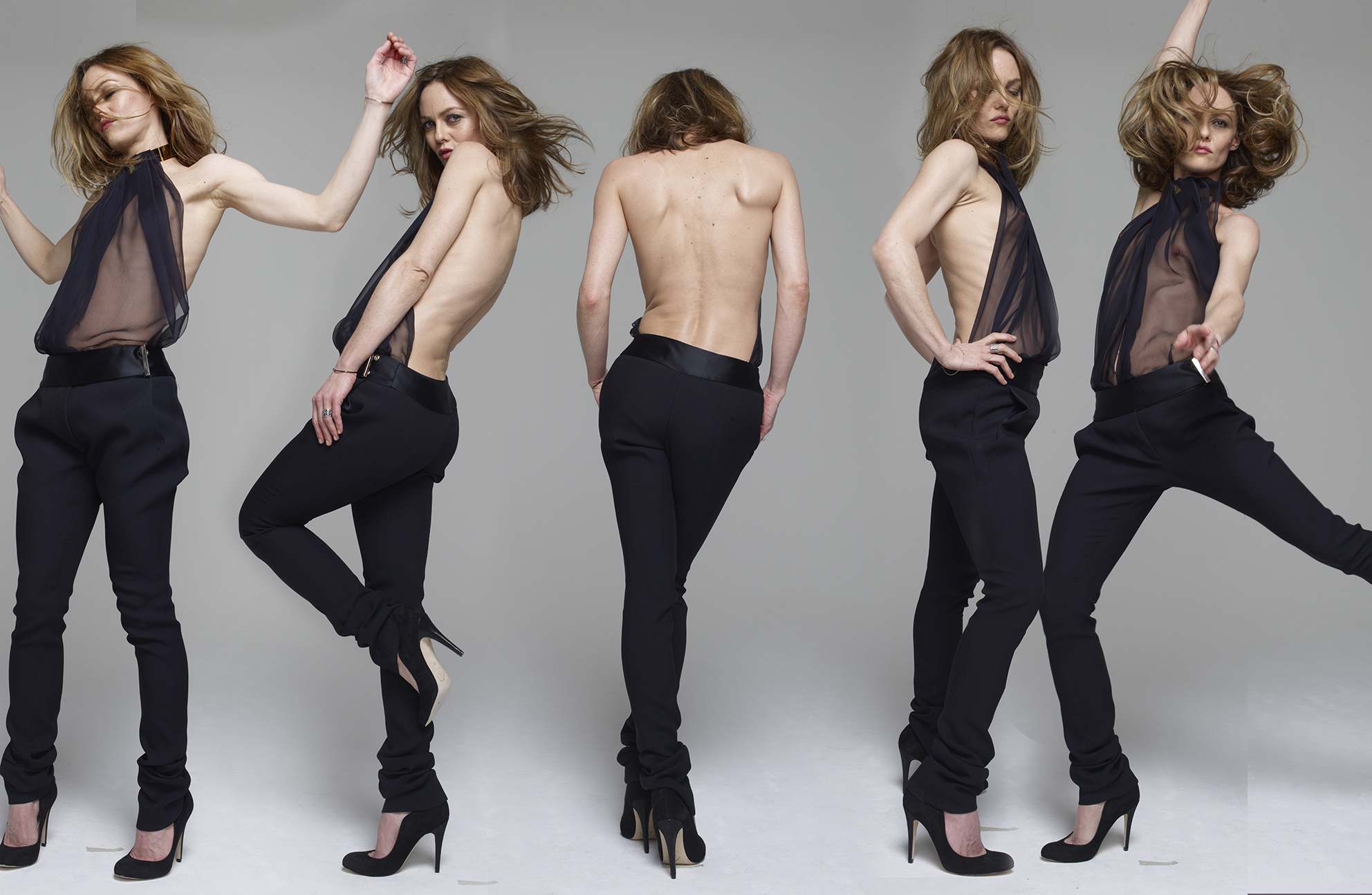
Vanessa Paradis