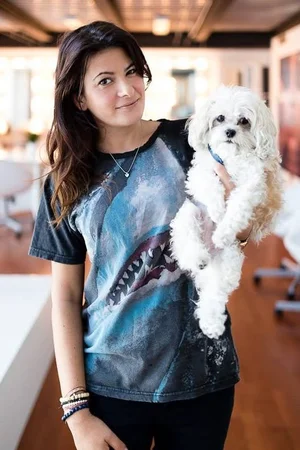
Edu Imbernon
He walked into his first club at sixteen, spent five years teaching himself everything, and at twenty-two was playing Space Ibiza. Then he went home to Valencia and lit a fire.

When I first spoke to Edu in 2011, he was twenty-two and the summer was already full: four dates at Space Ibiza, tours of the UK, Germany and Scandinavia. What struck me wasn't the schedule. It was how little he talked about himself. Ask him what fuels the music and he lists the weather, his family, his girlfriend, last weekend's crowd.
His story has the shape of a lot of dance-music stories: a teenager hears something in Ibiza and can't unhear it. What's different is what he did next. He nearly studied economics in Valencia; at the last minute he went to Berlin instead. Then, once the world was paying attention, he came back and started a party for seventy people in the upstairs room of a small Valencian club. He named it Fayer.
Fifteen years on, this is a revisit of that first conversation, and of a longer one he gave later about learning, copying, and the ordinary days that feed the music.
Leila Antakly
"Good shows make me produce better music. People enjoy the show more when I play good music. It's clearly a loop that just gets better and better."
Edu Imbernon, in a later interview
At twenty-two, in his words
Your sound merges melody with dancefloor energy. What fuels it?
Everything. The weather, my family, my girlfriend, even the energy of last weekend's gig.
Most unforgettable performance?
Off Sónar 2010 at Moog in Barcelona, playing alongside Los Suruba, Uner and Affkt. That crowd's energy was electric.
Gigs we can't miss?
Space Ibiza on 7 and 21 July, 25 August, and the closing party on 2 October. Plus tours across the UK, Germany and Scandinavia.
Editor's note: Space Ibiza closed for good in 2016. Edu played its final season with a Fayer showcase.
Dream collaborations?
Remixing Florence + The Machine would be a dream. Their emotion aligns with my sound.
Anything else?
Valencia raised me, but the world shapes my music. Expect more live instruments, vocals and stories.
He kept that promise: the live instruments and vocals became his signature.
Five quiet years, then a sound
The first club he ever walked into was Amnesia, on a short trip to Ibiza at sixteen. "It definitely left a mark on me." His heroes then were Tiga, Anthony Rother and Gregor Tresher.
What came next is the part nobody posts about. "I 'studied' everything a lot from the ages of sixteen to twenty-one. I kind of secluded myself from social life and focused on music." He trained as a sound engineer, and it was frustrating: "All I really wanted was to make the music I had in my head."
The breakthrough came in 2009 with "El Baile Alemán", made with Coyu for the German label Liebe*Detail, which Beatport named Best Underground Track of the year. The turn came in 2010. He made a remix of The xx's "Crystalised" on spec, it was chosen as one of four official remixes, and the process taught him to write with live instruments and vocals. That's the sound people now recognise as his.
"You have to aim to be special."
"Plenty of producers copy constantly as a part of their work, and in my opinion that's heading nowhere. You have to be creative, and that will take you to a special level as a musician."
- Two CDJ-200s and a Behringer mixerThe first setup, at sixteen.
- Traktor, MIDI and an iPadTouring years: three or four channels at once, so he could lay a non-dancefloor song over a dancefloor one.
- Laptop + CDJs in HID modeTwo years of his own mappings for effects and loops on each deck.
- Back to CDJs and USB sticksThe decks caught up with the software, and the laptop problems went away.
Groceries first, music after four
The most human part of his later interview is his description of a normal day. No glamour: emails, breakfast, the gym, the market, cooking. The music starts in the late afternoon and, if it's going well, runs into the night.
"I consider myself more inspired late at night, which fights a bit with early mornings, so I try to combine these, as I really like waking up early and being productive."
The fire he built
Fayer started small on purpose: an irregular party for about seventy people above a little club in his hometown. It grew into events with Dixon, Âme, Solomun, Tiga and Seth Troxler, a showcase in Space Ibiza's final season, and dates as far as Cairo, Moscow and Beirut.
The label works the way his own music does, bridging the song-based worlds of indie and electronica with house and techno. It has released David August, Agoria, WhoMadeWho, Adriatique and Maya Jane Coles. In his later interview he was running two labels and a monthly party, and about to open a restaurant in Valencia, Fayer Bar. "Some weeks I don't really have the time to be in the studio as much as I wanted."
Since we spoke
The twenty-two-year-old who wanted to remix Florence + The Machine went on to remix Maya Jane Coles, Hot Natured, Metronomy and WhoMadeWho, and to tour across five continents, from fabric and Watergate to Coachella and Tomorrowland. His own records moved from "Punset" and "Imberlove" towards slower, more emotional songs like "Fixing Fires" and "Bitter Fate".
Fayer is still the centre of it: event listings show Fayer nights continuing at Marina Beach in Valencia and in Alicante, though we couldn't pin down the most recent dates.

- 2009"El Baile Alemán" with Coyu, Beatport Best Underground Track
- 2010Official remix of The xx, "Crystalised"
- 2011Our interview; Space Ibiza dates
- 2012Fayer begins in Valencia
- 2014"Fayer" voted Best Track, Vicious Music Awards
- 2015"Fixing Fires", first release on Fayer; Best Artist, Vicious Music Awards
- 2016Fayer showcase in Space Ibiza's final season
We couldn't confirm what Edu is releasing in 2026, or whether Fayer Bar opened. If you know, tell us.
Three tracks
Who is Edu Imbernon?
A DJ, producer and label owner from Valencia, Spain. He broke through in 2009 with "El Baile Alemán", made with Coyu, which Beatport named Best Underground Track of the year, and in late 2012 founded Fayer, a party series and label.
What is Fayer?
His event series and label. It began as a 70-person party in the upstairs room of a small Valencia club and grew into events with artists such as Dixon, Âme, Solomun and Tiga. The label bridges indie and electronica with house and techno.
Did he remix The xx?
Yes. His remix of "Crystalised", made on spec around 2010, was chosen as one of the track's four official remixes, and taught him to produce with live instruments and vocals.
What was his first DJ setup?
Two Pioneer CDJ-200s and a Behringer mixer. He later moved to Traktor and MIDI controllers, then back to CDJs with USB sticks.
Images courtesy of the artist. Original interview: Leila Antakly, 2011. Quotes on his early years, setup and daily routine are from a later interview with Edu Imbernon. Biography from imbernonmusic.com, Ibiza Spotlight (2011) and Neo2 (2017). Revisited for Antakly Projects, 2026.