Meet Our Man in Beirut
Nasri Atallah
On Our Man in Beirut, the blog that became a book, and the funny, tragic business of being out of synch with home

Why this conversation
We first spoke in 2009, when Our Man in Beirut was still a blog and Nasri Atallah was the returning expat writing it, hundreds of thousands of readers a month watching a Lebanese kid raised abroad try to make sense of the country his family came from. I understood the territory in my bones. Anyone who grew up between passports does. The diaspora carries a particular ache, a love for a place that does not quite recognise you when you arrive, and Nasri had found a way to write it that was both very funny and quietly devastating.
He was born in London to the Lebanese journalist Samir Atallah, raised between there and Beirut, schooled at the American University of Beirut. He is, in the truest sense, a third culture kid, and the book that came out of the blog is a small classic of that condition.
A third culture kid is someone who spends a significant part of their formative years in a culture outside their parents' passport countries. The term was coined in the 1950s for people who blend pieces of their home culture with the host cultures around them into a distinct third culture of their own.
Our Man in Beirut
The site ran from 2009 to 2012 and became, in 2012, a best-selling collection of stories and essays for Turning Point Books. The subject was the returning expat in Lebanon and, as Nasri put it, the funny and tragic consequences of being out of synch with your environment. That phrase has stayed with me, because it is the whole diaspora experience in a single line: not unwelcome exactly, just permanently half a beat off from the place you are supposed to call yours.

The funny and tragic consequences of being out of synch with your environment.Nasri Atallah, Our Man in Beirut
The Conversation
Beirut, 2009
So who is Our Man in Beirut?
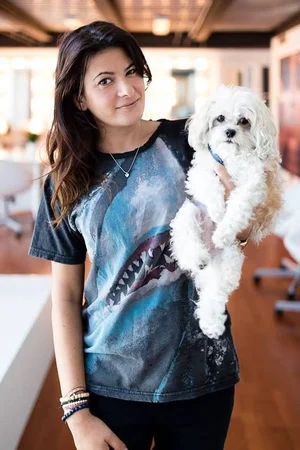
I was born in London in 1982, Thatcher in office, and I grew up on Fawlty Towers and Keeping Up Appearances and all sorts of insufferably British things on the telly. We moved to Beirut when I was fifteen. I hurriedly rushed back to England at twenty. And then, rather inexplicably, I decided to come back to Beirut two years ago, of my own volition. Over twenty-eight years I have been a UN researcher, an oil analyst, a private banker, and an advertising copywriter, and I am currently enjoying my latest incarnation as a person who writes words. I started Our Man in Beirut in 2009 out of frustration more than anything. I had no idea what I was doing with my life, or quite how I had ended up in Beirut. The place infuriated me no end, so I decided to channel that, and once I did I found a lot of people felt exactly the same way.
Your greatest inspirations?
I am really lucky with the family I landed in. Saying my father is a writer does not do justice to the breadth of his knowledge and his charisma; he is the ultimate inspiration. My mother is a painter and a recreational hippie, yoga and all that, and she keeps me grounded and calm-ish. My sister is a very talented fashion designer. It is all about family, really.
The most interesting response to your work so far?
Almost everything that has happened to me in the past couple of years came out of the blog. The copywriting job, the new platform, the book deal. It has been very therapeutic. (Did I just say that? Jeez.) But seriously, the validation you get from people who enjoy your work is amazing. It feels specific to the creative industries, and social media only heightens it, the response is immediate. Even the negative reactions are great, because they let you defend yourself and argue your point.
The sites you cannot live without?
I am hopelessly addicted to the internet. Design inspiration sites like NOTCOT and FFFFOUND, tech sites like TechCrunch and Mashable, the Guardian every single day. But the one I genuinely could not live without is Arts and Letters Daily.
What are you working on next?
Besides the Our Man in Beirut book, which also includes some photography, I am working on some fiction. It is still embryonic, but I am aiming for something like Bret Easton Ellis meets Tayeb Salih, channelled through Gary Shteyngart.
Where do you see social media in the Middle East going?
I think we are going to stop saying social media soon and just call it media. It is already the default mode of communication for a certain age bracket, and that will only grow. It is enormously empowering. It helps us see ourselves as something more than a passive, captive audience, and the impulse to create and comment and engage can only be a good thing.
Anything else for us?
Someone once said that if you do what you enjoy you will never work another day in your life, and I could not agree more. People thought I should seek psychiatric help when I said I was leaving a cushy banking job in London to go and write out of Beirut. I think they are the crazy ones, putting on a suit and tie every day and denying themselves the pleasure, and the success, of doing something they are actually good at.
The years since
Much of what follows I learned simply by keeping up with him over the years. He has become one of the region's busiest cultural operators. He ran Esquire Middle East as editor-in-chief and now edits The National's TN Magazine. He co-founded Last Floor Productions, created and showran the psychological thriller Doubt and produced the action comedy Fixer, both for MBC Shahid, and executive produced the horror short It Gets Darker, which premiered at Screamfest in Los Angeles. More recently came The Long Away Game, picked up through Warner Bros. Discovery's Access initiative and aired during the Champions League final on TNT Sports, and Swim Sistas, a documentary short narrated by the Academy Award nominee Naomie Harris. Through his company Dark Coast Media he is developing a slate of Mediterranean crime stories.
His writing runs through The Guardian, Monocle, GQ, Little White Lies and Brownbook, he has been a regular on the BBC's Arts Hour, and he turns up in anthologies like Haramacy. Across all of it runs one throughline, the thing he has been chasing since the blog: amplifying Arab and diaspora voices and carrying them into the global industry.
He lives in Dubai now with his wife, the designer and curator Nour Hage, their son Dia, and a cat named Izzy. Hage's own work reclaims Arab textile traditions as fine art, most visibly in her project Women's Work with the Barjeel Art Foundation. And last year Nasri wrote an essay for The National about taking Dia to Lebanon for the first time, and how introducing his son to the country helped mend a relationship with home that the 2020 Beirut port explosion had left estranged. It is the same subject as the blog that started everything, fifteen years on: what it means to belong to a place you do not quite live in.
Listen
About Antakly Projects
Antakly Projects has been in conversation with artists and creatives from around the world since 2003.
And for the personal rants, opinions you didn't ask for, and the occasional existential spiral: follow me on Substack.
Follow us on @antakly.projects (instagram) ✦ Stay curious.