STRETCH ARMSTRONG AND BOBBITO
DJ Stretch
Armstrong
The Sound of the City
I find myself talking, often, about old New York: the city I knew in the late 90s early 2000s, the time most people now call the golden era of hip-hop. One name keeps surfacing in those conversations, then as much as now. Stretch Armstrong.
He has stayed as eclectic and restless as NY itself. A native New Yorker raised in Spanish Harlem, he soaked up everything the streets were playing, early hip-hop, freestyle, disco, and reggae from the time he was small. He started on rhythm as a five-year-old drummer, bought his first record in the 5th grade, Rapper's Delight, and never really put the twelve-inch down after that.
By 1988 his own parties had carried him into the city's club underground. But the thing that turned a local legend into an international one was a college radio show. He understood something most people missed: that the underground was about to become the mainstream, and he was standing right at the door when it happened.
Antakly Projects · Music Series · New York City

From the streets to the club
Stretch, born Adrian Bartos, came up loving two things that did not always share a dance floor: New York's weekend hip-hop mix shows and the city's house music. That double appetite pushed him to start spinning while he was still in high school, and the parties he threw were good enough to pull him into the club underground by 1988.
For a few years he was simply part of the architecture of nightlife, a reliable presence in rooms like Big Haus, MK, the Love Transporter Room and Mars, working the seam between hip-hop, dancehall, reggae, funk and house. He was helping usher in a new era without announcing it, because to him the boundaries between those sounds were never real to begin with.
A college station, 1 to 5 a.m.
The real turn came in 1990. He had met Bobbito Garcia at Def Jam, where Bobbito was working A&R and Stretch was a DJ hunting for fresh promos to play out. About to enroll at Columbia, Stretch approached the university's station, WKCR, about doing a hip-hop show that summer. Hip-hop radio had gone stale, and he wanted to do his own version of the mix shows that raised him.
The result, The Stretch Armstrong Show with Bobbito, aired Thursday nights from 1 to 5 a.m. and became the cornerstone of a whole emerging world. Anchored by Bobbito's voice and the easy humor between the two of them, it gave unsigned artists a place to be heard. Legends came through for quick freestyle sessions while they were still unknown: Nas, Biggie, Busta Rhymes, Jay-Z, DMX, Big Pun, you name it. The show is credited with first putting Wu-Tang, Mobb Deep and even Eminem in front of listeners, and Stretch and Bobbito took a direct hand in launching the careers of Redman, Ol' Dirty Bastard (a regular), Large Professor, Big L, Fat Joe and more.
The tapes traveled. A devoted local audience was matched by a fervent global trade in home-recorded bootlegs, copies of copies, passed hand to hand around the world. The Village Voice called it the best hip-hop show in New York; The Source later voted it the best hip-hop show of all time. The duo went on to host a second show on HOT 97, the self-proclaimed Home of Hip-Hop, for five years.
"Beastie Boys and Beatnuts sampled bits of our show for hooks, and never gave us anything. We were happy. We were like, the Beastie Boys listen to our show. That's cool."
Bobbito GarciaCurator, consultant, author
These days Stretch has folded that same instinct into music supervision and consulting, helping brands find a musical identity that actually means something. His first book, No Sleep: NYC Nightlife Flyers 1988-1999, came out through powerHouse Books and reads as a love letter to the city's club years.
He and Bobbito are still at it, too, trading stories and breaking new music on their show What's Good with Stretch & Bobbito, which lives on NPR and Spotify. One recent episode I keep returning to is their conversation with the Beastie Boys. Listen to the full archive and their playlists wherever you get your podcasts.
A document of a vanished city
When you make something small and seemingly disposable in the moment, a party flyer, say, you almost never imagine it accruing value or nostalgia, or one day standing in for an entire era. That recognition sits at the heart of No Sleep: NYC Nightlife 1988-1999, the book Stretch made with hip-hop historian Evan Auerbach, with an introduction by Mark Ronson.
It gathers flyers from the personal archives of people who lived inside New York's unmatched nightlife in those years, and the effect is a kind of collective memory: a record of a time and a set of rooms that, for a lot of people, were a genuine sanctuary.
"There is no other definitive time in New York City nightlife that can eclipse the early-'90s underground house scene. As a teen who survived the chaos of the '80s hip-hop clubs, house music was a safe haven, freedom in dance, fashion, and expression, while escaping the drug-laden, violent landscape of the city. This was at the height of the crack epidemic, which often meant you had to watch your back just getting to the club."
DJ Spinna, in No SleepNo Sleep: NYC Nightlife Flyers 1988-1999, by Adrian Bartos (aka DJ Stretch Armstrong) and Evan Auerbach. powerHouse Books.

No Sleep · powerHouse Books
SoundCloud
Sets, mixes and selections spanning decades, posted by Stretch himself.
Open →@stretcharmstrong: records, the city, and the ongoing life of a New York selector.
Open →What's Good
Stretch & Bobbito reunited: history, new music, and the Beastie Boys episode.
Open →The Duo
The pair's shared history, projects, and the legacy of the WKCR years.
Open →No Sleep
NYC Nightlife Flyers 1988-1999, with an introduction by Mark Ronson.
Open →Episodes & Playlist
Every What's Good episode plus the duo's playlist, on Spotify.
Open →This piece grew out of my original 2018 post on Stretch and the golden era, revised and expanded here with new links and listening.
Part of the Antakly Projects music archive, twenty-three years of conversations with artists, DJs, and the people who shape how a city sounds. Read all interviews here.
Stay curious,

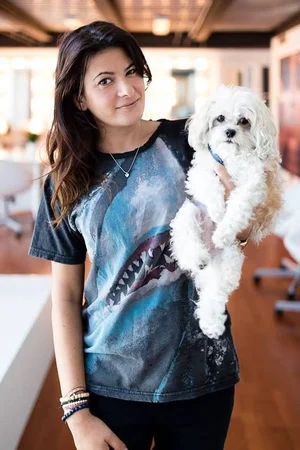
Photo by Leila Antakly circa 2006.