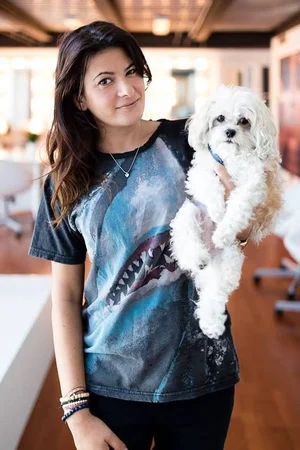
Fatima Bocoum: Bridging Cultures, Empowering Women, and Transforming Art Through Curation
Fatima Bocoum
A marketer turned curator who moves like a whisper, using art to change how the world sees women, and African women most of all.

Why this conversation
I am drawn to people who refuse to stay in one lane, and Fatima is a glorious example. She spent more than a decade inside the machinery of houses like Conde Nast, LVMH and American Express, then followed a thread from a women's empowerment blog into the art world, where she has been quietly rearranging how African women are seen ever since. What moves me is the gentleness of her method. She does not shout. She curates shows that work like a whisper and trusts that reflection can do what argument cannot. Born in China, raised across Libya, Saudi Arabia, Mali and the United States, she learned early that culture is the bridge. This is a conversation about identity, representation, and using art as a quiet force for change.
Culture Is the Bridge
Fatima Bocoum is a marketer, curator and advocate for the rights of women and girls, based in Brooklyn by way of what feels like the whole map. Born in China and raised across Libya, Saudi Arabia, Mali and the United States, she grew up watching her family stage celebrations of Malian culture wherever they landed, and watching, too, the very different positions women were given from one society to the next. After more than a decade building a marketing career alongside category leaders and houses like Conde Nast, LVMH and American Express, she stepped sideways in 2018 into art and curation. A single press release, written up on her women's empowerment blog, opened the door, and her first show, a collaboration staged in a Chelsea apartment, made her a curator for good.
From the conversation
How have your experiences living in China, Libya, Saudi Arabia, Mali and the U.S. influenced your approach to art and curation?
I grew up in an environment where my family frequently organized events to celebrate and showcase Malian culture within the communities we lived in. This instilled in me a deep sensitivity to the importance of culture and its role in shaping how we accept and appreciate others and their differences. From an early age we moved frequently, experiencing life in diverse socio-political contexts, and what stood out to me most was the position of women in those societies. That realization fostered a strong belief in the need for greater freedom and equality for women. As a result, my curatorial practice places significant emphasis on identity and representation. I am deeply committed to reshaping how women perceive themselves, and I enjoy collaborating with men, or allies, who recognize the importance of portraying women, particularly Black women, with dignity. My goal is to ensure that African women artists receive the same recognition and representation in the art world as their male counterparts.
What motivated you to focus on curatorial work and women's empowerment?
Back in 2018 I ran a women's empowerment blog where we explored beauty, art, and feminist news. One day I received a press release from a brilliant photographer and art curator organizing an all-women art show. Writing about it felt natural because we shared common values. After the article was published, she remarked that my perspective on the curation of the artworks was intriguing, and asked if I had ever considered becoming a curator. She introduced me to a gallerist in New York, which led to my first show, a collaboration held in a Chelsea apartment with industry professionals. It was one of the most beautiful experiences I have ever had. The scenography was exquisite, tiny vintage images framed in oversized photo frames. And the rest, as they say, is history. I firmly believe that art is one of the most powerful ways to address complex societal issues. It has a unique ability to invite the viewer to sit and reflect, often in silence.
Art is like a whisper, subtle yet profound. Sometimes that is exactly what is needed to inspire change.Fatima Bocoum
It Is the Era of Women
What sets Fatima apart is a refusal to dwell in despair. Even with the heaviest subject matter she curates toward the outcome she wants to see rather than the wound itself. Her exhibition Musow Ka Touma Sera, which translates as It Is the Era of Women, shown at the Bamako Photography Biennale, looked hard at the conditions of women in Mali and the roots of gender-based violence, and still made room for hope. She works with local artists because authenticity cannot be imported, and she believes, rightly, that the stories a culture tells through its art are the same stories that can be retold. Today she curates under her own practice, Wilden Oche, still working to change the narrative for women, and for African women in particular.
More from the conversation
How do you approach curating exhibitions that not only showcase art but also foster meaningful conversations about societal issues?
One thing I approach differently from many of my curator friends is my focus on showcasing the ideal outcome, regardless of how sensitive or profound the topic may be. For instance, when examining poverty, I do not see the value in simply depicting its harsh realities. Instead, I aim to highlight the change I wish to see.
Can you share a project that had a significant impact on raising awareness or inspiring change for women and girls?
Musow Ka Touma Sera, which means It Is the Era of Women, was presented in Mali during the Bamako Photography Biennale across 2019 and 2020. The show explores the socio-economic and political conditions of women in Mali, with a particular focus on some of the underlying causes of gender-based violence. A beautiful memory I carry is seeing a group of young girls stop by every afternoon for several days to revisit the show. In societies where certain conversations are taboo, and the education system lacks the cultural freedom to address issues like violence, something must change. This is a show I am truly proud of. I had the privilege of collaborating with Malian women photographers to collectively analyze our context. It was powerful.
Why do you believe art is an effective medium for addressing gender inequality and societal dynamics?
Many of the construed notions about gender inequality and societal dynamics have been created and perpetuated through media, through art, film, literature and more. If these media had portrayed women, or certain dynamics, differently, the outcomes could have been vastly changed.
How do you ensure that the voices and perspectives of women and girls in Africa are authentically represented in your work?
Authenticity is key, and I have found that engaging with relevant local artists is essential to achieving it. For example, collaborating with women artists from Mali to explore issues affecting women in Mali ensures a deeper and more meaningful perspective.
What advice would you give to young curators or advocates looking to make an impact in both the art world and social justice?
To follow their hearts and pursue the questions they seek answers to, remaining curious and persistent.
I do not see the value in simply depicting harsh realities. I aim to highlight the change I wish to see.Fatima Bocoum
@fatimabocoum · fatimabocoum.com · Wilden Oche
About Antakly Projects
Antakly Projects has been in conversation with artists and creatives from around the world since 2003.
Explore the full archive →And for the personal rants, opinions you didn't ask for, and the occasional existential spiral: follow me on Substack
Follow us on @antakly.projects (instagram) ✦ Stay curious.