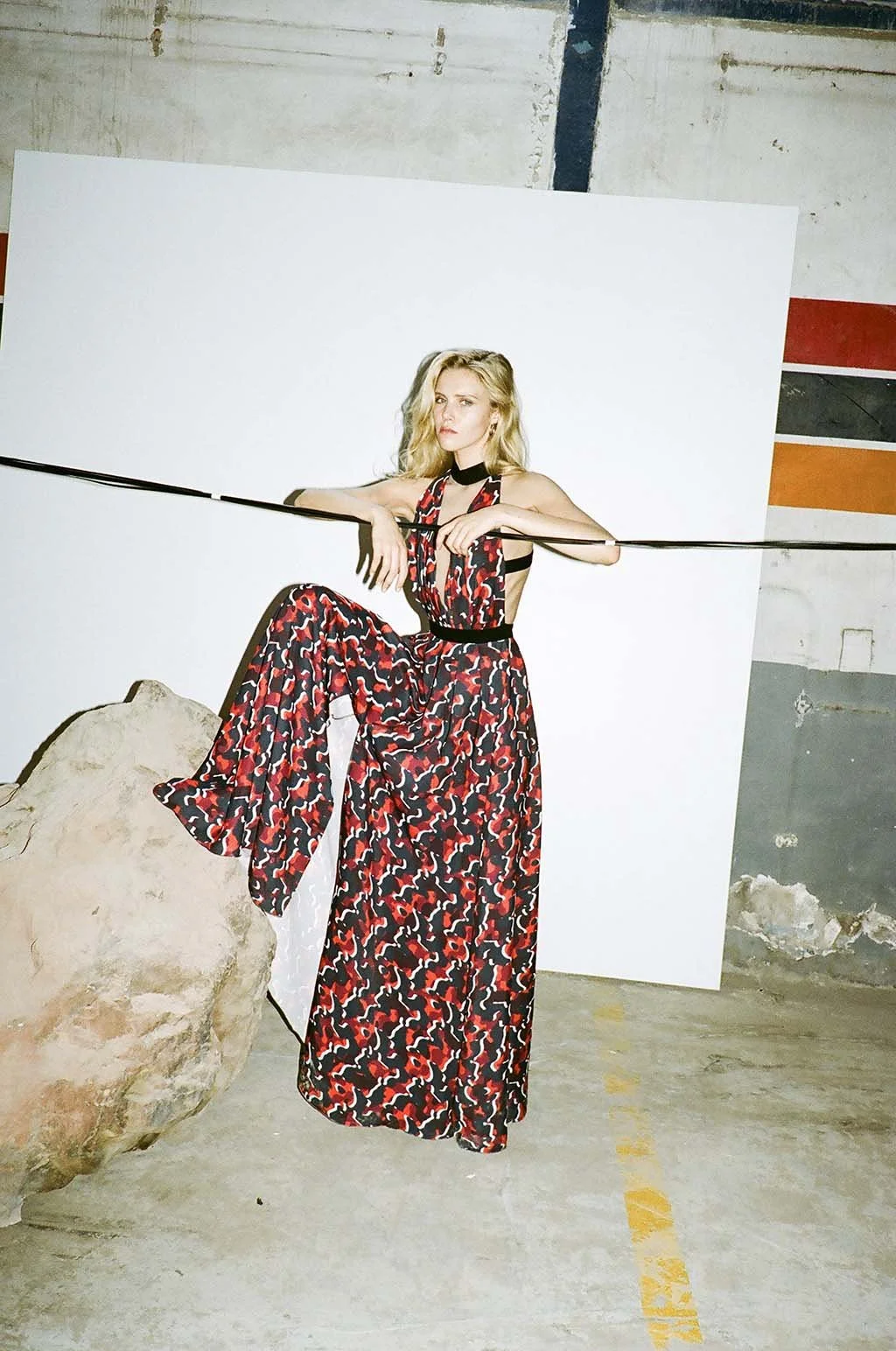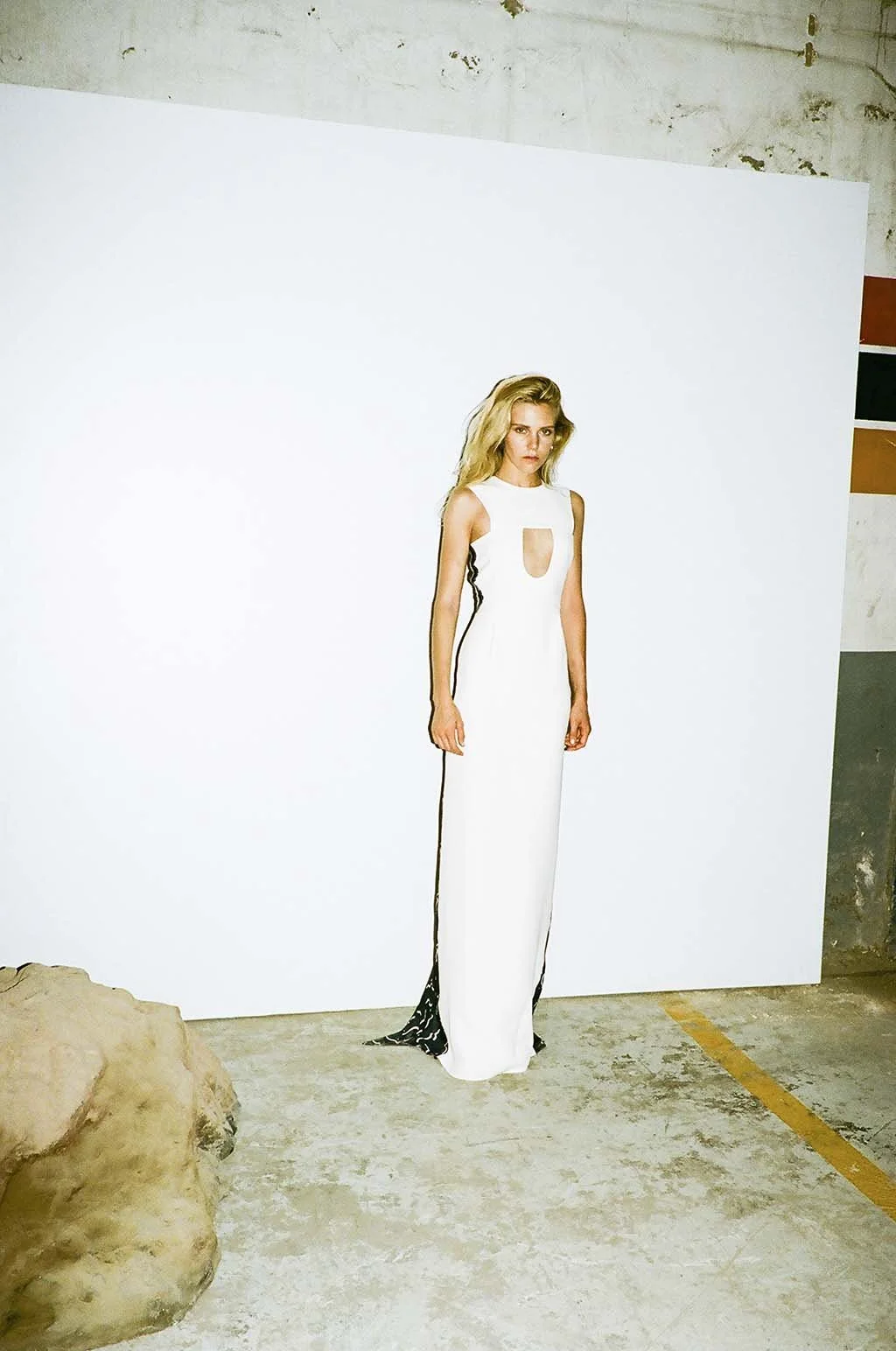
Inside Nafsika Skourti’s Fashion Vision
Nafsika
Skourti
Nafsika Skourti makes clothes as acts of cultural preservation. In a moment when physical archives are being erased — currency, family homes, community memory — she is embedding the fragments into fabric. Not as metaphor. As documentation.
"Documenting Palestine through clothing is about preserving memory, visibility, and humanity at a moment when so much is under attack. Physical traces like archives, currency and family homes are being erased, and clothing becomes a way to carry fragments of lived experience into the present."
"She is not a political designer. She is a designer who cannot look away. There is a difference, and it matters."
Clothing as archive. Memory as material.
The second chapter in her series حُبِّي فِلَسطِين gathers together newspaper clippings, epistolary, pamphlets, posters, handwritten letters, political graffiti scrawled on prison walls, pages torn from old newspapers, inscriptions from a 1937 coin. She retraced their histories onto practical clothing. The archive becomes wearable. The wearable becomes archive.
The collection premiered in March 2026 as part of Skourti's ongoing project of cultural preservation through dress. Proceeds from the collection support the Ghassan Abu Sitteh Children's Fund.
After graduating from Central Saint Martins in 2012, Nafsika was burnt out from London and moved back to Jordan. Then in 2014, sitting at a friend's house, her phone went crazy. A woman who had contacted her months earlier about including her graduate collection in a Paris Fashion Week showroom, an opportunity she had declined, was reaching out again. This time she wasn't taking no for an answer. She had already sent the lookbook to Colette, Opening Ceremony, and Joyce Hong Kong. They had already replied. PFW was 13 days away. Nafsika left her friend's house immediately. Her sister Stephanie had just quit her banking job at Goldman Sachs in London. She came to Paris. They got some orders. They've been working together ever since.
In 2014, Nafsika had the privilege of sitting with Widad Kawar, a renowned Palestinian art historian and collector of Palestinian and Jordanian cultural dress. As Kawar walked her through her extraordinary archive of antique thobes, explaining the history and iconography woven into each piece, she pulled out a set that looked completely different. These dresses had moved away from traditional motifs. Instead they carried political symbols: the Palestinian flag, the Dome of the Rock, maps, olive branches, embroidered in the national colours. At the time, displaying these colours publicly was banned. Artists were imprisoned for using them. Creating and wearing these dresses wasn't simply an aesthetic choice. It was a quiet but powerful act of resistance.
What peaked your interest in fashion?
I was at Central Saint Martins, and I graduated in 2012 from the BA in fashion print. I actually applied wanting to do sculpture because I didn't ever think of fashion as a career, but it was secretly what I wanted to do. I had a teacher who saw my illustrations and really liked what I was doing and encouraged me to do fashion print. It wasn't a traditional path because I feel like life has a funny way of introducing you to things and putting you in places.
What was growing up with Palestinian heritage like?
I actually grew up in Jordan. My mother is Palestinian and my father is Greek, so my connection to Palestine came through family, community, and memory rather than geography. That connection to something you've never physically inhabited but carry completely inside yourself, it shapes everything about how I think about culture, about objects, about what it means to preserve something.
"Physical traces like archives, currency and family homes are being erased, and clothing becomes a way to carry fragments of lived experience into the present."
You are based in Jordan. Is this strategic?
To be honest, I'm based here mostly because I couldn't afford to be based in London. My nerves couldn't handle trying to build a brand somewhere so expensive. And I've found myself in Jordan, which is interesting, because first of all it's really beautiful, even though everyone around us is going through turbulent times to put it lightly. In London it's very easy to find amazing pattern cutters and in Jordan that's harder, but while things would take a while in London, people in Jordan get things done in two weeks. I might as well do it from here. The energy around our region is insane and as a creative, I'm always hunting for pools of electricity.
How does the political landscape in the region shape the work?
We're surrounded by wars and unjustifiable conflict. I didn't mean to make a collection with political undertones. I started off thinking about youth and freedom, but the more I thought about freedom the more I understood that freedom has always been fought for. We take it for granted but some people died for the liberties we have today. Arabic is not neutral right now, but that made it even more relevant. The words borders and television face each other on jeans, acting as a commentary on our generation's priorities. Young people want to be politically aware but entertainment is just around the corner.
Tell us about the camouflage print in Temporary Security.
Variations on the classic camouflage print, now saturated with colour. Military made beautiful. What was once a print associated with war and ugliness was now a print with colours to lift you, printed on silk cotton grosgrains, double georgettes, and poplin. All our prints and embroideries are lovingly made in-house. I imagined a powerful and positive protest of guys and girls who felt an urgency to go out and say something. We featured bilingual embroidered phrases saying the same things, like "can we be victorious" and "twice killed."
What was the thinking behind the backpacks and bum bags?
I love music festivals. The freedom, the escape, the good vibes. So lots of the design references came from what my friends and I wear, need, and want. We made backpacks and bum bags because we wanted our hands back. For moving, dancing, and fighting the good fight.
On fashion as a form of cultural preservation and political resistance.
When buildings are demolished and libraries are destroyed, what remains? The dress someone wore. The embroidery passed between generations. The print that carried a flag when carrying a flag was an act of imprisonment. Skourti understands this, and makes it the centre of her practice.
Arabic is not neutral right now. Nafsika uses that. Bilingual embroidered phrases. Words that say the same thing in two languages, confronting the viewer with their own assumptions about which language carries authority. The message is always the same. The reception is always different.
The Palestinian women who embroidered political symbols into their thobes when displaying those symbols was punishable by imprisonment were doing what Nafsika is doing now: keeping something alive through the act of making. The thread is unbroken. The tradition continues.