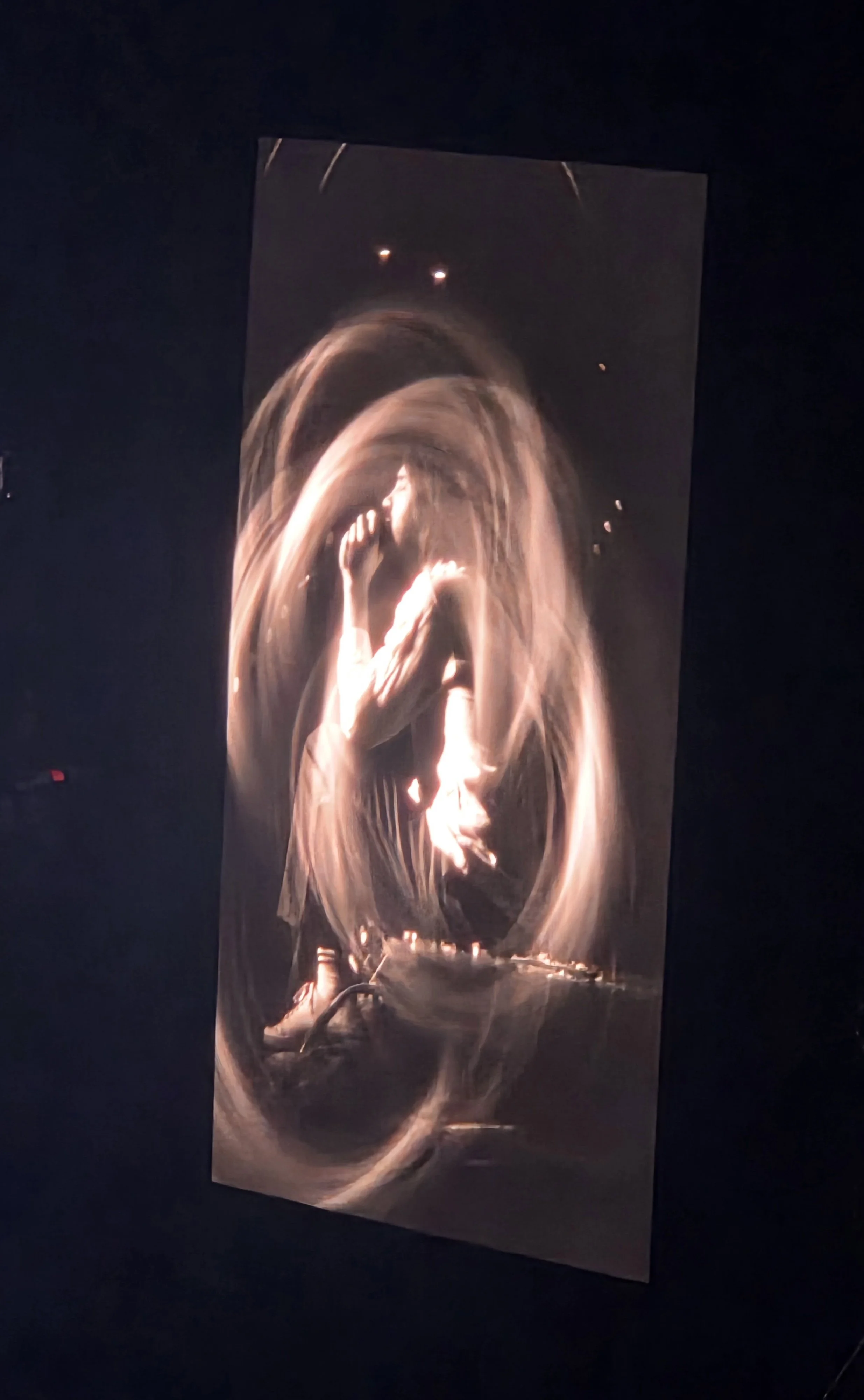
Tame Impala What Music Is Supposed to Look Like
Live Review · Personal Essay
What music
is supposed to look like
Tame Impala's Deadbeat Tour lands in Munich, and the room becomes a synesthete's dream — and everyone else's too
I — How it started
I've been a fan since around 2016, I can't pinpoint the exact moment, but I remember precisely the first thing that got me: the guitar in "Let It Happen." I played it over and over in the car until I was slightly unhinged about it. And for an embarrassingly long time I thought Tame Impala was a band. Multiple people. Little did I know: it's essentially one man in a studio in Perth, Australia, hearing things in colour.
One man. A home studio at the edge of one of the most remote major cities on earth. And a neurological condition that means he doesn't just hear the music he's making — he sees it. Which explains everything about why walking into one of his shows feels less like attending a concert and more like being high on shrooms in a forest playing a little game of hide and seek with gnomes.
"For an embarrassingly long time I thought Tame Impala was a band. Little did I know: it's essentially one man in a studio, hearing things in colour."
II — The man behind the kaleidoscope
Kevin Parker writes, records, produces, and mixes almost everything himself — playing guitar, bass, drums, and keyboards, layering himself over and over until a song exists fully formed. He keeps his work close until it's done, often surprising his own label with the finished product. What comes out the other end isn't clean or digital-precise. It's heavily compressed drums with a massive presence, textures that bleed into each other, sounds that feel like they have physical weight.
But the thing that truly sets him apart: Parker has synesthesia. Specifically chromesthesia — sound-to-colour synesthesia, where music triggers vivid, involuntary visual experiences. High notes appear as bright, sharp shapes. Bass reads as dark, slower-moving mass. Melodies behave like moving lines or waves in front of his eyes. He has described his process as "painting with sound" an internal light show running constantly as he works. When he says a track has a particular colour by the time it's done, he means it literally. He's not being poetic. He's reporting a perceptual reality.
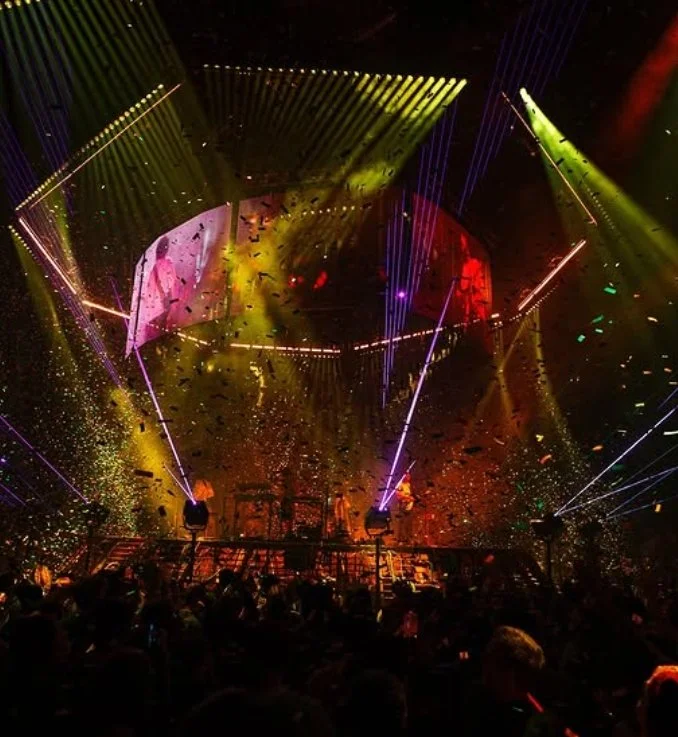
Which is why this concert, I realised about 10 minutes in, was not designed for us to just hear and enjoy the music. It was designed for us to see it — the way he sees it. Every laser, every colour shift, every moment the visuals contracted or expanded — that was someone trying to render in light what Parker perceives in sound. You were essentially being handed a window into his world.
What synesthesia sounds like — and looks like
People with chromesthesia perceive music as vivid, automatic flashes of colour, shape, and texture. High notes appear as bright, pointed shapes, diamonds, sharp lines. Bass moves as dark, slower mass. Melodies flow as waves or particles that dance in real-time. Parker has described his process as a "visual dreamscape" a screen in his mind where music paints a scene, constantly, as he works.
III — What happened in the room
The production was amazing in the specific way that only works when it's earned — when you can feel it was built to serve the music, not distract from it. Lasers and visuals choreographed with impossible precision, each burst of light syncing with the music's shifting moods. It was a fully immersive experience designed to be felt as much as seen or heard.
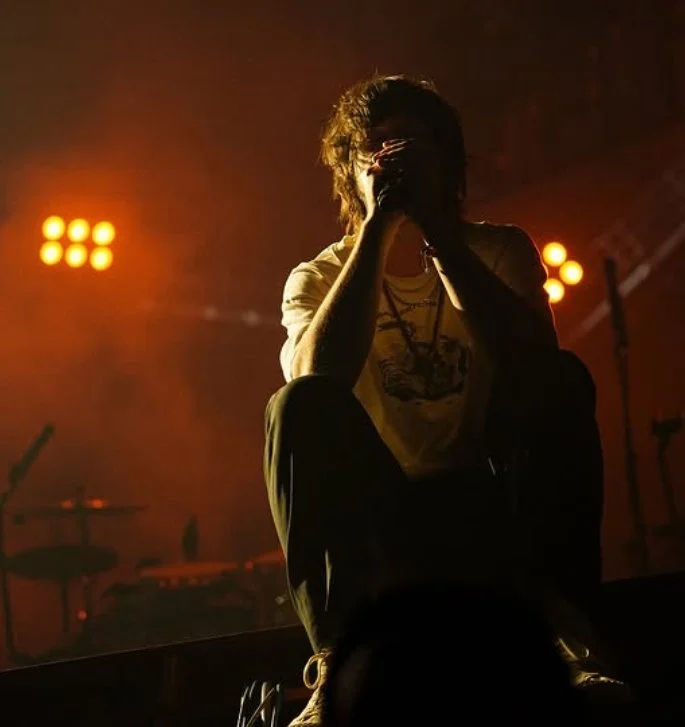
Parker's on stage charisma — warm, completely unpretentious, he really made 12 thousand people feel like we were chilling in his bedroom studio.
Highlights from the setlist — Deadbeat Tour 2026
Violet = classic favourites · Teal = new Deadbeat material
IV — The impossible favourite
Here is something I cannot resolve about Tame Impala: I genuinely cannot decide which song is my favourite. Every time a new one arrives, I think: this is it. This is the one. Then another comes along and I think the same thing. It is psychedelic, and then it is pop, and then some strong electric current runs through it and it morphs into something else entirely — and each version is somehow the one I wanted. The man makes music the way light through a prism makes colours: it's all the same source, refracted differently, and all of it is the answer.
"The man makes music the way light through a prism makes colour — it's all the same source, refracted differently, and all of it is the answer."
V — Things you might not know
Surprise facts about Kevin Parker / Tame Impala
He plays almost everything
On studio recordings, Parker plays guitar, bass, drums, and keyboards — and handles all production and mixing himself. The band assembles for live shows only.
Perth, Western Australia
The isolation of Perth — one of the most remote major cities on earth — shaped the project's introversion and self-sufficiency. He's been building music in bedrooms since his teens.
The name means nothing
Tame Impala was a MySpace project name chosen quickly in 2007. It stuck. Parker has acknowledged it doesn't mean anything in particular — which feels exactly right.
Deadbeat came from raves in the bush
The fifth album draws on Western Australia's underground "bush doof" culture — outdoor raves far from cities. Parker was "deeply inspired" by this scene when making the record.
His drums are endlessly sampled
Parker's signature heavily-compressed drum sound — massive, spongy, slightly dirty — has been sampled across hip-hop and pop and is considered one of the most distinctive sounds in modern production.
He shocks his own label
Parker keeps work private until fully finished. The label — and often his touring bandmates — hear a new album for the first time only when it's complete and ready to ship.
VI — What it was actually about
The Deadbeat tour is the fullest realisation yet of what Parker has always been reaching for made available, by all the great tunes, great crowd, and of course, through light and lasers and scale, plus the company I was with wasn't so bad either...
You will also love
Thank you, Cilantro 🌿
Tame Impala Munich 2026