Growing Up Political
How Growing Up in
San Francisco's Mission District
Made Everything Political
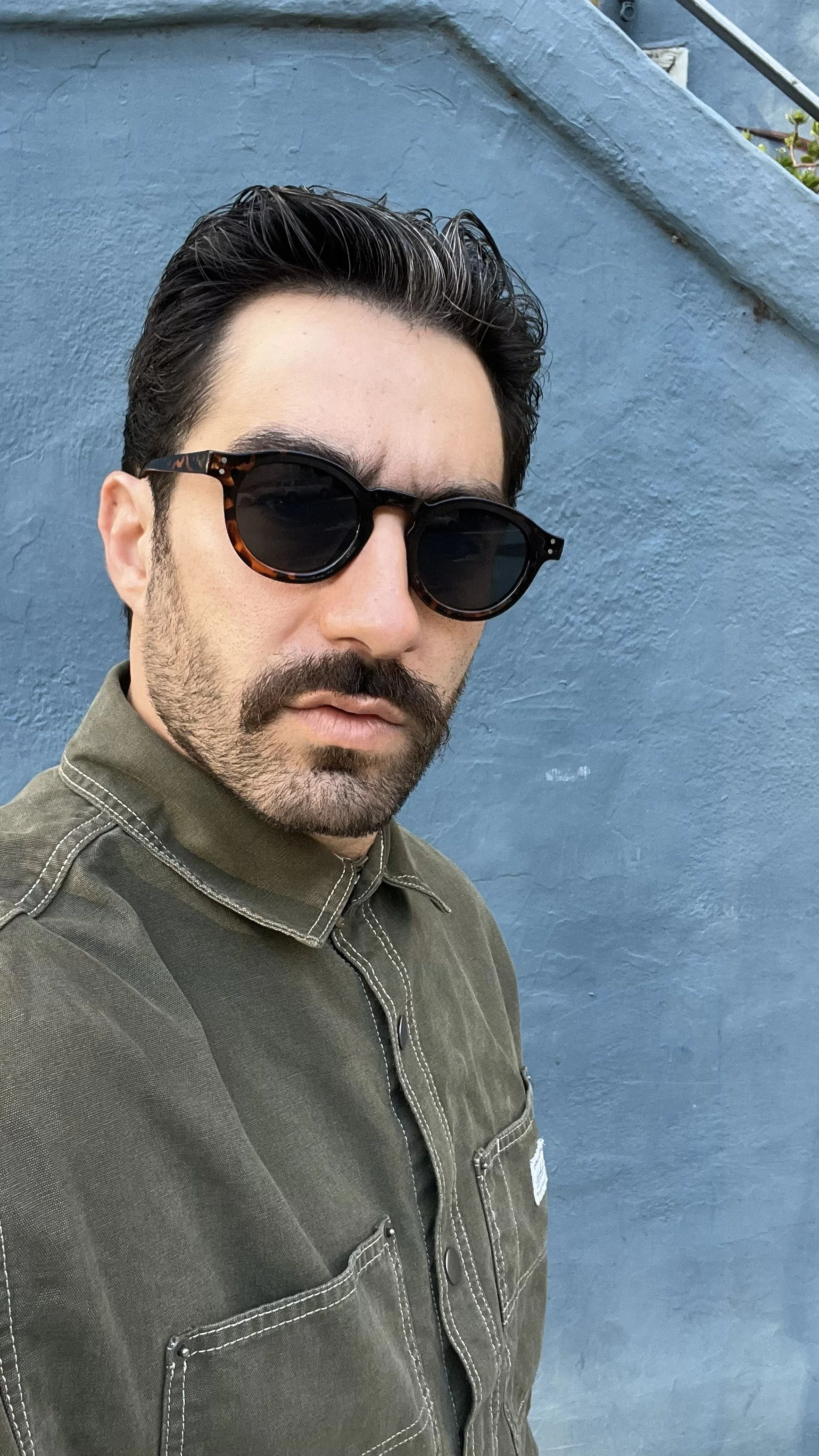
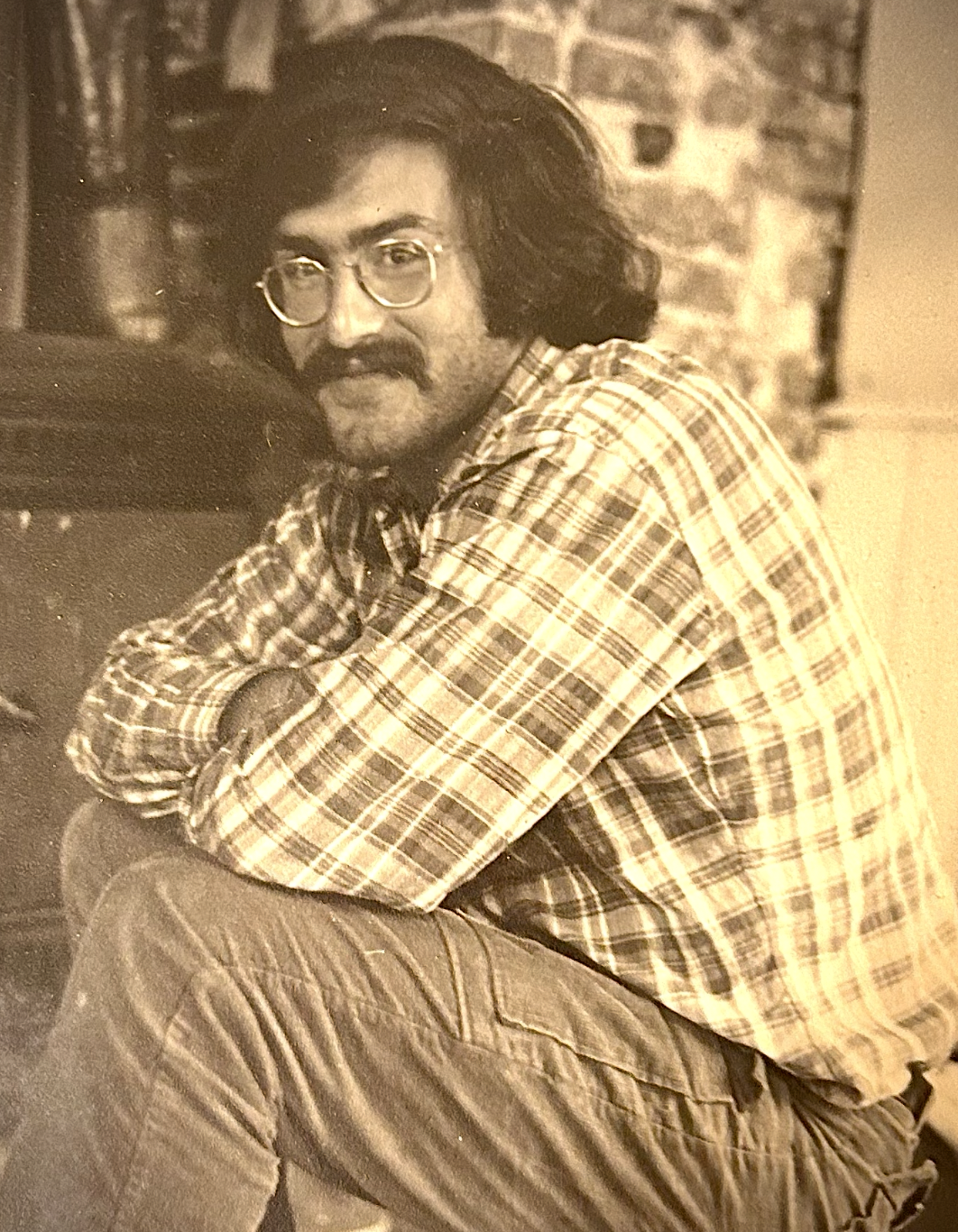
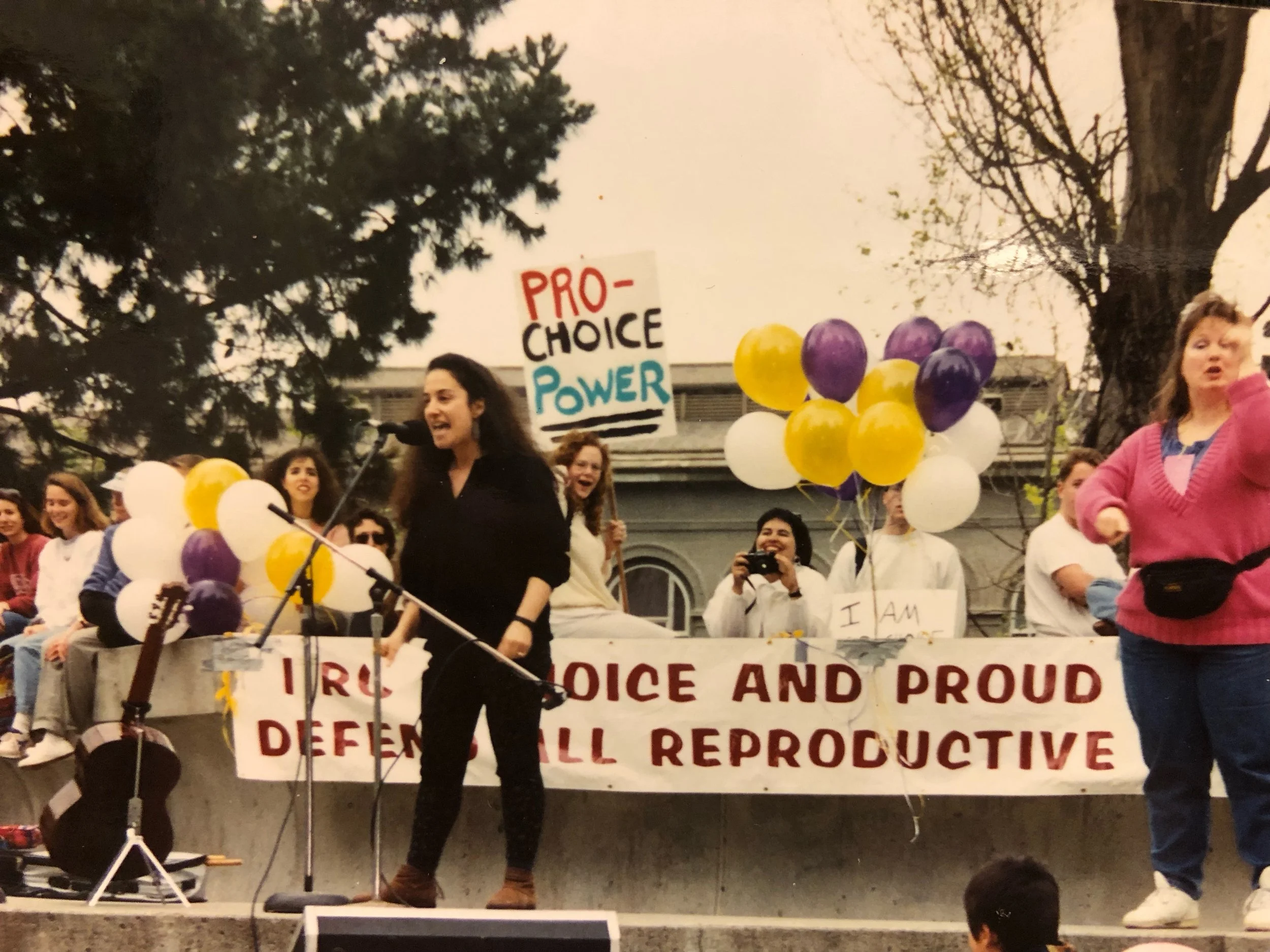
Charlie Goldensohn grew up in San Francisco's Mission District, the son of an activist educator and a mother who ran a Planned Parenthood. Politics was not something the family discussed, it was the language they spoke. There was no separating daily life from the obligation to give a shit about the world. That was just the weather.
What that household gave him, beyond politics, was a model of creativity and conviction as a unified force. The community around his parents (artists, thinkers, educators, activists) showed him from an early age that mobilising people and making things were the same gesture. Whether it was artists organising against Vietnam, Afghanistan, or Iraq, it was always creativity driving movements forward. "This is the foundation of doing what I do and being who I am," he says.
The Career in Brief
From Biden's 2020 campaign in Delaware to advising José Andrés and World Central Kitchen, from national organisations focused on abortion rights and voting access to executive producer of paid media in the final stretch of the Kamala Harris campaign, Goldensohn has operated at the highest levels of Democratic political communication for over a decade.
The Moral Quandary
Why Charlie Goldensohn Said No
to Biden's 2024 Campaign:
Because of Gaza
Q
You worked on Biden's first campaign, but when Biden's team asked you back for Round 2, you initially said no, because of Gaza. Walk us through that decision.
It was a psychological switch, a moral quandary. I'd spent a lot of my career in establishment Democratic politics, always a leftie but working within the system. Gaza changed something fundamental for me. I couldn't just show up and do the work without that weighing on me.
Once Biden dropped out and Kamala stepped in, the calculation shifted. It became what Goldensohn describes as an all-hands-on-deck moment, the same logic that had brought him back for 2020, when he'd initially supported Bernie Sanders in the primary and only joined the Biden team once the race was settled. Beat the fascist. Figure out the rest later.
He moved back to Delaware (again, sleeping on a mattress on the floor) and dove in as an advisor and executive producer for paid media. "And the whole time, from a messaging perspective, I viewed a lot of the decision-making as terrible."
After the Loss
After the Kamala loss, Goldensohn describes himself as furious, pulling his hair out. His entire career had been built on messaging and storytelling: turning wonky policy into engaging content for voters who weren't searching for it. The 2024 loss felt like a systemic indictment of everything the party refused to change.
"We keep polishing everything until it sounds like a press release. Nobody talks like that. Nobody connects with that."
, Charlie GoldensohnThe Content Strategy
200,000 Followers.
Dudes Talking
to Dudes.
The diagnosis after 2024 was everywhere: Democrats are losing men, mainly white men. The prescription, as Goldensohn heard it repeated across a thousand meetings, was to find a "Joe Rogan of the left." He saw that as a fundamental misreading of the problem.
"Sporty guys who drink beer and aren't conceited about politics." That was the actual gap. Not a podcast host. Messengers who are authentic to the audience they're trying to reach. And when he couldn't find them, he pointed the camera at himself.
Q
You've had videos hit five million views. What have you learned about what resonates?
The food video was huge on Instagram. The message was simple: you can't complain about immigrants and then eat at a taqueria. You can't benefit from a culture you claim to hate. Five million views. Some people were infuriated but they understood what I was saying. There was also me running on the beach on TikTok, delivering a message to MAGA dudes, telling them they're not getting laid because they're fascists. That did millions of views.
Q
You've called politicians "creepy little losers." Some say that's counterproductive.
Look, shame can be a mover for certain demographics if done correctly and used by the right messenger. But it can't be your only thing. I don't think we should dumb it down when talking to young men. They're not stupid. But calling the people who are trying to court their vote "losers" and "creeps"? Yeah, I do that. Because sometimes the truth is that the most dangerous people working 24/7 to appeal to struggling young men are, in fact, complete losers and creeps.
Watch
See It On The Feed
A few of the videos that built the audience: blunt, funny, and made to travel.
The Structural Problem
What Democrats Fundamentally
Get Wrong About Messaging Men
Goldensohn's critique of Democratic messaging is not ideological, it is operational. The party has had a thousand meetings about losing white men. It is not doing anything different. The fear of sounding authentic, of taking risks, of letting genuine people with genuine voices be the messengers, that paralysis is the product.
Meanwhile the right has spent years building digital ecosystems populated by people who sound relatable, who meet audiences where they are, who aren't afraid to be messy or controversial. The asymmetry is not accidental. It reflects different tolerances for risk, different relationships to authenticity, different theories of how people are actually persuaded.
"I've built confidence to just say what I think. That's what people respond to." Not the tenth version of a message that's been focus-grouped to death. The first version, from someone who means it.
The Techno Parallel
Goldensohn draws an unexpected line between dance music and political organising: "There's this freedom and lack of judgment and openness to others that you find on a warehouse dance floor that feels like what we should be building politically." Community without pretense. The question that animates him: how do you bring people into that energy while maintaining the essence of what makes it special?
On AI & Creativity
On AI transforming art and politics: "What remains true is that the things making and moving people the most are creative expressions of ideas and emotions. Creativity is the force that cuts through all the noise." The tools change. The force doesn't.
The Human Behind the Feed
Runs, Whiskey, and
The Best Noodles in Chinatown:
How Charlie Goldensohn Decompresses
Q
Political work at this level is exhausting. How do you actually decompress?
You can't feel guilty for feeling joy. You're allowed to take a break. I love to exercise, gym, long runs. I need to move and sweat regularly. And food: cooking and eating is huge. I like solitude too. I'm very social, but I decompress with solo meals out and about. Mental health walks through Jackson Heights. Just being in the chaos of New York, the overwhelming array of culture and diversity and food. Cities are my happy place.
He also, he notes with appropriate frankness, likes a beer. Or a whiskey. Or two. Or six.
Charlie's New York Food List
Pho Bang
Pho · Manhattan
Zabar's
Classic · Upper West Side
Shu Jiao Fu Zhou
Peanut butter wheat noodles · Chinatown
The Order
Cover with vinegar + homemade chili oil
Final Thought
Why Creativity Is the
Only Thing That Has
Ever Moved Politics
Goldensohn's parting argument is the one that runs through everything he has made and everything he believes. Creativity is not adjacent to political change, it is the engine of it. Any artist who pursues a creative endeavour has to know that not only is everything political, but that art has the strength to move politics in ways that white papers and polling data never will.
"If we lose that, if we become just another set of talking points and fundraising emails, we've already lost." The force that moves people politically is the same force that makes great art: authentic, willing to take risks, unapologetic about having something to say.
For Goldensohn, the 2024 loss was not the end of a story. It was the beginning of one. And it turns out, people respond to that.