RANIA MATAR: "OUR SHARED HUMANITY IS WHAT I CHOSE TO FOCUS ON"
AIPAD 2026
Rania Matar
in New York
New York, NY
Book Signing
Friday April 24
3:30 PM
"This is not an easy time for me to send an announcement email while my birth country is under the bombs." After days of deliberating, Rania decided that this is exactly what she should be doing.
"I am both an American and an Arab and these identities are sometimes at odds with each other, not every day, not even often, but once in a great while I become a mountain that some terrifying earthquake has split."
"I feel that we are living in one of these moments right now. Yet I believe this time also holds possibility — an invitation to draw on our creativity, affirm our shared humanity, and serve as messengers between the two worlds that shape us."
"I am grateful to every venue and publication who is helping amplify our voices from Lebanon, and the voices of the women who have courageously allowed me to represent them in my images."

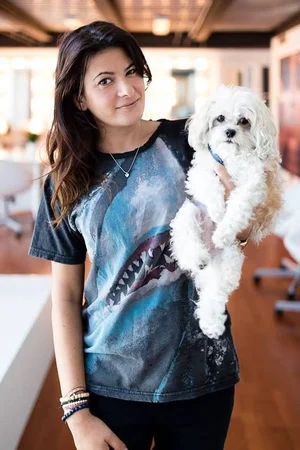
Rayven, Miami Beach, Florida, 2019
Rania Matar
There are photographers who document the world. And then there are photographers who make you feel it differently. Rania Matar belongs firmly in the second category.
"I was 'them' and I was 'us.' I had grown up there and now lived here. It became important in my work to focus on our shared humanity."
A practice rooted in the deeply personal.
A 2018 Guggenheim Fellow, Matar was born and raised in Lebanon and moved to the United States in 1984 to study architecture. Today, based in Boston and mother to four young adults, she is one of the most compelling voices in contemporary portrait photography — her work exhibited at the Museum of Fine Arts Boston, LACMA, the Carnegie Museum of Art, the National Museum of Women in the Arts, Fotografiska, and the Institut du Monde Arabe, among many others.
Her practice is rooted in something deeply personal: as a Lebanese-Palestinian-American woman and mother, questions of identity, belonging, and womanhood aren't abstract subjects for Matar — they are lived experience, translated into images of extraordinary intimacy. Working across the United States and the Middle East, she focuses on female adolescence and womanhood, exploring how identity forms in parallel across cultural lines.
The interview that follows was conducted by Leila Antakly. It is a portrait of an artist whose clarity of purpose is as striking as her photographs.
In Conversation
The news after September 11 in the US was typically portraying the Middle East in a very negative way — the "them" versus "us" rhetoric was deeply disturbing to me. I was "them" and I was "us." I had grown up there and now lived here.
It's always instinctive and personal, and then it turns into a project. My work usually addresses states of becoming — the fraught beauty and vulnerability of growing up — in the context of our visceral relationships to our physical environment and our universal humanity.
But it's also about collaboration, experimentation, performance, empowerment, and pushing the limits of creativity and self-expression, both for the women I photograph and for myself. By collaborating with women in the United States and the Middle East, I focus on our essence, our physicality, and the commonalities that make us human — highlighting how female subjectivity develops in parallel forms across cultural lines.
This past year was challenging on so many levels — Covid-19, of course, but also the horrible August 4th explosions in Beirut. In both instances I tried to focus on our humanity and interconnectivity, and the light at the end of the tunnel.
During lockdown I stayed connected with people by going to their windows and making their portraits from the other side of the glass. I was humbled by how many people were willing to be part of it — and by how important that human interaction, which we had so often taken for granted, turned out to be. For both of us, on either side of the window and the camera.
After the August 4th explosions, I organised a fundraiser for Beirut where every dollar raised was donated to SEAL — Social and Economic Action for Lebanon. Once again I was immensely humbled by people's kindness and the speed at which they came together.
My children, especially my daughters as I watch them grow up and transform. My own life and direct experiences are always the foundation of every project I take on. Watching what is happening in Lebanon and staying connected is a constant thread through my work, as is the energy of the young generation of women in Lebanon, who have been a particular inspiration to me these past few years.
Artistic Icons
Portraits through the glass.
During lockdown, Matar went to people's windows and made their portraits from the other side of the glass. The resulting series, On Either Side of the Window: Portraits During COVID-19, is one of the most quietly profound bodies of work to emerge from that period — a reminder that connection doesn't require proximity. Only attention.
The series was exhibited in Baltimore and Santa Fe as part of her SHE exhibitions in 2021.
Beirut. And the light at the end.
After the devastating August 4th explosions in Beirut, Matar organised a fundraiser where every dollar raised was donated to SEAL — Social and Economic Action for Lebanon. Once again, she was humbled by the speed with which people came together.
In both the pandemic and the Beirut explosion, her instinct was identical: to focus on humanity, interconnectivity, and the possibility — however fragile — of light at the end of the tunnel.
Exhibited Around the World
United States
United States
United States
United States
Sweden
France
A photographer who chose humanity over rhetoric at the moment it was hardest to do so. Who went to windows during a lockdown and found the whole world on the other side. Who works between worlds and makes both feel more true.
Boston, USA Origin
Lebanon Fellowship
Guggenheim · 2018 New Monograph
Radius Books

Kefa, Gambier, Ohio, 2018 (from the series SHE) Courtesy of the artist, Robert Klein Gallery/Boston, Galerie Tanit/Beirut