A Shift in Seeing: Encountering Cy Twombly at Museum Brandhorst
There is something almost sacred about experiencing great art in solitude, without the shuffle of feet or the murmur of voices to interrupt the dialogue between viewer and canvas. At Brandhorst Museum in Munich, I was given the rare gift of time. Time to sit, to absorb, to let Cy Twombly's monumental works reveal themselves gradually rather than all at once. John Berger wrote in Ways of Seeing that "the way we see things is affected by what we know or what we believe," and what I discovered was how much I have yet to learn about truly seeing.
The entire upper floor belongs to Twombly, a devotion befitting an artist who understood that his work needed space to breathe, to create its own atmosphere. This wasn't a collection of isolated pieces hung on walls, it is an orchestrated experience, a sequence of rooms that functioned like movements in a symphony.
The Lepanto Cycle
The Lepanto cycle stopped me completely. Twelve paintings, each monumental in scale, arranged in a room designed according to Twombly's own vision. These works commemorate the naval battle of October 7, 1571, when the Holy League defeated the Ottoman fleet at Lepanto on the Gulf of Corinth. But Twombly doesn't give us heroism or triumph. He gives us fire and water, wound and dissolution.
Sitting in that room, I understood what Berger meant when he discussed the difference between looking and seeing. Looking is passive; seeing requires engagement, context, duration. Twombly demonstrates that history isn't a fixed narrative but something fluid, interpretive, felt through the body and eye together.
The Roses Gallery
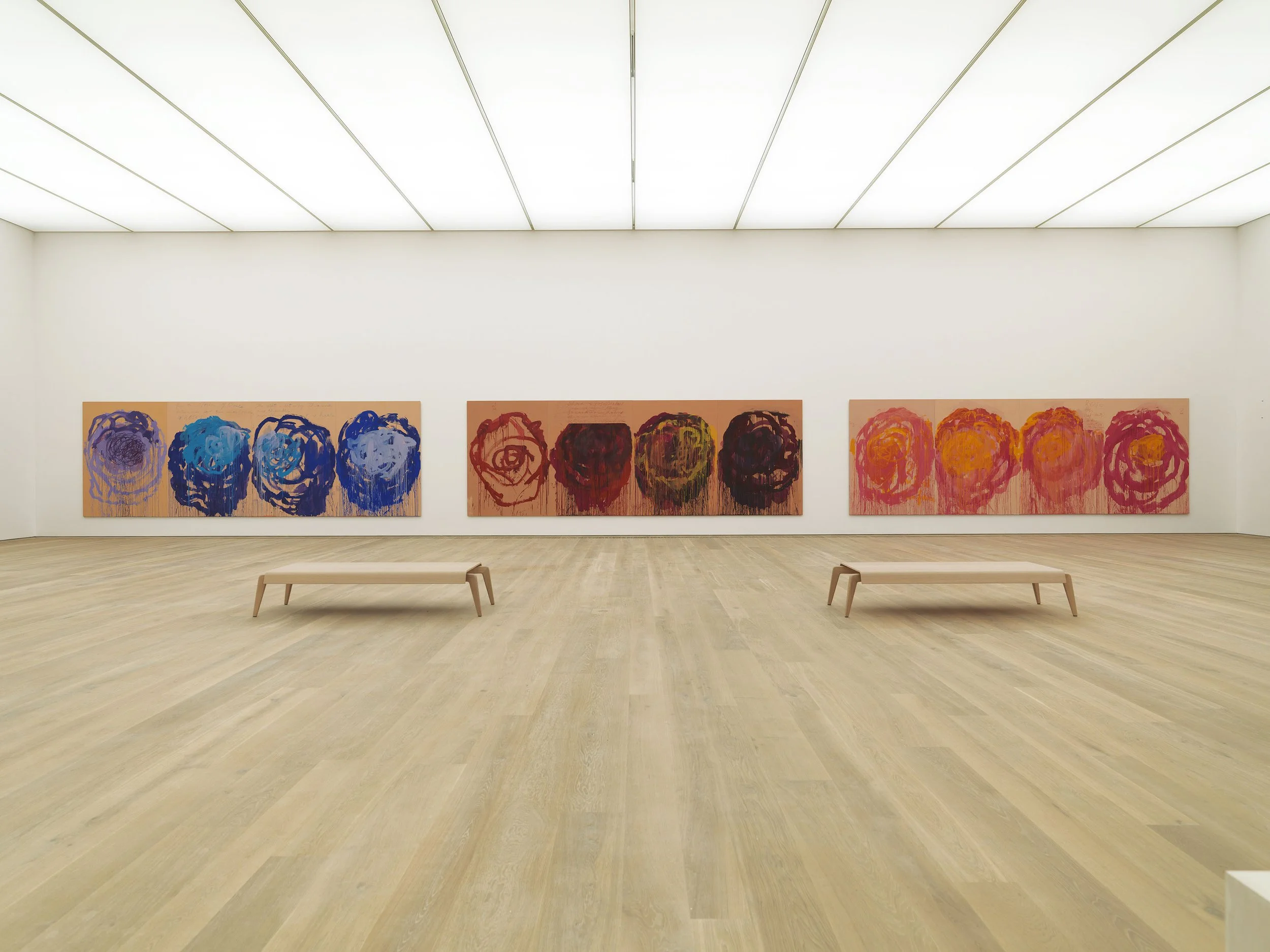
If Lepanto spoke of violence sublimated into abstraction, the Roses series spoke of beauty shadowed by mortality. These large paintings, created in 2008 specifically for Brandhorst, exist in perfect conversation with the architecture that houses them.
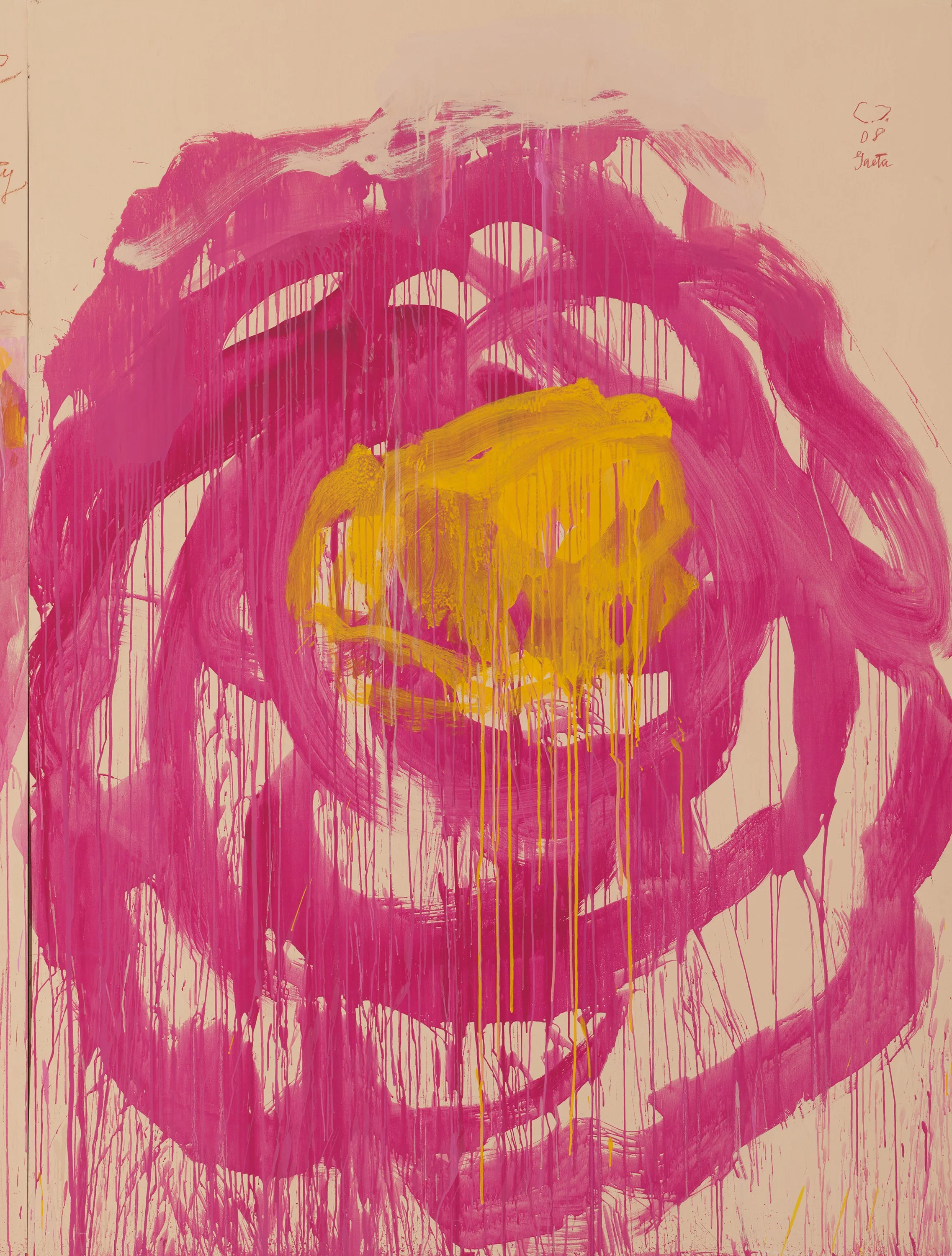
The roses aren't botanical illustrations. They're abstractions, built from overlapping planes and brushstrokes in bold reds, pinks, blues, yellows, and greens. Countless streaks flow across each canvas, suggesting not just the petals of flowers but their cultural weight, their freight of meaning accumulated over centuries. Twombly attached literary references to these paintings, from Rilke, Eliot, Dickinson, Bachmann creating what he called a small "cultural history of the rose." Memory, beauty, eroticism, loneliness, vulnerability, death: all contained in the gesture of paint on canvas. The colors pulse. The surfaces vibrate with energy. Your eye follows the streaks and discovers new tensions, with each viewing.
Early in his career, Twombly earned his reputation as "a man with a line", those raw graffiti scrawls charged with postwar avant-garde energy, but up close, in the intimacy of these Munich rooms, I could see the full repertoire of his mark-making. This is where Twombly's sophistication reveals itself. His paintings appear spontaneous, even chaotic, but they're the result of profound control and deep knowledge. He wanted to demonstrate, as he said, that "modern art isn't dislocated, but something with roots, tradition, and continuity." He presented the past in contemporary abstraction, ancient history made urgent and present. The scrawling lines reference Mediterranean culture, classical mythology, poetry, and war, all filtered through a distinctly American sensibility shaped by Abstract Expressionism.
Berger reminds us that "the relation between what we see and what we know is never settled." Twombly's work embodies this instability. You see gestures, colors, marks. You know they reference history, literature, nature. But the relationship between seeing and knowing remains perpetually open, requiring you to participate actively in the creation of meaning.
His paintings are beautiful, sophisticated, spell-binding in their ability to hold together contradictions, ancient and modern, controlled and spontaneous, intellectual and visceral. Standing in those Munich rooms, I felt the shift happen. A recognition that art's power lies not in any single approach but in the accumulation of experiences, each one adding to how we see.
Twombly ‘s modern abstractions carry the weight of history, that scrawled lines contain civilizations, that roses speak of death and beauty simultaneously, that a naval battle from 1571 can feel immediate and urgent today. I left Museum Brandhorst different than I entered. Isn't that what we ask of art? To change us, even slightly? To make us see the world differently, more completely, with greater awareness of everything that flows between the eye and the mind?
Written by Leila Antakly
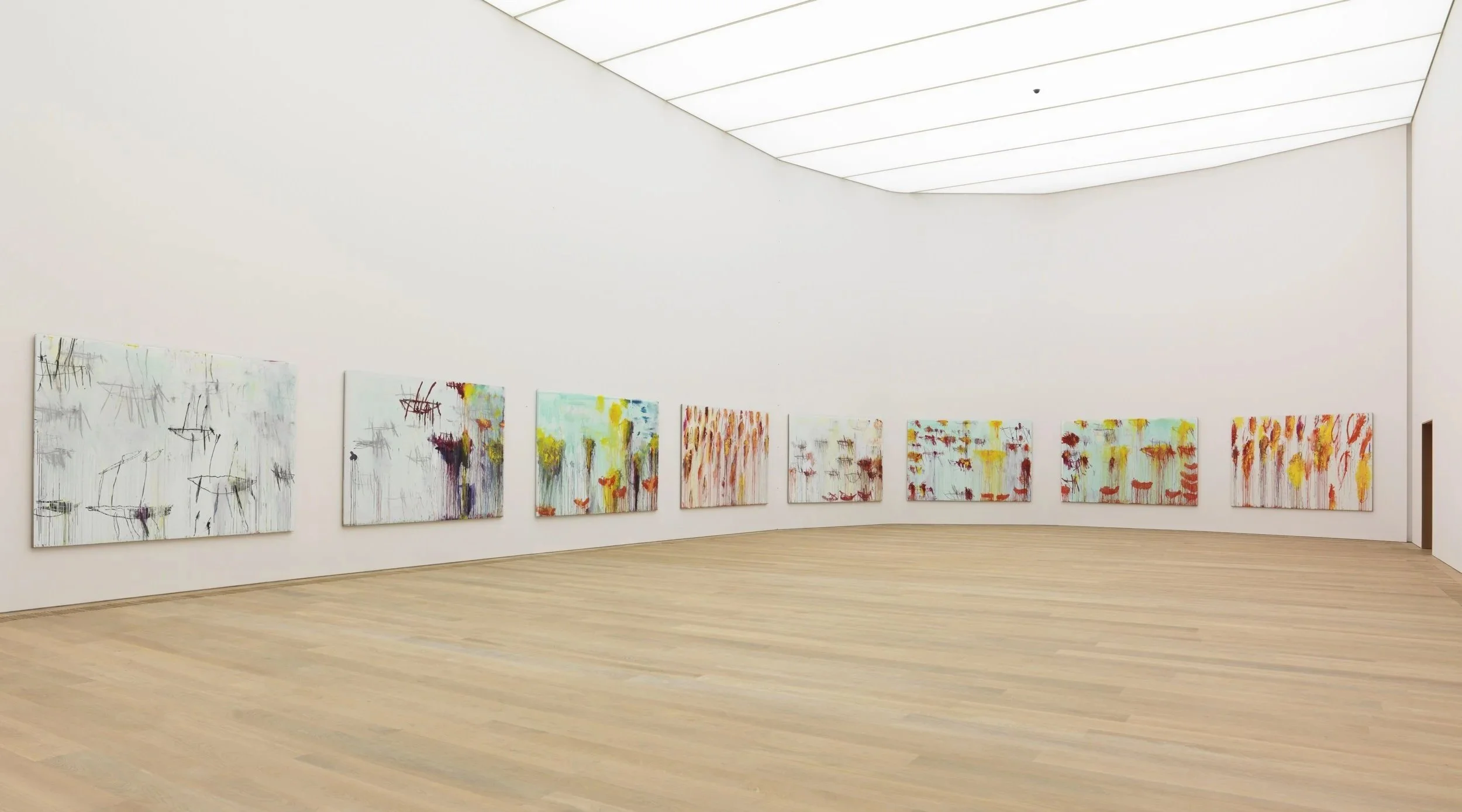
© Cy Twombly Foundation. Photo: Haydar Koyupinar, Bayerische Staatsgemäldesammlungen, Museum Brandhorst, Munich