Martin Parr: A Legacy of Radical Attentiveness
RIP Photographer Martin Parr
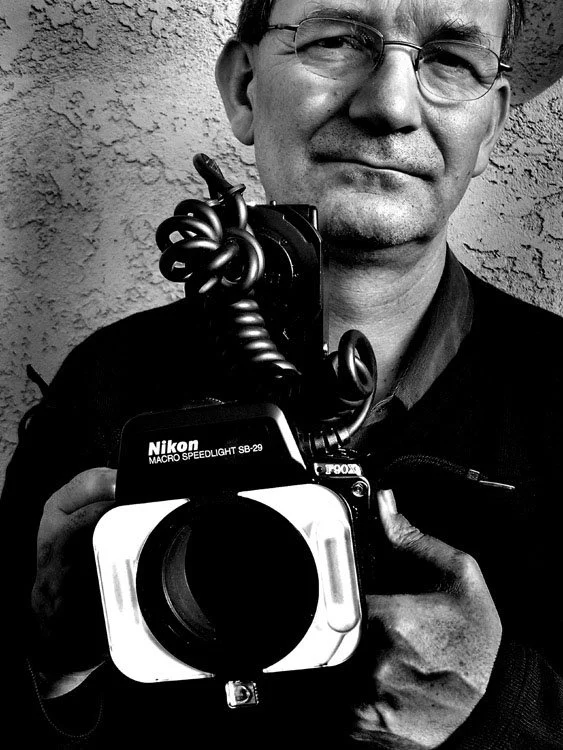
Martin Parr looked like "a naff birdwatcher," according to his editor Wendy Jones. His appearance was so unassuming that during a recent public talk, he recounted how passersby remarked he was "a bit like Martin Parr" while he photographed a seaside scene. Unbothered by glitz and glamour, for more than five decades Parr purposefully pursued what others deemed mundane—unapologetically celebrating the excitement he found in a perfect cup of tea, a plate of beans on toast, or a woman filling her car at a petrol station. He understood that, with time, these supposedly dull things would become profoundly interesting.
Parr took delight in looking, without flattery, at the things we thought we already knew. In his pictures, beauty is not always graceful—the overflowing rubbish at New Brighton beach, the cucumber and cheese sandwiches wrapped in clingfilm at Shalfleet church fete (with the sign pleading, "please do take ONE cherry tomato"). He made the mundane magnificent with his panache for saturated colors and surprising compositions, masterfully capturing the unexpected, unchoreographed interruptions that reveal the unpolished truth of ordinary moments. He understood that the fluorescent glow of a chip shop could be as revealing as a cathedral; that the color of a plastic beach bucket could anchor the entire mood of a nation; that the way a stranger holds a sandwich or an ice cream speaks of class, of longing, of place, of the small stories that batter or buoy us daily. This radical attentiveness—this celebration of the overlooked—made Parr one of the most human photographers of our time.
The Photographer Who Saw Everything
Born in Surrey in 1952, Martin Parr started taking pictures as a child. He attended Manchester Polytechnic from 1970 to 1973 before moving to West Yorkshire, where he met his wife, Susan Mitchell. Following two years in Ireland, the couple relocated to Wallasey in Merseyside. During this period, Parr began working in color and produced one of his most iconic series, The Last Resort (1983–86), documenting beachgoers in New Brighton. The highly saturated photographs—depicting crowded ice cream shops, sunbathers lounging by construction vehicles, and trash-filled beaches—received polarized reviews. Some criticized Parr's seemingly derisive portrayal of working-class Britain, while others praised his unflinching realism.
This ambivalence in interpreting his work became a hallmark of his career. He went on to capture Thatcher-era middle-class society events (The Cost of Living, 1986–88), the global tourism industry (Small World, 1987–1994), and the excesses of consumerism (Common Sense, 1995–1999). When Martin Parr was 14, his teacher wrote that he was "utterly lazy and inattentive" in a school report. He went on to become one of the most successful and sought-after photographers in the world, publishing over 100 photobooks on subjects ranging from seaside resorts to smoking.
In September, Parr released his first autobiography, Utterly Lazy and Inattentive (Penguin Press), combining over 150 of his photographs with his recollections and reflections on each image. His distinctive voice was captured by his friend, writer Wendy Jones, who said: "Martin was fun, invariably right, and never actually the slightest bit lazy or inattentive. It is Martin's photographs that our great-great-grandchildren will think of when they look back to our time. Martin has left us with a catalogue of our century, our times, our society and the trends that shaped us. He has made us laugh with his images, and he has shown us back to ourselves."
Parr's autobiography spans from spotting steam trains to Tesla electric cars. He identified the advent of smartphones as the single biggest societal change in his lifetime. "I think smartphones made a huge difference to things like tourism, what people do, and how they respond to reality," he explained. He observed that visiting tourist landmarks now seemed almost solely about taking photos rather than experiencing the sites themselves. "You collect points, like you would collect points towards a toy or a game," he noted, a keen observation from the photographer whose publications include a book titled Death by Selfie.
Palestine and Protest: Parr's Commitment to Witness
Beyond his celebrated documentation of consumer culture and British life, Martin Parr maintained a less widely known but deeply significant commitment to social justice and political advocacy, particularly concerning Palestine. This dedication was showcased in a symposium at the Martin Parr Foundation titled "Palestine and Protest," where Parr's photographs serve not merely as historical documents but as acts of witness and solidarity. Parr shared a selection of his early photographs taken in Palestine during the 1980s alongside his more recent work documenting protests in support of Palestine held in Bristol.
The symposium, organized by the Martin Parr Foundation and photographer-activist Alex Wolfe-Warman, brought together photographers, activists, and creatives for an evening dedicated to Palestine and protest.
A Lasting Legacy
Parr's editor at Penguin Press, Chloe Currens, reflected: "It's hard to put words to Martin's gifts as an artist and as a person. He wasn't keen on being called a genius but, sitting next to him as he worked, choosing between photographs, thinking up chapter titles, it was hard not to marvel at his intuition, his creative daring, and his lightning-fast wit. He was also, quite simply, a fantastic collaborator: kind, unpretentious and at least as curious about all of us as we were about him."
He taught us that nothing is too ordinary to deserve attention, that beauty exists in the overlooked, and that the photographer's responsibility is not to flatter but to reveal. Whether documenting the excesses of Western tourism, the debris-strewn beaches of working-class Britain, Parr maintained an unwavering commitment to showing us ourselves, our complexity, our comedy, our reality, and our humanity.
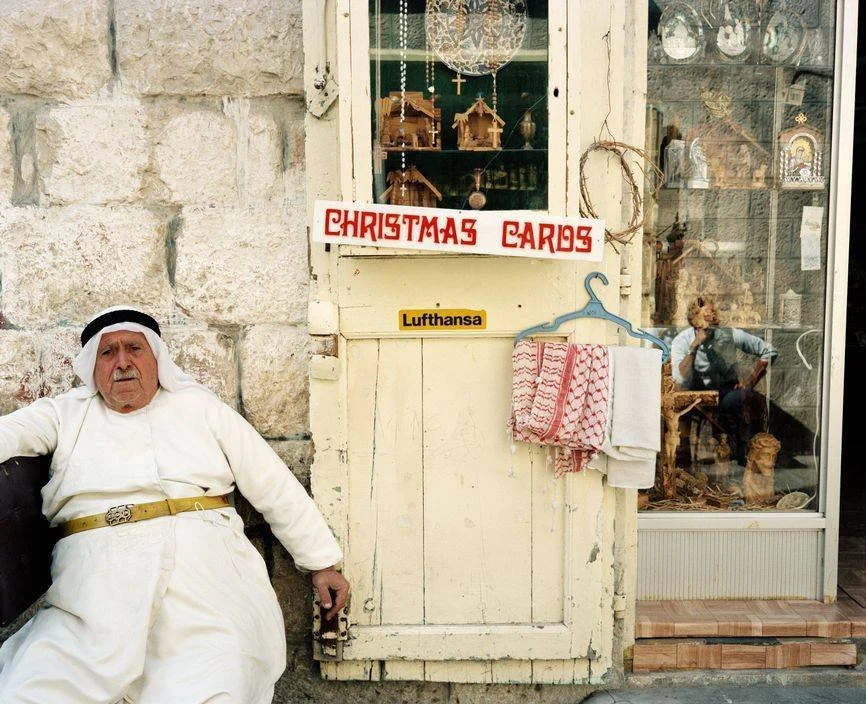
PALESTINE. Bethlehem.
1986
© Martin Parr/Magnum Photos